Education Best in category 1 results Assistant AI Tool

Popular AI tools in the Assistant field of Education include Infinichat AI, etc., helping you quickly improve efficiency.

Infinichat AI

Infinichat AI

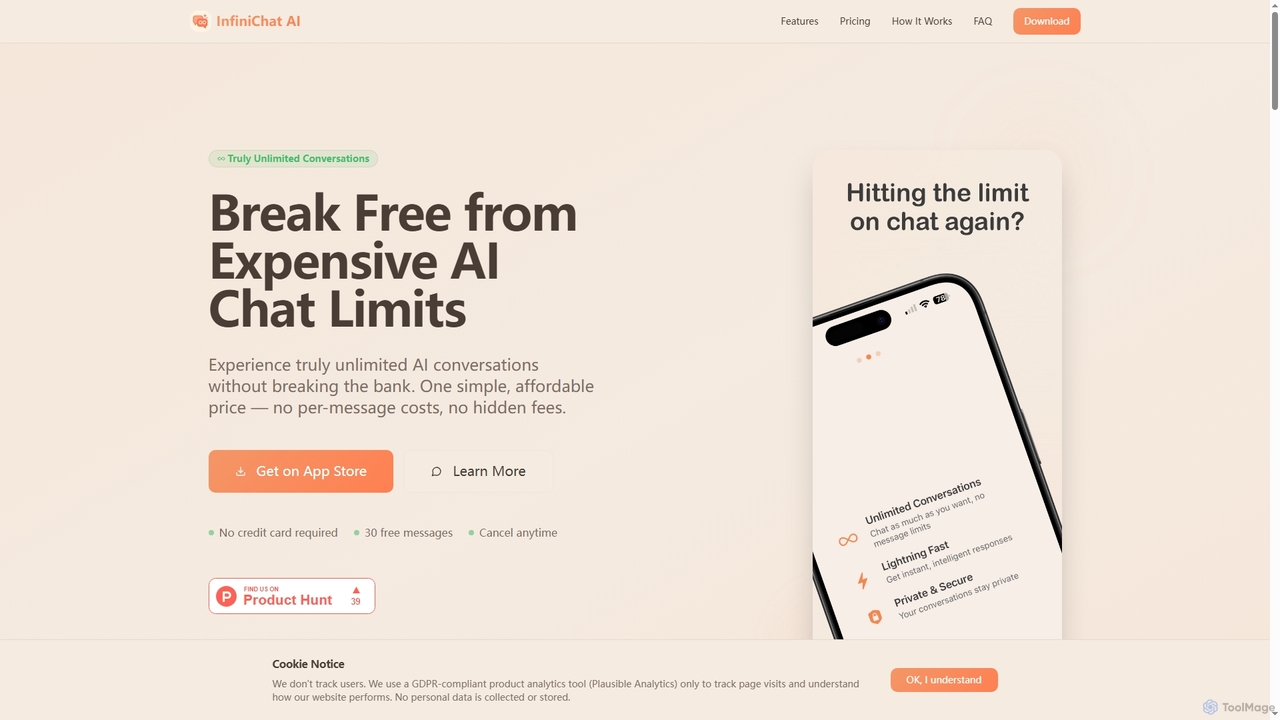
Infinichat AI is an AI chat assistant app offering truly unlimited conversations for a simple, affordable price. It …

4.1K

About Assistant

AI Assistants in education are specialized tools designed to provide personalized academic support and streamline administrative tasks. They leverage natural language processing (NLP) and machine learning to understand student questions, explain complex concepts, and assist educators with course management. These assistants make learning more accessible and efficient by offering on-demand help and automating repetitive workflows. Their primary value lies in delivering tailored educational experiences at scale, catering to individual learning paces and needs.

Core Features

  • Personalized Tutoring: Offers step-by-step explanations and practice problems tailored to a student's learning level.
  • Homework & Research Aid: Helps find relevant information, summarize articles, and generate citations for academic work.
  • Automated Grading & Feedback: Provides instant scoring for quizzes and offers constructive feedback on written assignments.
  • Lesson Plan Assistance: Helps educators generate ideas, create teaching materials, and structure lesson plans.
  • Language Practice: Engages users in conversation to improve fluency, grammar, and pronunciation in a new language.

Use Cases

These tools are widely used by K-12 and university students for subject-specific help, from math problems to essay writing. Educators and tutors use them to reduce administrative workload, create engaging content, and provide scalable support. Language learners also benefit from interactive, 24/7 practice partners.

How to Choose

When selecting an AI Education Assistant, consider the subject matter accuracy and curriculum alignment. Evaluate its integration capabilities with existing Learning Management Systems (LMS). Assess the quality and depth of feedback it provides. Finally, prioritize platforms with strong data privacy and security policies, especially when used by younger students.

AssistantUse Cases

1

Personalized Homework Help for Students

A high school student struggling with a complex physics problem can use an AI Education Assistant instead of waiting for the next class. They can input the problem, and the assistant provides a step-by-step breakdown of the solution, explaining the underlying principles and formulas. It doesn't just give the final answer but guides the student through the reasoning process. This on-demand, personalized support helps reinforce learning, build confidence, and allows students to overcome obstacles at their own pace, turning homework from a chore into a constructive learning opportunity.

2

Automating Repetitive Teacher Tasks

An elementary school teacher can use an AI Assistant to streamline their weekly workflow. For instance, they can ask the assistant to generate a 10-question multiple-choice quiz on a recent history lesson. The assistant can also create different versions to prevent cheating. After students complete the quiz online, the tool automatically grades the submissions and provides an analytics report, highlighting common mistakes. This frees up hours of the teacher's time from manual grading, allowing them to focus on more impactful activities like one-on-one student support and creative lesson planning.

3

Language Learning Practice Partner

A user learning Spanish can engage in a conversation with an AI Assistant to practice their speaking and listening skills. They can set the context, such as ordering food at a restaurant or asking for directions. The AI responds naturally and can provide real-time corrections on grammar and pronunciation. Unlike a human partner, the AI is available 24/7, is infinitely patient, and can adapt its difficulty level. This provides a safe, low-pressure environment for learners to build confidence and fluency before engaging in real-world conversations.

4

Research and Citation Assistance for University Students

A university student writing a thesis can use an AI Assistant to accelerate their research process. They can ask the assistant to find and summarize key academic papers on a specific topic, saving hours of manual searching through databases. Furthermore, as they write, the assistant can help paraphrase complex sentences to avoid plagiarism and ensure proper academic tone. Once the paper is written, the tool can automatically generate a bibliography in a required citation style (e.g., APA, MLA), ensuring accuracy and consistency, which is a common point of stress for students.

5

Developing Differentiated Lesson Plans

An educator teaching a class with diverse learning needs can use an AI Assistant to create differentiated instructional materials. By providing the core lesson topic, such as 'the water cycle', and specifying different learning levels (e.g., beginner, intermediate, advanced), the assistant can generate varied content. This might include a simplified visual guide for beginners, a standard text-based explanation for intermediate learners, and a project-based inquiry prompt for advanced students. This approach helps the teacher cater to individual student needs more effectively, promoting inclusive learning without spending excessive time on manual content creation.

6

Interactive Study Guide Creation

Before a final exam, a student can upload their class notes, lecture slides, and textbook chapters into an AI Assistant. The tool then processes this information to create a comprehensive, interactive study guide. It can generate flashcards for key terms, create practice quizzes with instant feedback, and produce concise summary sheets of complex topics. The student can even ask clarifying questions like 'Explain the difference between mitosis and meiosis based on my notes.' This transforms static study materials into a dynamic learning tool, helping students actively engage with the content and identify knowledge gaps more effectively.

AssistantFrequently Asked Questions