ToolMage
Sign in

Best 2 College Admissions AI tools for Education

Popular College Admissions AI tools in Education include GradGPT and Reachbest, helping you work more efficiently.

Reachbest
Freemium

Reachbest

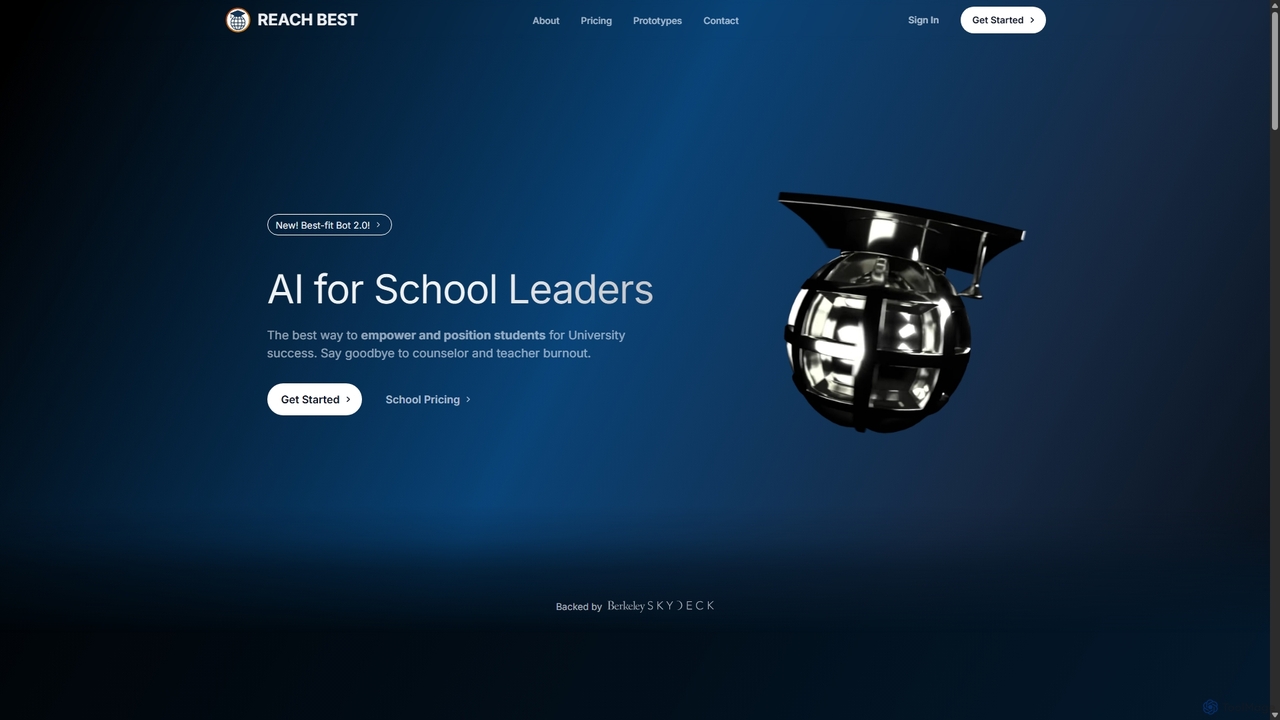
Reachbest is an AI-powered platform designed to simplify the university research and application process. It offers personalized university recommendations, predicts admission chances, provides AI-driven essay reviews, and connects users with AI mentors. By leveraging advanced AI, Reachbest aims to reduce the stress associated with college applications, empowering students to confidently apply to their dream universities in the USA, UK, Canada, Australia, and Japan.

College Admissions
Visits 7.1KFavorites 136Likes 142
GradGPT
Freemium

GradGPT

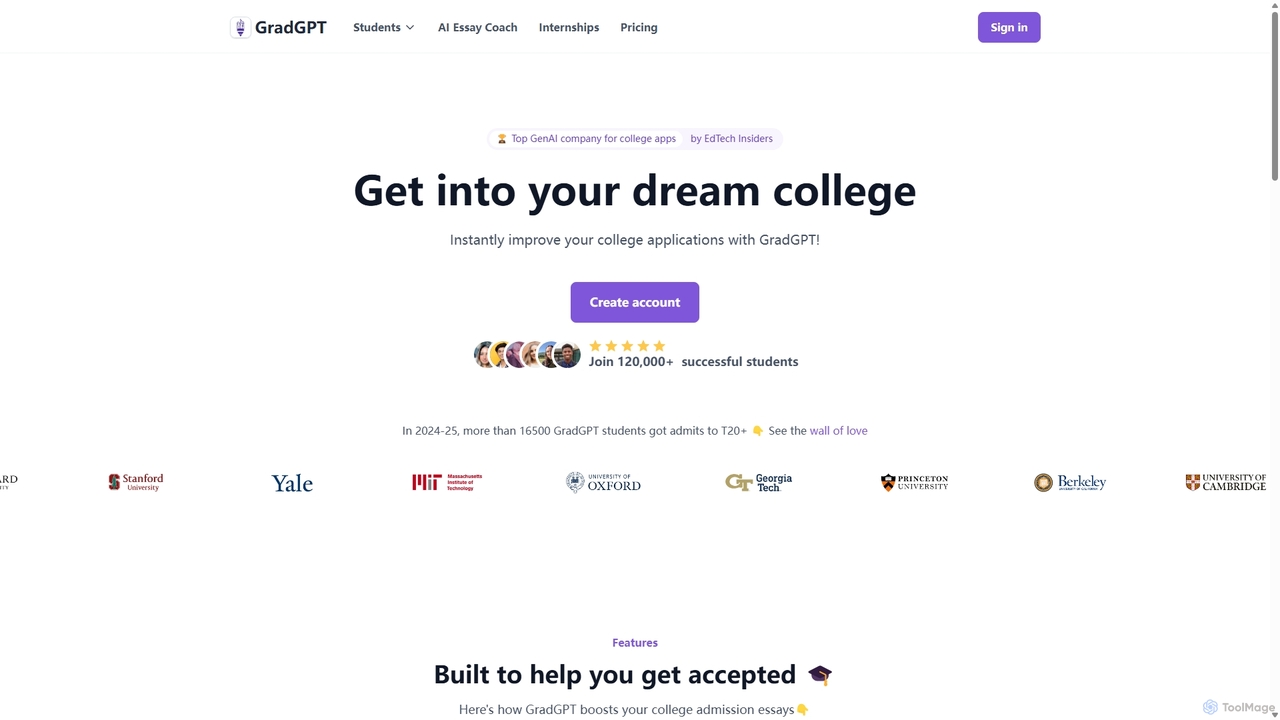
GradGPT is an AI-powered college application coach designed to help students get into their dream universities. It provides instant, expert feedback on admission essays, identifies critical mistakes, and optimizes applications based on internal rubrics from top schools like Harvard and Yale. It's a comprehensive suite for essay reviews, CV building, and more.

Essay Feedback
Visits 197.4KFavorites 142Likes 127

About College Admissions

AI College Admissions tools are specialized platforms designed to guide students through the complex university application process. These tools leverage natural language processing and machine learning to analyze application essays, suggest suitable universities, and prepare students for interviews. Their primary value lies in providing data-driven insights and personalized feedback, helping applicants strengthen their profiles and navigate the competitive admissions landscape more effectively. They act as a digital co-pilot for students, parents, and counselors.

Core Features

  • Essay Analysis & Enhancement: Provides real-time feedback on personal statements, analyzing structure, tone, clarity, and suggesting improvements to enhance narrative impact.
  • University Matching: Recommends a balanced list of 'reach', 'match', and 'safety' schools based on a student's academic profile, test scores, and personal preferences.
  • Interview Preparation: Offers AI-powered mock interviews with common questions and provides feedback on verbal and non-verbal communication skills.
  • Scholarship & Financial Aid Discovery: Scans extensive databases to identify relevant scholarship opportunities and financial aid options tailored to the student's background.

Use Cases

These tools are primarily used by high school students applying for undergraduate programs, their parents, and school counselors. They are particularly valuable for crafting compelling personal essays, building a strategic list of target universities, and practicing for critical admissions interviews. International students also use them to understand and adapt to different countries' application systems.

How to Choose

When selecting an AI College Admissions tool, consider the specificity of its features—does it offer deep essay analysis or just basic grammar checks? Evaluate the accuracy and recency of its university and scholarship data. Assess the level of personalization in its recommendations. Finally, review its data privacy policy to ensure the secure handling of sensitive personal and academic information.

College Admissions use cases

1

Refining a Personal Statement for Maximum Impact

A high school senior is struggling to articulate their personal story in their main college application essay. Using an AI College Admissions tool, they upload their draft. The AI analyzes the text for narrative flow, emotional tone, and clarity. It highlights clichés to avoid, suggests stronger verbs, and provides examples of how to better connect their experiences to their future aspirations. The student uses this feedback to revise their essay, resulting in a more compelling and authentic personal statement that stands out to admissions officers.

2

Building a Strategic University Application List

A student and their parents are overwhelmed by the sheer number of universities. They use an AI tool and input the student's GPA, standardized test scores, intended major, and preferences for location and campus size. The AI algorithm processes this data against a vast database of universities, generating a categorized list of 'reach', 'match', and 'safety' schools. For each suggestion, it provides admission probability statistics, tuition costs, and key program highlights, enabling the family to build a well-balanced and realistic application strategy.

3

Practicing for a Crucial Admissions Interview

A student has secured an interview with their top-choice university and feels nervous. They use an AI interview simulator which presents them with common questions asked by that specific university's interviewers. The student records their answers, and the AI provides instant feedback on their pacing, use of filler words, and the clarity of their responses. It also analyzes their non-verbal cues like eye contact and posture via the webcam. After several practice sessions, the student feels more confident and prepared to deliver articulate and thoughtful answers during the real interview.

4

Discovering Niche Scholarships and Financial Aid

A family is concerned about the high cost of tuition and is looking for financial aid beyond federal loans. They use an AI platform's scholarship finder, inputting the student's academic achievements, extracurricular activities (like robotics club and volunteering), and family background. The AI scans thousands of scholarships, matching the student's unique profile to niche awards they would have likely missed, such as a scholarship for aspiring engineers from a specific region or one for community volunteers. This uncovers several new funding opportunities, reducing the potential student loan burden.

5

Managing Application Deadlines for Multiple Universities

A school counselor is responsible for guiding 50 students, each applying to 8-10 different universities with varying deadlines and requirements. Using an AI-powered admissions platform, the counselor creates a centralized dashboard. The tool automatically populates deadlines for applications, financial aid, and recommendation letters for each university on a student's list. It sends automated reminders to both the counselor and the students as deadlines approach. This system prevents missed deadlines and allows the counselor to focus their time on providing personalized advice rather than administrative tracking.

6

International Student Adapting Essay for US Universities

An international student, accustomed to a different educational system, needs to write a personal statement for US universities, which often emphasize narrative and personal growth. They use an AI tool specifically trained on successful US application essays. The AI helps them shift their writing style from a purely academic summary to a compelling story. It provides feedback on cultural nuances, appropriate tone, and how to frame their international experience as a unique strength, helping them bridge the cultural gap and present a more effective application.

College Admissions FAQ

What are AI College Admissions tools?

AI College Admissions tools are specialized software platforms that use artificial intelligence to assist students with the university application process. Unlike general productivity tools, they are specifically designed to tackle key admissions tasks. Key features often include:

  • Essay Analysis: Providing feedback on structure, tone, and content of personal statements.
  • University Matching: Recommending schools based on a student's academic and personal profile.
  • Interview Simulation: Offering practice sessions with AI-driven questions and feedback.
  • Task Management: Tracking application deadlines and requirements for multiple schools.
These tools aim to provide data-driven, personalized guidance to make the application process more strategic and less overwhelming.

How do I choose the right AI tool for college applications?

Choosing the right AI College Admissions tool depends on your specific needs. Consider these factors:

  • Primary Need: Are you struggling most with writing your essay, building a school list, or preparing for interviews? Choose a tool that excels in your weakest area.
  • Data Quality: For university and scholarship matching, check if the tool uses up-to-date and comprehensive data sources.
  • Feedback Specificity: A good essay analyzer should offer more than just grammar correction; it should comment on narrative, tone, and structure.
  • User Interface: The platform should be intuitive and easy to navigate, as the application process is already complex.
  • Cost and Value: Compare pricing models (subscription vs. one-time fee) and evaluate if the features offered justify the cost. Many offer free trials to test their capabilities.

What's the difference between an AI College Admissions tool and a general AI writer?

The key difference lies in specialization and data. A general AI writer (like ChatGPT) is a versatile tool trained on a massive, broad dataset, capable of writing on any topic. An AI College Admissions tool is a specialized application trained specifically on data relevant to college applications. This includes:

  • Successful application essays and personal statements.
  • University admissions criteria, statistics, and program details.
  • Common interview questions and effective response strategies.
This specialized training allows admissions tools to provide more contextual, relevant, and strategic feedback. For example, instead of just improving grammar, it can advise if an essay's theme aligns well with the values of a specific university, a task a general AI writer cannot perform reliably.

Can AI tools guarantee admission to a top university?

No, AI tools cannot guarantee admission to any university. University admissions are a holistic process involving many factors beyond what an AI can control, such as letters of recommendation, academic transcripts, and the subjective judgment of admissions officers. These AI tools should be viewed as powerful assistants, not magic bullets. They can significantly enhance the quality of an application by improving essays, optimizing school selection, and preparing for interviews. However, the final decision always rests with the university's admissions committee. Their purpose is to help students present the best possible version of themselves, thereby increasing their chances of success.

Who can benefit most from using AI College Admissions tools?

A wide range of individuals can benefit, but these tools are particularly helpful for:

  • Students without access to extensive counseling: They provide structured guidance and feedback that might otherwise be unavailable.
  • First-generation applicants: They can demystify the often complex and unwritten rules of the college application process.
  • International students: They help bridge cultural and stylistic gaps in application materials, especially essays.
  • Highly organized students: They can use these tools to optimize their strategy, track multiple deadlines, and ensure every part of their application is polished.
  • Parents and counselors: They can use these platforms to manage information, track student progress, and discover financial aid opportunities more efficiently.
Essentially, anyone looking to add a layer of data-driven strategy and refinement to their college application process can find value in these tools.