ToolMage
Sign in

Best 1 Communication Skills AI tools for Education

Popular Communication Skills AI tools in Education include ChatCoach.io, helping you work more efficiently.

ChatCoach.io
Freemium

ChatCoach.io

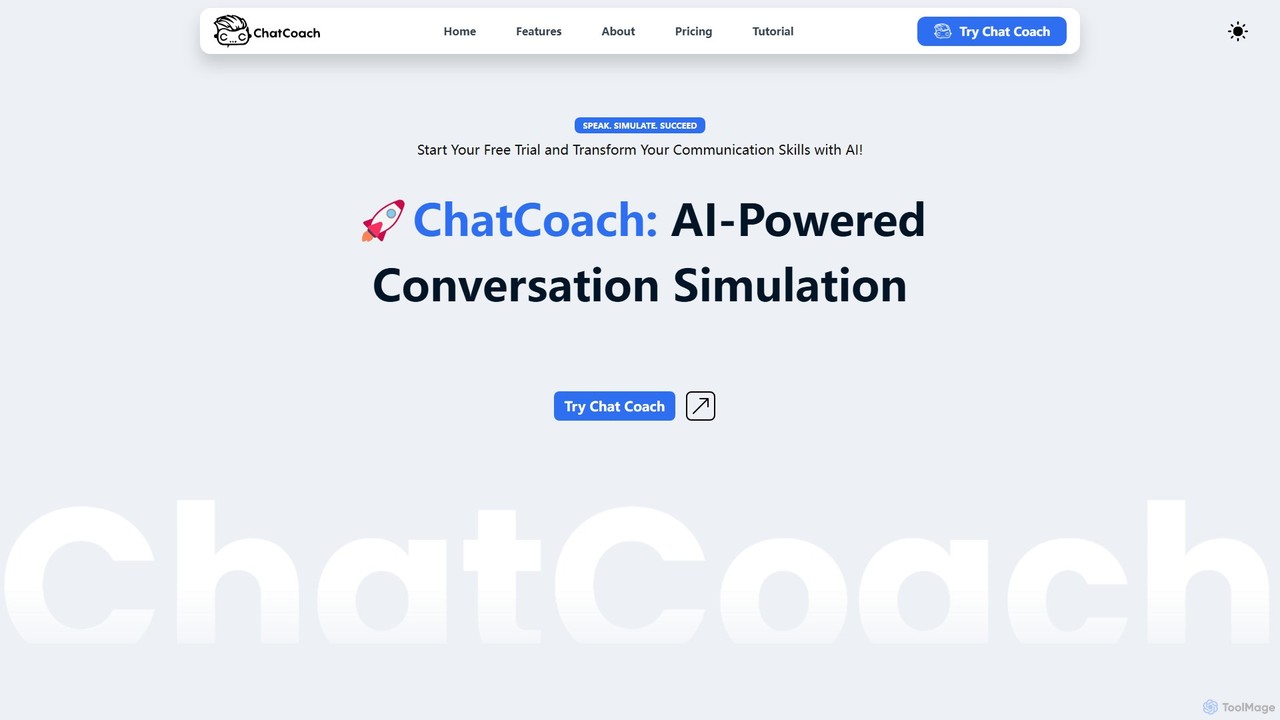
ChatCoach.io is an AI-powered conversation simulator designed to help you master communication skills. Practice high-stakes scenarios like job interviews, sales pitches, and negotiations in a risk-free environment. Engage with diverse AI personas, receive real-time emotional analytics, and get personalized feedback to boost your confidence and professional success.

Interview Preparation
Visits 5.8KFavorites 139Likes 134

About Communication Skills

AI Communication Skills tools are a specialized category of educational software designed to analyze and improve how individuals speak and write. These platforms utilize technologies like Natural Language Processing (NLP) and speech recognition to evaluate aspects such as clarity, tone, pace, and word choice. They provide users with objective, data-driven feedback, acting as a personal coach to help build confidence and effectiveness in various communication scenarios. This targeted approach helps users master persuasive speaking, clear writing, and impactful presentations.

Core Features

  • Real-time Speech Analysis: Provides instant feedback on speaking pace, filler words (e.g., 'um', 'ah'), vocal tone, and volume.
  • Content Structure Suggestions: Analyzes the logical flow and clarity of a speech or text, suggesting improvements for better impact.
  • Non-Verbal Feedback: Uses computer vision to assess body language, eye contact, and facial expressions during practice sessions.
  • Interactive Simulations: Offers realistic practice environments for scenarios like job interviews, sales pitches, or team meetings.
  • Personalized Learning Paths: Creates customized exercises and lessons based on the user's specific strengths and weaknesses.

Use Cases

These tools are widely used by professionals preparing for high-stakes presentations, job seekers practicing for interviews, and students developing public speaking abilities. Sales and customer service teams also leverage them to refine their pitching and client interaction skills, ensuring their communication is clear, empathetic, and persuasive.

How to Choose

When selecting a tool, consider the specific skill you want to improve—be it public speaking, interview performance, or writing. Evaluate the depth and type of feedback provided, from basic metrics to advanced sentiment analysis. Check for integrations with platforms you already use, such as video conferencing or presentation software, and carefully review the tool's data privacy policy.

Communication Skills use cases

1

Preparing for a High-Stakes Business Presentation

A marketing manager needs to present a quarterly review to senior leadership. They use an AI communication coach to rehearse their presentation. The tool records their practice sessions, providing a detailed analysis of their speaking pace, identifying filler words like 'um' and 'basically', and highlighting sections where their tone lacked confidence. It also suggests stronger, more active language to make key points more impactful. After several practice runs with AI feedback, the manager delivers a polished, confident, and persuasive presentation that is well-received by the executives.

2

Acing a Crucial Job Interview

A recent graduate is preparing for a final-round interview for their dream job. They use an AI interview simulator to practice answering common and behavioral questions. The AI acts as the interviewer, and after the session, it provides feedback on the clarity and structure of their answers. It also uses webcam analysis to give pointers on maintaining better eye contact and displaying confident body language. The tool helps the graduate refine their responses, reduce nervousness, and walk into the real interview feeling significantly more prepared and self-assured.

3

Improving Sales Pitch Delivery

A sales representative wants to increase their conversion rate by making their pitch more persuasive. They record their standard pitch using an AI communication tool. The AI analyzes the transcript and vocal tone, identifying overuse of technical jargon and moments where their enthusiasm dips. It suggests simpler, benefit-oriented language and provides exercises to maintain a consistent, energetic tone. By practicing with the AI's guidance, the representative develops a more engaging and customer-centric pitch, leading to better client rapport and a noticeable increase in closed deals.

4

Enhancing Daily Team Communication

A new team lead wants to ensure their instructions and feedback during virtual meetings are clear and motivating. They use an AI communication assistant that integrates with their video conferencing tool. During meetings, the tool provides private, real-time prompts, such as suggesting they rephrase a complex point for clarity or reminding them to pause and ask for questions. It also provides a post-meeting summary of their communication patterns, helping them track their progress in becoming a more effective leader. This leads to more efficient meetings and a team that feels more heard and aligned.

5

Mastering Academic Public Speaking

A university student feels anxious about defending their final year thesis in front of a panel. They use an AI public speaking coach to practice their presentation in a low-pressure, private setting. The tool provides a 'confidence score' based on vocal variety, posture, and avoidance of filler words. It offers specific exercises, like breathing techniques to manage nervousness and drills to improve vocal projection. By repeatedly practicing and seeing their scores improve, the student builds confidence, reduces their anxiety, and is able to deliver a well-structured and compelling thesis defense.

6

Refining Cross-Cultural Written Communication

An employee at a multinational corporation frequently communicates with colleagues in Japan via email. They use an AI writing assistant specialized in cross-cultural communication. The tool analyzes their draft emails for tone, formality, and potential cultural misinterpretations. For instance, it might suggest softening a direct request to be more polite by Japanese business standards or recommend a more formal closing. This helps the employee avoid unintentional misunderstandings, build stronger international working relationships, and communicate more effectively across different cultural contexts.

Communication Skills FAQ

What are AI Communication Skills tools?

AI Communication Skills tools are software applications that use artificial intelligence to analyze and provide feedback on your speaking and writing. They act like a personal coach, evaluating factors such as your speaking pace, use of filler words, vocal tone, clarity of your message, and even body language. The primary goal is to offer objective, data-driven insights to help you become a more confident, clear, and persuasive communicator in various settings like presentations, interviews, and daily conversations.

How do I choose the right AI tool for communication skills?

To choose the right tool, consider these factors:

  • Your Specific Goal: Are you preparing for interviews, public speaking, or improving your writing? Select a tool that specializes in your target area.
  • Depth of Feedback: Do you need basic metrics like filler word count, or advanced analysis of tone, sentiment, and body language? Check what specific feedback the tool provides.
  • Practice Scenarios: Look for tools that offer realistic simulations relevant to your needs, such as Q&A sessions for interviews or presentation rehearsals.
  • Platform Integration: If you need real-time feedback, check if the tool integrates with software you use, like Zoom, Microsoft Teams, or Google Slides.
  • Data Privacy: Since you'll be sharing voice and potentially video data, carefully review the tool's privacy policy to understand how your data is stored and used.
What's the difference between AI Communication Skills tools and grammar checkers?

The primary difference lies in their scope. A grammar checker, like Grammarly, focuses almost exclusively on the correctness of written text—analyzing spelling, punctuation, grammar, and style. An AI Communication Skills tool has a much broader focus. It analyzes not just the content of what you say or write, but also the delivery of spoken communication. This includes your pace, tone, use of filler words, and sometimes even non-verbal cues like eye contact. In essence, grammar checkers help you write correctly, while communication skills tools help you communicate effectively and persuasively, both in writing and speech.

Who can benefit from using AI Communication Skills tools?

A wide range of individuals can benefit from these tools. Key users include:

  • Professionals: To prepare for important presentations, client meetings, and to deliver clearer feedback to their teams.
  • Job Seekers: To practice and gain confidence for interviews by rehearsing answers and improving their delivery.
  • Students: To develop public speaking skills for class presentations, debates, and thesis defenses.
  • Sales and Customer Service Teams: To refine their pitches, handle difficult conversations more effectively, and build better rapport with clients.
  • Non-native Speakers: To improve pronunciation, fluency, and confidence when speaking a new language.
How do these AI tools analyze my speech?

These tools use a combination of technologies to provide comprehensive analysis. First, Speech-to-Text technology converts your spoken words into a written transcript. Then, Natural Language Processing (NLP) algorithms analyze this text for clarity, word choice, sentiment, and structure. Simultaneously, audio analysis technology processes the sound of your voice to measure metrics like pace (words per minute), pitch variation, and volume. More advanced tools also use computer vision through your device's camera to analyze non-verbal cues such as eye contact, posture, and facial expressions, giving you a holistic view of your communication performance.