ToolMage
Sign in

Best 1 Community Platform for Education

Popular Community Platform in Education include Prg.ai, helping you work more efficiently.

Prg.ai

Prg.ai

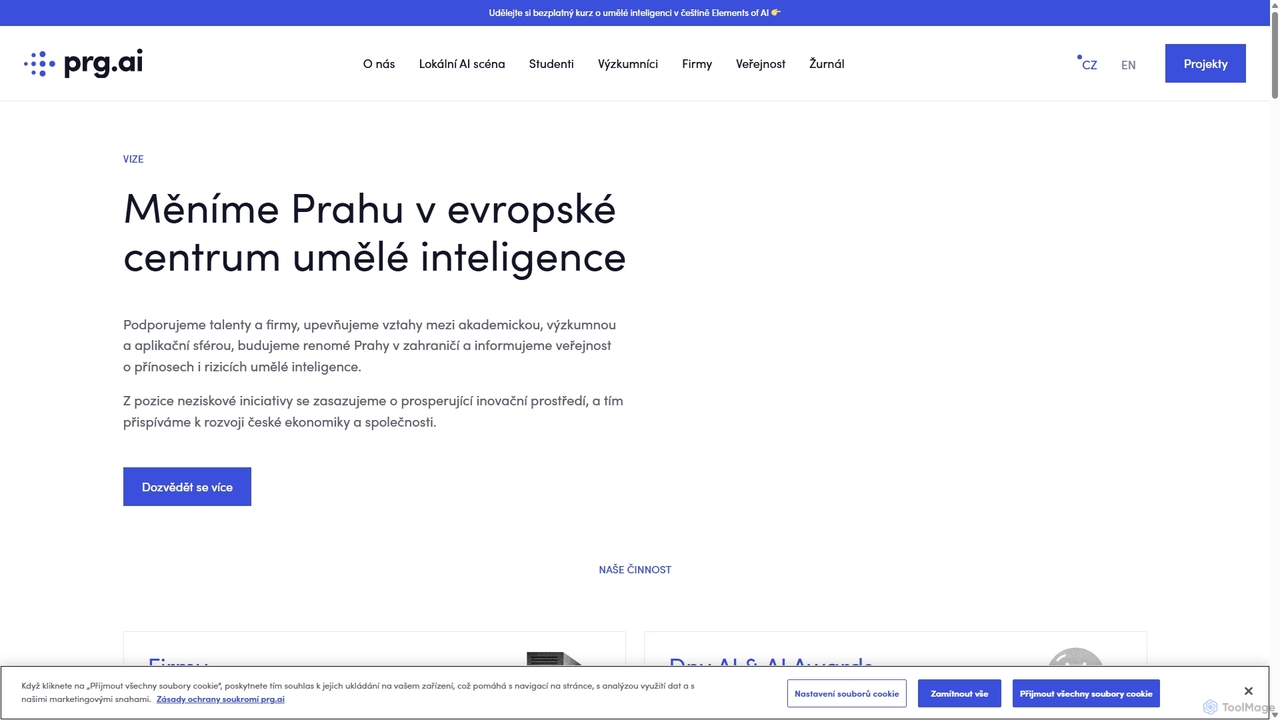
Prg.ai is a non-profit initiative dedicated to transforming Prague into a world-class AI hub. It connects companies, academic institutions, and researchers to foster talent, support innovation, and build a thriving artificial intelligence ecosystem. Through educational programs, community events, and industry collaboration, Prg.ai aims to advance the Czech economy and society.

Networking
Visits 17KFavorites 128Likes 128

About Community Platform

AI Community Platforms are specialized tools designed to build, manage, and scale online communities using artificial intelligence. These platforms leverage AI for tasks like content moderation, user engagement analysis, and personalized content delivery. They help create vibrant, safe, and organized spaces for learning, discussion, and collaboration, transforming passive audiences into active participants. The core value lies in automating administrative tasks and providing deep insights into community health and member behavior.

Core Features

  • AI-Powered Moderation: Automatically detects and flags spam, inappropriate content, and hate speech to maintain a safe environment.
  • Engagement Analytics: Provides data-driven insights on member activity, sentiment analysis, key influencers, and trending topics.
  • Personalized Content Feeds: Recommends relevant discussions, articles, and members to users based on their interests and behavior.
  • Automated Summarization: Generates concise summaries of long discussion threads or weekly activity digests to keep members informed.
  • Smart Member Grouping: Uses AI to identify and suggest user segments based on activity, interests, or expertise for targeted communication.

Applicable Scenarios

These platforms are ideal for online course providers, corporate training programs, brand-led user groups, and professional associations. For instance, an ed-tech company can use it to foster a peer-to-peer support network for a course, while a software company can build a community for user feedback and feature requests, with AI helping to categorize and prioritize input.

Selection Criteria

When choosing an AI Community Platform, consider the sophistication of its AI moderation and analytics features. Evaluate its integration capabilities with your existing Learning Management System (LMS) or CRM. Also, assess its scalability to support community growth, customization options to match your brand, and the overall user experience for both administrators and members.

Community Platform use cases

1

Building an Online Course Learning Hub

An online education provider uses an AI Community Platform to create a dedicated space for students enrolled in a data science course. The AI automatically categorizes student questions into topics like 'Python Libraries' or 'Machine Learning Concepts'. It also identifies frequently asked questions and suggests them to the instructor for creating a new FAQ section. The platform's sentiment analysis helps moderators gauge student frustration levels, allowing them to intervene proactively. This fosters a supportive peer-to-peer learning environment, reducing instructor workload and improving course completion rates.

2

Managing a Corporate Knowledge Sharing Hub

A multinational corporation implements an AI Community Platform as an internal knowledge base. Employees from different departments can ask questions and share best practices. The AI's 'expert identification' feature analyzes contributions and automatically suggests subject matter experts for specific queries. It also generates weekly digests of the most valuable solutions and discussions, which are sent to relevant teams. This breaks down information silos, accelerates problem-solving, and creates a searchable, living repository of organizational knowledge, reducing redundant inquiries to senior staff.

3

Fostering a Brand Ambassador Community

A direct-to-consumer brand uses an AI Community Platform to nurture a community of its most loyal customers. The platform's AI tracks engagement metrics to identify 'superfans' and potential brand ambassadors. It uses sentiment analysis to monitor brand perception within the community in real-time. Based on trending topics, the AI suggests content ideas for community managers to post, such as polls or challenges, to keep engagement high. This strategy turns customers into advocates, generating authentic user-generated content and valuable product feedback.

4

Automating Moderation for a Large Gaming Community

A video game developer hosts a large online community for its players. To maintain a non-toxic environment, they use an AI Community Platform. The AI moderation engine works 24/7, instantly flagging and quarantining posts containing hate speech, spoilers, or personal attacks, which significantly reduces the burden on human moderators. The system can also identify patterns of disruptive behavior from specific users, automatically escalating cases for human review. This ensures a safer and more welcoming space for players to discuss strategies and share experiences.

5

Personalizing Member Experience in a Professional Association

A national association for marketing professionals uses an AI Community Platform to increase member value. When a new member joins, the AI analyzes their profile and initial activity to recommend relevant discussion groups, upcoming webinars, and potential mentors. The weekly community newsletter is dynamically generated for each member, highlighting conversations and resources tailored to their specific interests, such as 'SEO trends' or 'B2B content marketing'. This level of personalization boosts member engagement and retention by making the community feel uniquely valuable to each individual.

6

Analyzing User Feedback for a SaaS Product

A SaaS company creates a community for its users to provide feedback and feature requests. The AI Community Platform automatically tags and categorizes all incoming posts based on keywords (e.g., 'bug report', 'UI improvement', 'integration request'). It then performs sentiment analysis on these categories to help the product team quickly gauge user feelings about different aspects of the software. The AI also identifies duplicate requests and merges them, providing a clear, prioritized list of the most-requested features, which directly informs the product development roadmap.

Community Platform FAQ

What is an AI Community Platform?

An AI Community Platform is a software solution for creating and managing online groups, forums, or networks, enhanced with artificial intelligence. Unlike traditional forums, these platforms use AI to automate key tasks such as content moderation, identifying influential members, analyzing community sentiment, and personalizing the user experience. Their primary goal is to help organizations build safer, more engaging, and scalable communities with less manual effort.

How to choose the right AI Community Platform?

When selecting an AI Community Platform, consider these factors:

  • Moderation Capabilities: Evaluate how effectively the AI detects and handles spam, toxicity, and other violations. Check for customization options.
  • Analytics & Insights: Ensure the platform provides deep, actionable insights into member engagement, sentiment, and community health.
  • Integration: Check if it integrates smoothly with your existing tools, such as CRM, LMS, or marketing automation software.
  • Scalability: Choose a platform that can grow with your community, supporting an increasing number of members and content without performance issues.
  • User Experience: The platform should be intuitive and easy to use for both community managers and members.
What's the difference between an AI Community Platform and a social media group?

The key difference lies in ownership, control, and data-driven features. With an AI Community Platform, you own the platform and the member data, offering a branded, distraction-free environment. Social media groups operate on third-party platforms with their algorithms, ads, and limitations. AI platforms provide advanced tools like automated moderation, deep analytics, and integration capabilities that are not available in standard social media groups, allowing for more strategic community management and a focus on specific educational or brand goals.

What key AI features do these platforms offer for education?

For educational purposes, AI Community Platforms offer several key features. They can automatically group students based on learning progress or interests, facilitating peer support groups. AI can identify common questions or points of confusion in discussions, providing valuable feedback to instructors to improve course material. Furthermore, personalized content recommendations can guide students to relevant resources or supplementary materials, creating a more adaptive and individualized learning journey within the community.

Who can benefit from using an AI Community Platform?

A wide range of users can benefit. This includes:

  • Educational Institutions & Course Creators: To build engaging learning communities around their content.
  • Businesses & Brands: To foster customer loyalty, gather feedback, and create brand advocates.
  • Professional Associations: To connect members, facilitate knowledge sharing, and increase member value.
  • Software Companies: To provide peer-to-peer support, collect feature requests, and communicate with users.
  • Non-profits: To coordinate volunteers and engage with supporters.

Essentially, any organization that wants to build a structured, scalable, and insightful online community can benefit.