Algorithm-Driven Design
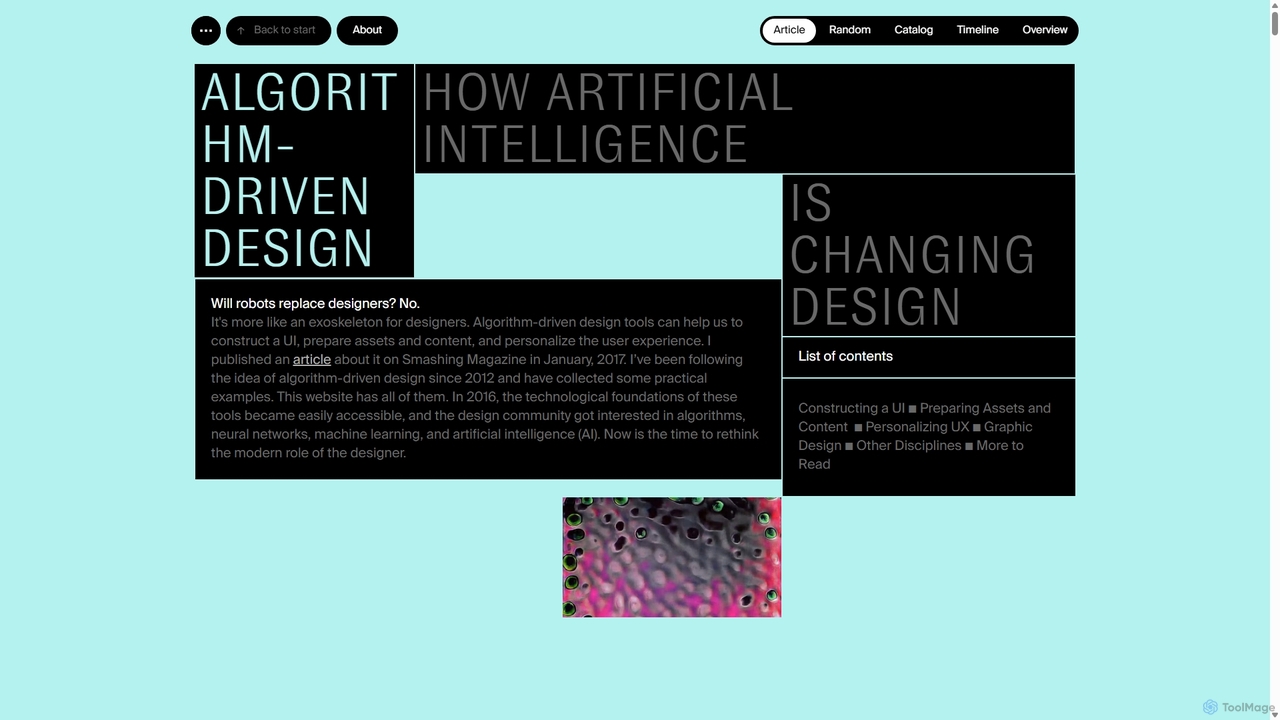
A comprehensive, curated online resource by Yury Vetrov that explores how Artificial Intelligence is transforming the world of …
A comprehensive, curated online resource by Yury Vetrov that explores how Artificial Intelligence is transforming the world of design. It serves as a knowledge base, showcasing real-world examples, tools, and articles on the intersection of AI and various design disciplines.
Dive Club
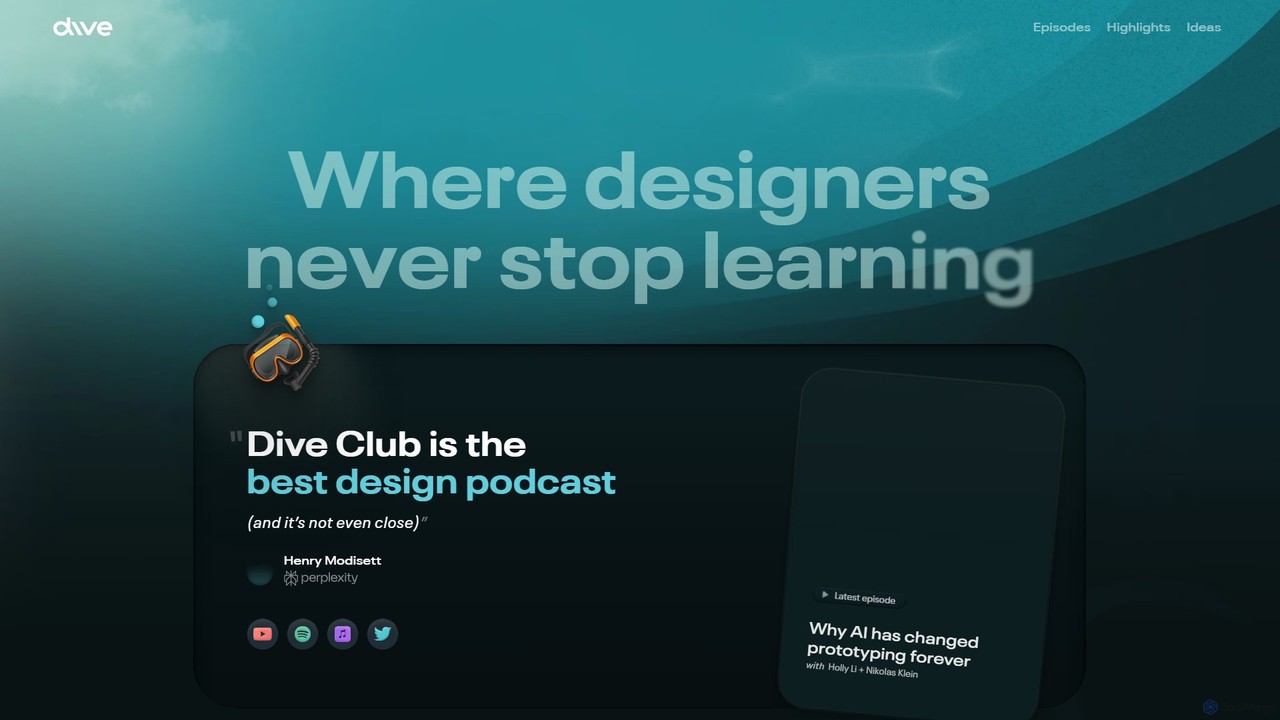
Dive Club is an educational platform and podcast for designers, offering in-depth interviews with leaders from top tech …
Dive Club is an educational platform and podcast for designers, offering in-depth interviews with leaders from top tech companies. It focuses on continuous learning, exploring topics like product design, user experience, career growth, and the transformative impact of AI on the design industry.
About Design
AI Design tools are applications that leverage artificial intelligence to assist and automate various aspects of the creative design process. They utilize machine learning algorithms to generate visual content, optimize layouts, suggest creative elements, and streamline workflows. These tools empower designers, marketers, and educators to create high-quality visuals more efficiently, fostering creativity and reducing manual effort. Within the education sector, they are invaluable for students learning design principles and for educators developing engaging visual aids.
Core Features
- Generative Design: Automatically creates images, illustrations, patterns, or 3D models from text prompts or basic inputs.
- Layout & Composition Assistance: Suggests optimal arrangements of elements, typography, and color schemes for visual harmony.
- Style Transfer & Enhancement: Applies artistic styles, upscales images, or enhances visual quality with AI-driven algorithms.
- Design Iteration & Optimization: Rapidly generates multiple design variations and helps optimize them based on user feedback or performance metrics.
- Content-Aware Editing: Intelligently modifies or removes elements within an image while maintaining context and realism.
Use Cases
AI Design tools are widely adopted across various fields. They are essential for graphic designers seeking to accelerate concept generation, for UI/UX professionals needing to rapidly prototype interfaces, and for marketing teams creating diverse campaign visuals. In educational settings, these tools assist students in visualizing complex concepts and help educators produce engaging course materials and presentations efficiently.
How to Choose
When selecting an AI Design tool, consider its specific generative capabilities (e.g., image, video, 3D), the level of creative control it offers, and its integration with your existing design software. Evaluate the quality of its AI-generated output, the learning curve, and the pricing model. For educational purposes, look for tools with intuitive interfaces and features that support learning and content creation.

DesignUse Cases
Student Design Project Assistance
Students learning graphic or product design can use AI tools to quickly generate mood boards, explore diverse color palettes, or create initial design concepts for academic projects, accelerating their ideation phase and allowing more time for refinement.
Educational Content Visualization
Educators leverage AI design tools to efficiently create engaging visual aids such as infographics, presentation slides, or interactive learning modules. This helps in simplifying complex topics and making course materials more appealing and understandable for students.
Social Media Campaign Visuals
Marketing professionals utilize AI design tools to rapidly generate a wide array of visual assets for social media campaigns, including posts, stories, and advertisements. This ensures brand consistency across platforms and allows for quick adaptation to trending content.
Rapid UI/UX Prototyping
UI/UX designers employ AI to generate multiple interface layouts, icon sets, or component variations from basic wireframes or text descriptions. This significantly speeds up the prototyping process, enabling faster iteration and user testing cycles.
Product Concept Visualization
Product designers use AI to transform textual descriptions or rough sketches into realistic renderings or conceptual visualizations of new products. This aids in communicating design ideas to stakeholders and gathering early feedback without extensive manual modeling.
Brand Identity Exploration
Branding agencies or in-house teams can use AI design tools to explore numerous logo variations, typography pairings, and brand guideline elements. This helps in developing a comprehensive and consistent brand visual identity system across all marketing and communication channels.