ToolMage
Sign in

Best 1 Digital Signage AI tools for Education

Popular Digital Signage AI tools in Education include Rocket Alumni Solutions, helping you work more efficiently.

Rocket Alumni Solutions
Paid

Rocket Alumni Solutions

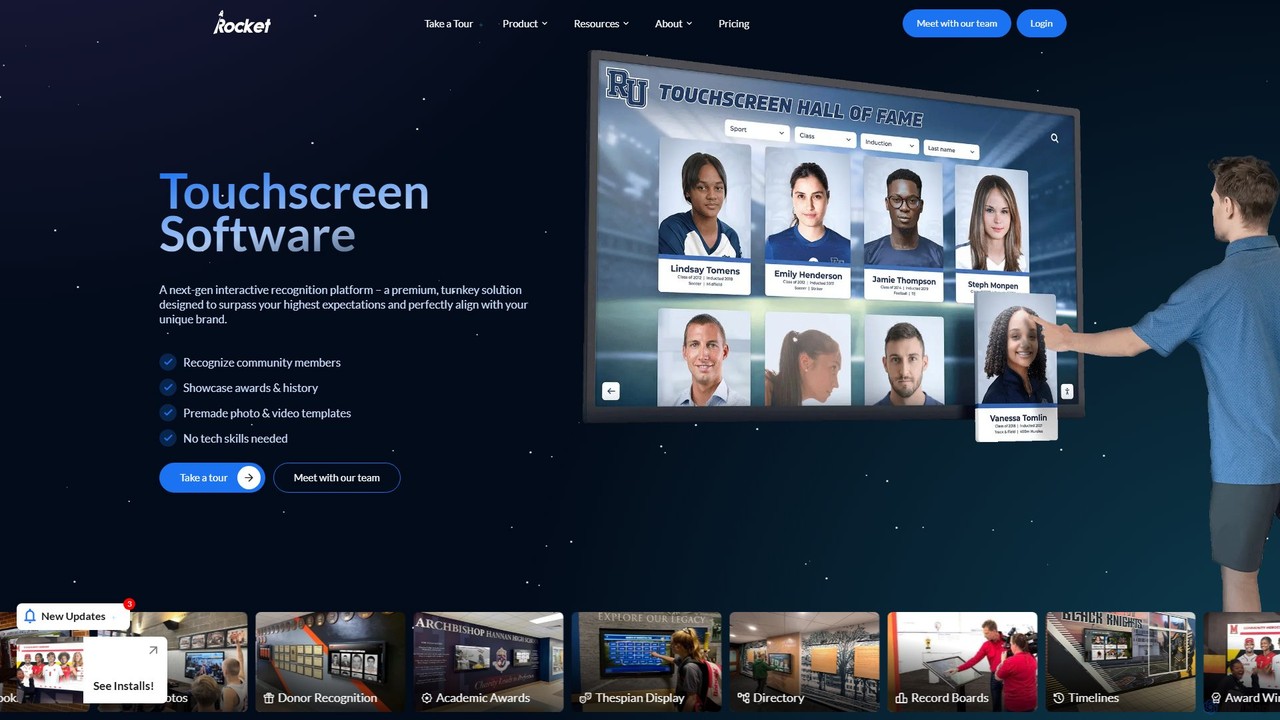
Rocket Alumni Solutions is a specialized platform for creating interactive touchscreen displays and digital halls of fame. It helps schools, universities, and organizations celebrate their history, honor alumni, and recognize donors. Using an intuitive editor and AI-assisted data import, users can build museum-quality digital showcases to replace traditional trophy cases and plaques, engaging their community in a modern, dynamic way.

Alumni Engagement
Visits 36.4KFavorites 122Likes 111

About Digital Signage

Digital Signage AI tools are a category of AI-powered solutions that transform traditional static displays into dynamic, intelligent communication platforms. These tools leverage artificial intelligence to automate content management, personalize messaging, and enhance audience engagement. In educational settings, they serve as powerful communication hubs, delivering timely information, interactive content, and emergency alerts across campuses.

Core Features

  • AI-Powered Content Automation: Automatically curates, schedules, and updates content based on predefined rules, audience data, or real-time events.
  • Audience Analytics & Personalization: Utilizes AI vision to analyze viewer demographics and engagement, dynamically adapting displayed content for relevance.
  • Interactive & Voice Control: Enables users to interact with screens via touch interfaces or voice commands for information retrieval and navigation.
  • Emergency Alert Integration: Seamlessly integrates with campus safety systems to instantly broadcast critical alerts and instructions across all displays.
  • Multi-Language & Accessibility Support: Provides AI-driven translation and text-to-speech capabilities to ensure content is accessible to diverse audiences.

Use Cases

Digital Signage AI tools are invaluable for educational institutions, corporate training centers, and public information hubs. They are used by campus administrators for streamlined communication, by marketing teams for targeted promotions, and by facility managers for efficient wayfinding and safety messaging.

How to Choose

When selecting Digital Signage AI tools, consider scalability for future expansion, integration capabilities with existing campus management systems (LMS, SIS), the robustness of AI content creation and scheduling features, and the level of audience analytics provided. Also, evaluate ease of use for content managers and the security protocols for data protection.

Digital Signage use cases

1

Automated Campus Announcements & Event Schedules

Campus administrators can leverage AI Digital Signage to automatically curate and display daily announcements, upcoming events, and class schedules. The AI can pull data from the university's calendar system, filter relevant information, and schedule its display across various screens in academic buildings, dorms, and common areas, ensuring students and staff receive timely updates without manual intervention.

2

Interactive Wayfinding & Information Kiosks

Visitors and new students often struggle with navigating large campuses. AI Digital Signage can power interactive kiosks that offer dynamic wayfinding, guiding users to specific buildings, classrooms, or offices. Integrated AI chatbots or voice assistants can answer frequently asked questions about campus facilities, services, or course offerings, providing instant, personalized support and reducing the burden on reception staff.

3

Personalized Learning Zone Displays

In modern learning environments, AI Digital Signage can create personalized learning zones. For instance, in a library or study common area, AI cameras could detect student groups working on specific subjects (e.g., engineering, arts). The screens in that zone could then dynamically display relevant educational content, research resources, or project highlights tailored to that group's focus, fostering a more engaging and targeted learning experience.

4

Emergency Communication & Safety Alerts

In critical situations, rapid and clear communication is paramount. AI Digital Signage systems can integrate with campus emergency alert systems to instantly override regular content and display urgent safety messages, evacuation routes, or lockdown instructions. The AI can ensure these alerts are broadcast across all connected screens simultaneously, potentially saving lives by providing immediate, actionable information to everyone on campus.

5

Student Engagement & Achievement Showcases

To foster a vibrant campus community, AI Digital Signage can be used to celebrate student achievements, showcase club activities, or promote upcoming sports events. The AI can automatically pull data from student databases or social media feeds (with appropriate privacy controls), generating dynamic content that highlights student successes, project portfolios, or team victories, thereby boosting morale and engagement across the institution.

6

Dynamic Library Resource Promotion

Libraries can utilize AI Digital Signage to dynamically promote relevant resources. The AI can analyze library usage data, popular search queries, or new acquisitions to suggest books, databases, workshops, or events on screens strategically placed throughout the library. This targeted promotion helps students discover valuable academic resources more easily, enhancing their research and learning experience while maximizing resource utilization.

Digital Signage FAQ

What are AI Digital Signage tools?

AI Digital Signage tools are advanced display solutions that integrate artificial intelligence to automate content management, personalize messaging, and enhance audience interaction. They transform static screens into intelligent communication hubs capable of dynamic content delivery, real-time updates, and data-driven engagement. In education, they are used to streamline campus communication and enrich the learning environment.

How does AI enhance traditional Digital Signage?

AI significantly enhances traditional digital signage by introducing automation, personalization, and intelligent analytics. While traditional systems require manual updates, AI can automatically curate and schedule content, adapt messages based on real-time audience engagement or environmental factors, and provide insights into content effectiveness. This leads to more dynamic, relevant, and efficient communication, especially beneficial in complex environments like educational institutions.

What are the key benefits of AI Digital Signage in educational institutions?

AI Digital Signage offers several key benefits for educational institutions. It streamlines communication by automating announcements and schedules, enhances student and staff engagement through personalized and interactive content, and improves campus safety with instant emergency alerts. Additionally, it provides valuable data on content effectiveness and audience behavior, helping institutions optimize their communication strategies and resource utilization.

What should I consider when choosing an AI Digital Signage solution for a school?

When selecting an AI Digital Signage solution for a school, consider its scalability to accommodate future growth, integration capabilities with existing campus systems like LMS or SIS, and the robustness of its AI-powered content management features. Evaluate the ease of use for content creators, the level of audience analytics provided, and the security measures for data privacy. Support and maintenance options are also crucial for long-term reliability.

Can AI Digital Signage integrate with existing campus systems?

Yes, AI Digital Signage solutions are designed for integration with various existing campus systems to maximize efficiency and data flow. They can connect with Learning Management Systems (LMS) for course-specific content, Student Information Systems (SIS) for personalized student data, emergency alert systems for critical communications, and campus calendar systems for automated event scheduling. This integration creates a cohesive and intelligent communication ecosystem.