ToolMage
Sign in

Best 5 Early Learning AI tools for Education

Popular Early Learning AI tools in Education include heycurio, Kidzovo, FoloToy, Adventure Box, and Babbly, helping you work more efficiently.

Adventure Box
Freemium

Adventure Box

Adventure Box is an AI-powered platform that delivers personalized, screen-free family activities directly to your app weekly. It helps transform screen time into quality family time by suggesting engaging projects using materials you already have at home, tailored to your child's age and interests.

Early Learning
Visits 5.9KFavorites 139Likes 142
Kidzovo
Freemium

Kidzovo

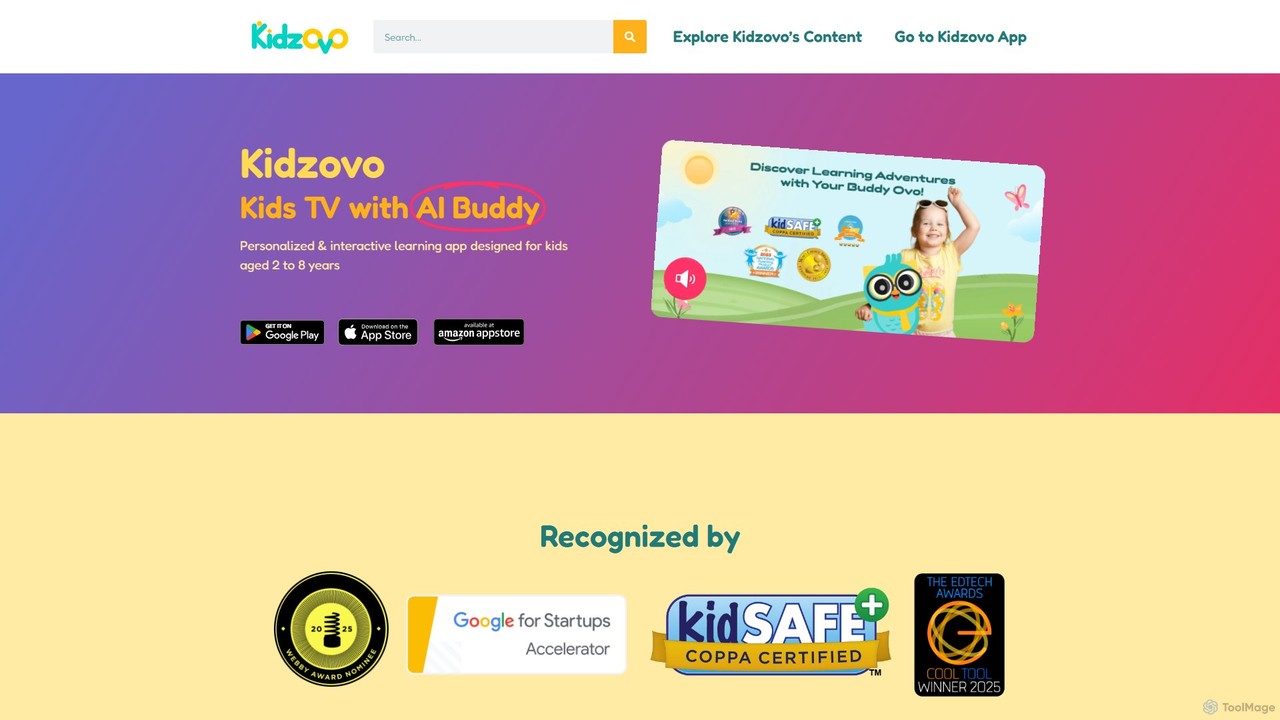
Kidzovo is an AI-powered interactive learning app for children aged 2-8. It transforms passive screen time into an engaging educational experience with an AI Buddy, interactive games, and activities. Featuring content from renowned creators, it covers a wide range of subjects, ensuring a safe, personalized, and fun learning journey for kids.

Early Learning
Visits 16.9KFavorites 100Likes 101
FoloToy
Paid

FoloToy

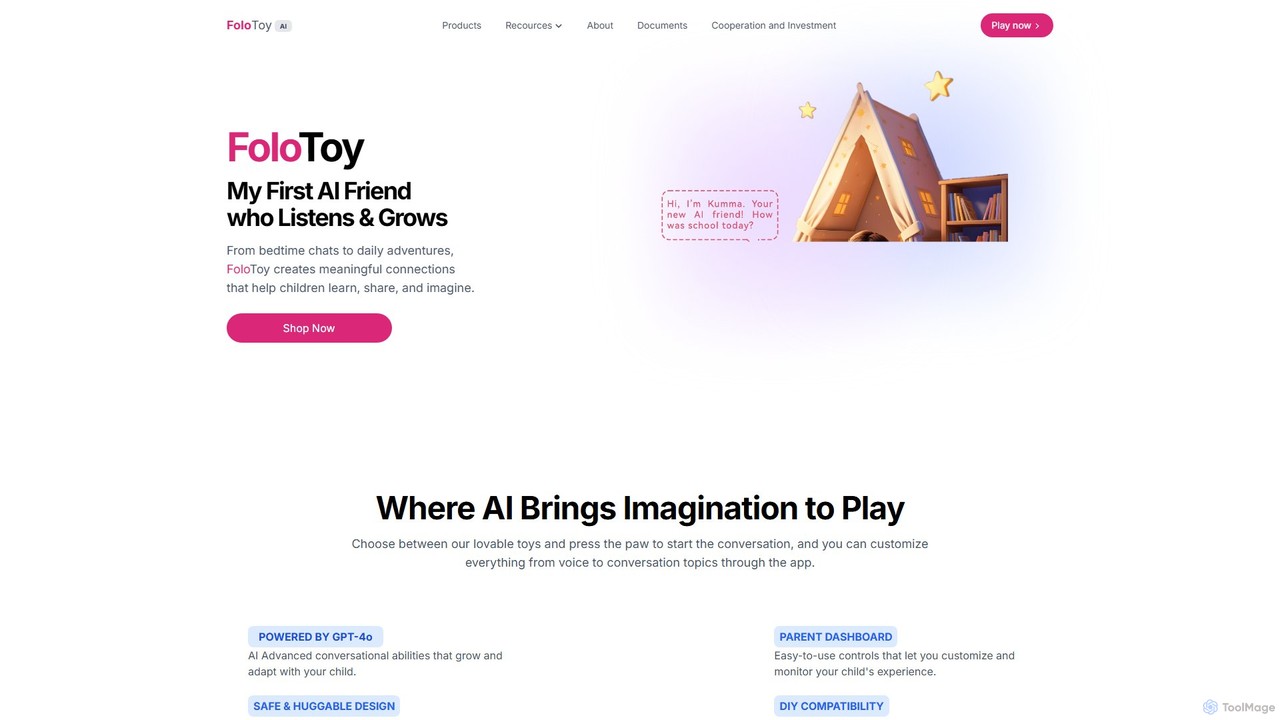
FoloToy is an innovative AI-powered plush toy for children, powered by GPT-4o. It serves as an interactive learning companion, offering personalized conversations, storytelling, and educational activities. With a parent dashboard for safety and a unique DIY kit to transform any toy into an AI friend, FoloToy blends imaginative play with advanced technology.

Early Learning
Visits 15.3KFavorites 104Likes 113

About Early Learning

Early Learning AI tools are specialized platforms that leverage artificial intelligence to support the cognitive, social, and emotional development of young children. These tools utilize adaptive learning algorithms and interactive interfaces to deliver personalized educational content. They aim to make foundational learning engaging and effective, often providing real-time feedback to both children and supervising adults. This sub-category within Education focuses on fostering essential skills from an early age.

Core Features

  • Adaptive Learning Paths: AI analyzes a child's progress and adjusts content difficulty and focus areas dynamically.
  • Interactive Content: Engaging games, stories, and activities powered by AI for personalized interaction.
  • Progress Tracking & Reporting: Detailed insights into a child's learning journey, strengths, and areas for improvement for parents/educators.
  • Speech Recognition & Language Development: Tools that help children practice pronunciation, vocabulary, and conversational skills.
  • Personalized Feedback: AI provides immediate, constructive feedback on tasks, encouraging correct responses and understanding.

Use Cases

Parents can use these tools to supplement traditional schooling with engaging, personalized learning activities at home. Educators in preschools or kindergartens can integrate AI-powered platforms to differentiate instruction and track individual student progress more efficiently. They are also valuable for children needing extra support in specific developmental areas, offering targeted practice.

How to Choose

When selecting an Early Learning AI tool, consider the age appropriateness of the content and its alignment with developmental milestones. Evaluate the level of personalization offered, ensuring it genuinely adapts to the child's pace and style. Look for robust progress tracking features and clear, actionable insights for parents or teachers. Prioritize tools with intuitive, child-friendly interfaces and strong privacy and safety protocols.

Early Learning use cases

1

Personalized Alphabet & Phonics Practice

Parents seeking to enhance their child's literacy skills can utilize Early Learning AI tools that offer interactive alphabet games and phonics exercises. The AI adapts to the child's recognition and pronunciation, providing targeted practice for letters and sounds they struggle with, accelerating foundational reading development.

2

Interactive Storytelling for Language Development

Educators in early childhood settings can deploy AI-powered storytelling apps to foster language comprehension and vocabulary. These tools generate dynamic narratives that respond to a child's choices or questions, introducing new words in context and encouraging active participation, thereby enriching their linguistic exposure.

3

Cognitive Skill Building Through Gamified Challenges

For children needing to develop problem-solving and critical thinking, AI Early Learning platforms offer gamified challenges. The AI presents puzzles, memory games, and logic tasks that incrementally increase in difficulty, providing immediate feedback and scaffolding to help children master new cognitive skills in an engaging format.

4

Early Math Concept Introduction

Parents can introduce fundamental mathematical concepts like counting, number recognition, and basic addition through AI-driven interactive lessons. The AI identifies areas where a child needs more practice, offering varied exercises and visual aids to build a strong foundation in numeracy before formal schooling.

5

Social-Emotional Learning (SEL) Scenarios

Some advanced Early Learning AI tools present interactive scenarios designed to teach social-emotional skills. Children can explore different emotional responses, practice empathy, and learn conflict resolution in a safe, simulated environment, guided by AI feedback that helps them understand social cues and appropriate behaviors.

6

Speech Therapy Support for Articulation

For children requiring speech development support, specialized Early Learning AI tools can assist with articulation practice. Using advanced speech recognition, the AI provides real-time feedback on pronunciation, helping children correct sounds and improve clarity, complementing professional therapy sessions with engaging home practice.

Early Learning FAQ

What are Early Learning AI tools?

Early Learning AI tools are digital platforms that use artificial intelligence to support the developmental and educational needs of young children, typically aged 0-8. They leverage AI to provide personalized, adaptive, and interactive content, focusing on foundational skills like literacy, numeracy, cognitive development, and social-emotional learning. These tools aim to make learning engaging and effective by tailoring experiences to each child's pace and style.

How do Early Learning AI tools personalize education for children?

Early Learning AI tools personalize education by continuously analyzing a child's interactions, progress, and learning patterns. Based on this data, the AI dynamically adjusts the difficulty of tasks, selects relevant content, and identifies areas where a child needs more support or advanced challenges. This adaptive approach ensures that the learning experience is always optimized for the individual child, preventing boredom or frustration.

What are the key benefits of using AI in early childhood education?

The key benefits include highly personalized learning paths that adapt to each child's unique pace and style, leading to more effective skill acquisition. AI tools offer engaging, interactive content that can capture and maintain a child's attention. They also provide valuable data and insights to parents and educators, helping them track progress and identify specific areas for intervention or enrichment.

Are Early Learning AI tools safe and appropriate for young children?

When chosen carefully, Early Learning AI tools can be safe and appropriate. It's crucial to select tools designed specifically for young children, with strong privacy policies, age-appropriate content, and minimal screen time recommendations. Look for platforms that prioritize child safety, avoid excessive advertising, and are endorsed by educational experts or child development specialists. Parental supervision remains essential.

How do Early Learning AI tools differ from traditional educational apps?

Unlike traditional educational apps that often follow a fixed curriculum, Early Learning AI tools are dynamic and adaptive. Traditional apps might offer a set of exercises, but AI tools use algorithms to respond to a child's real-time performance, adjusting content and difficulty on the fly. This means AI tools can offer a truly personalized learning journey, whereas traditional apps provide a more static, one-size-fits-all experience.

How to choose the right Early Learning AI tool for your child?

Choosing the right Early Learning AI tool involves several considerations. First, ensure the content is age-appropriate and aligns with your child's developmental stage. Look for tools that offer genuine personalization, adapting to their learning pace and style. Evaluate the quality of educational content, focusing on interactive and engaging activities. Check for robust progress tracking and clear reporting for parents. Finally, prioritize tools with strong privacy policies, minimal advertising, and a child-friendly interface to ensure a safe and effective learning environment.