
ToolMage
Sign in

Best 5 Elearning AI tools for Education

Popular Elearning AI tools in Education include Play.ht, Presentory, Showzone, uPresenter, and SoundSoReal, helping you work more efficiently.

Presentory
Freemium

Presentory

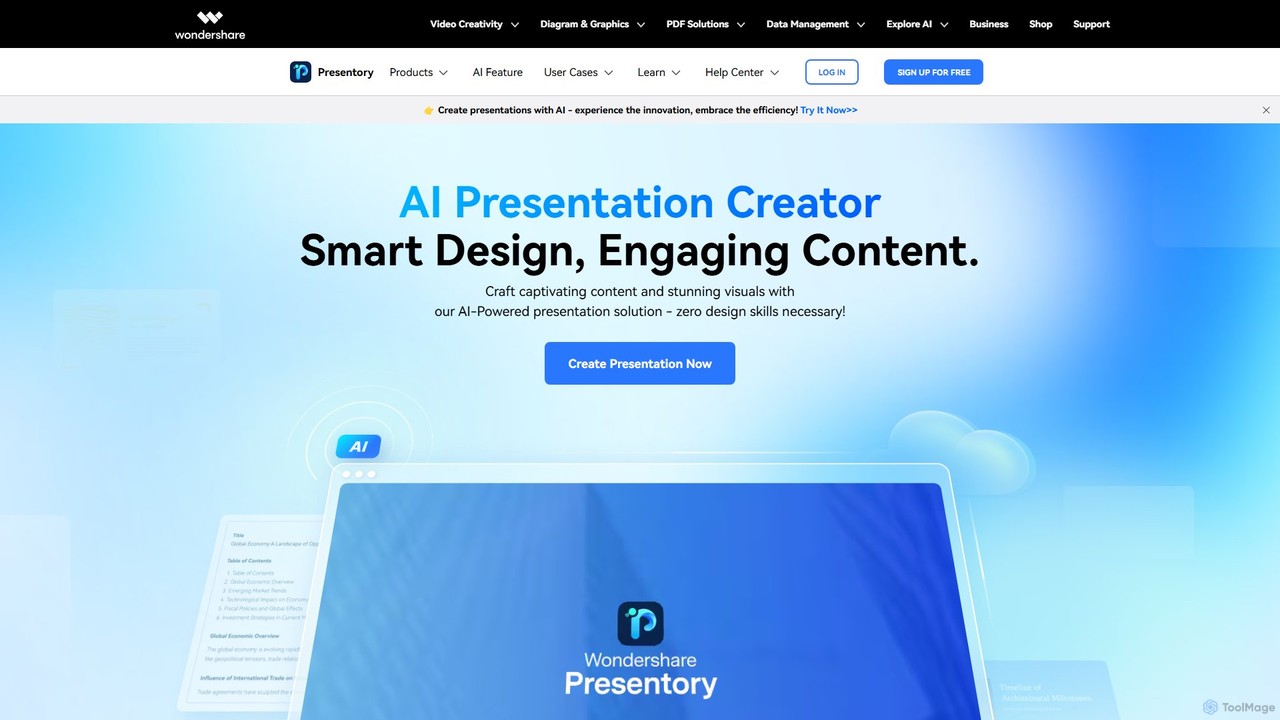
Presentory is an AI-powered presentation maker by Wondershare that enables users to create professional and engaging presentations effortlessly. Leveraging GPT-4, it automates content generation, visual design, and layout adjustments. Ideal for business, education, and marketing, it requires no design skills and offers features like AI image generation, video presentation recording, and seamless sharing in various formats.

Elearning
Visits 13.2KFavorites 92Likes 105

About Elearning

AI Elearning tools are a category of artificial intelligence applications designed to enhance and automate various aspects of online learning and education. These tools leverage AI algorithms to personalize learning experiences, generate educational content, and provide intelligent tutoring. They aim to make learning more engaging, efficient, and accessible for students, educators, and corporate trainers alike, fundamentally transforming traditional digital education.

Core Features

  • Personalized Learning Paths: Dynamically adapts course content and pace based on individual learner progress, style, and knowledge gaps.
  • AI Tutors & Chatbots: Provides instant answers, explanations, and interactive support, simulating a human tutor for complex queries.
  • Automated Content Generation: Creates quizzes, summaries, lesson plans, or even full course modules from raw educational materials.
  • Intelligent Assessment & Feedback: Automatically grades assignments, identifies areas for improvement, and offers targeted, constructive feedback.
  • Learning Analytics & Prediction: Tracks student performance, predicts potential difficulties, and provides insights for educators to intervene proactively.

Applicable Scenarios

AI Elearning tools are widely adopted across various educational and professional settings. Academic institutions use them to scale personalized instruction and support for diverse student populations. Corporate training departments leverage these tools to create adaptive onboarding programs and continuous skill development courses for employees. Individual learners benefit from AI-powered language learning apps and personalized exam preparation platforms.

How to Choose

When selecting an AI Elearning tool, consider its core AI capabilities, such as the sophistication of its personalization engine or the accuracy of its content generation. Evaluate its integration with existing Learning Management Systems (LMS) and other educational platforms. Assess the quality and relevance of its pre-built content, if any, and its ability to handle custom content. Finally, consider user experience, scalability, and data privacy features to ensure it meets your specific educational or training objectives.

Featured tool rankings

Elearning use cases

1

Generate Personalized Learning Paths

Educational institutions or independent educators can utilize AI Elearning tools to automatically generate customized learning paths for students. By analyzing individual learning styles, knowledge levels, and goals, the tool recommends the most suitable resources and activities. This significantly enhances learning efficiency and engagement, ensuring each student receives the most effective educational experience tailored to their needs.

2

Automate Course Content Creation

Content creators and instructional designers can leverage AI Elearning tools to rapidly develop diverse educational materials. By inputting topics, learning objectives, or existing texts, the AI can generate quizzes, summaries, flashcards, or even draft entire lesson modules. This automation drastically reduces the time spent on content development, allowing educators to focus more on pedagogical design and student interaction.

3

Provide Intelligent Tutoring and Q&A

Students facing difficulties with specific concepts can interact with AI tutors or chatbots integrated into Elearning platforms. These AI assistants offer immediate, context-aware explanations, clarify doubts, and guide learners through complex problems step-by-step. This instant support reduces reliance on human instructors for basic queries, ensuring continuous learning progress even outside of scheduled class times.

4

Assess Student Progress and Provide Feedback

Educators can use AI Elearning tools to automate the assessment process for large classes. The AI can grade assignments, identify common misconceptions, and provide detailed, personalized feedback to each student much faster than manual grading. This allows educators to gain deeper insights into student performance, tailor their teaching strategies, and offer timely interventions to improve learning outcomes.

5

Enhance Corporate Training and Onboarding

HR and training departments in companies can deploy AI Elearning platforms to create dynamic and engaging training modules for new hires and existing employees. The AI can adapt content based on job roles, skill gaps, and individual learning pace, ensuring efficient knowledge transfer and skill development. This leads to faster onboarding, improved employee performance, and significant cost savings compared to traditional training methods.

6

Facilitate Language Learning with AI Companions

Language learners can utilize AI Elearning tools that act as conversational partners, providing real-time feedback on pronunciation, grammar, and vocabulary. These AI companions offer immersive practice environments, simulating real-life dialogues and adapting to the learner's proficiency level. This accelerates language acquisition by providing consistent, non-judgmental practice opportunities anytime, anywhere, making it a highly effective supplement to traditional classes.

Elearning FAQ

What are AI Elearning tools?

AI Elearning tools are software applications that integrate artificial intelligence to enhance and automate various aspects of online education. They leverage technologies like machine learning, natural language processing, and computer vision to offer personalized learning experiences, intelligent tutoring, automated content generation, and advanced analytics. These tools aim to make digital learning more adaptive, engaging, and efficient for a wide range of users, from K-12 students to corporate professionals.

How do AI Elearning tools personalize learning?

AI Elearning tools personalize learning by continuously analyzing a student's performance, learning style, and engagement patterns. Based on this data, the AI dynamically adjusts the curriculum, recommends specific resources, modifies the pace of instruction, and even suggests alternative teaching methods. This adaptive approach ensures that each learner receives content and support tailored to their individual needs, optimizing their learning journey and improving retention.

What are the benefits of using AI Elearning tools for educators?

For educators, AI Elearning tools offer significant benefits by automating administrative tasks like grading and content creation, freeing up valuable time for more impactful activities. They provide deep insights into student performance and learning gaps through advanced analytics, enabling more targeted interventions. Furthermore, AI tools facilitate the creation of highly personalized learning environments, allowing educators to cater to diverse student needs more effectively and improve overall teaching efficacy.

How do AI Elearning tools differ from traditional Elearning platforms?

The key difference between AI Elearning tools and traditional Elearning platforms lies in their adaptability and intelligence. Traditional platforms primarily deliver static content and rely on pre-set paths, while AI Elearning tools use algorithms to dynamically adjust content, provide real-time feedback, and offer personalized support. AI tools can learn from user interactions, predict performance, and automate tasks, creating a much more interactive, responsive, and tailored learning experience that traditional systems cannot match.

What are the privacy concerns with AI Elearning tools?

Privacy concerns with AI Elearning tools primarily revolve around the collection and use of sensitive student data, including academic performance, behavioral patterns, and personal information. It's crucial to ensure that tools comply with data protection regulations like GDPR or FERPA. Users should look for platforms with robust encryption, clear data usage policies, and options for data anonymization. Transparency about how data is collected, stored, and utilized is paramount to maintaining trust and protecting learner privacy.