StarQuiz
StarQuiz is an AI-powered formative assessment platform for K-12 and higher education. It instantly transforms lesson materials, such …
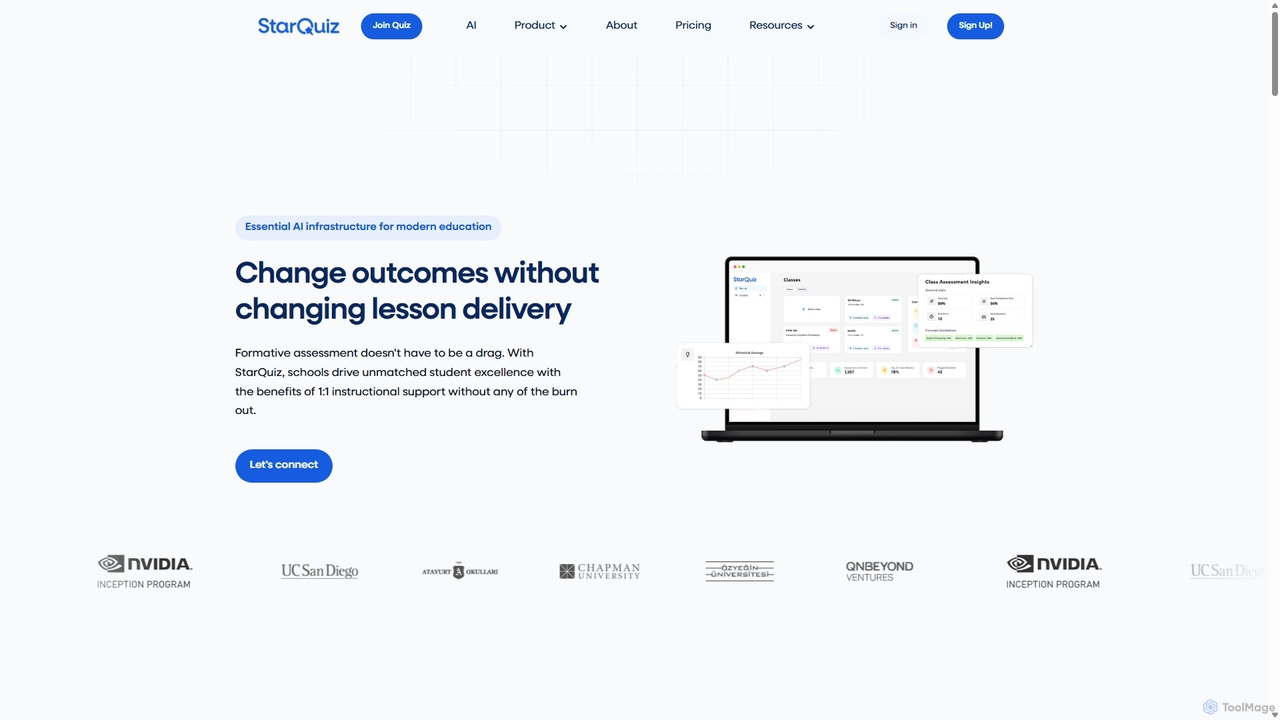
StarQuiz is an AI-powered formative assessment platform for K-12 and higher education. It instantly transforms lesson materials, such as lectures and documents, into interactive quizzes. Teachers gain real-time insights into student comprehension, while students receive immediate feedback to enhance learning. The platform streamlines grading, supports personalized instruction, and integrates with Learning Management Systems (LMS) to improve educational outcomes without increasing teacher workload.
About Learning Analytics
Learning Analytics are AI-powered tools that systematically collect, analyze, and report data about learners and their learning environments. These tools leverage machine learning and statistical models to uncover patterns, predict academic outcomes, and provide actionable insights. They aim to optimize educational processes, personalize learning experiences, and enhance academic success for students and institutions.
Core Features
- Student Performance Prediction: Forecasts academic outcomes based on historical data and engagement metrics.
- Engagement Monitoring: Tracks student activity, participation, and interaction within learning platforms.
- Personalized Feedback & Recommendations: Delivers tailored suggestions for learning resources or intervention strategies.
- Learning Pathway Optimization: Identifies effective learning sequences and suggests improvements for course design.
- Curriculum Effectiveness Analysis: Evaluates the impact of course content and teaching methods on learning outcomes.
Use Cases
Educational institutions use Learning Analytics to identify at-risk students early, allowing for timely intervention. Educators apply these tools to understand student engagement with course materials and adapt teaching strategies. Researchers utilize them to study the efficacy of different pedagogical approaches and learning designs.
How to Choose
When selecting Learning Analytics tools, consider the scope of data integration (LMS, SIS, external platforms), the sophistication of predictive models, the clarity and customizability of reporting dashboards, and compliance with data privacy regulations (e.g., GDPR, FERPA). Evaluate the ease of use for educators and administrators, and the level of support for interpreting complex data.

Learning AnalyticsUse Cases
Proactive Identification of At-Risk Students
Educational administrators and academic advisors use Learning Analytics to monitor student engagement, assignment submissions, and performance trends. The tools flag students showing early signs of disengagement or academic difficulty, enabling advisors to initiate timely outreach and provide targeted support, significantly reducing dropout rates and improving retention.
Tailoring Individualized Learning Journeys
Educators leverage Learning Analytics to understand each student's strengths, weaknesses, and preferred learning styles. The AI analyzes performance data and recommends personalized learning resources, adaptive quizzes, or alternative content, ensuring students receive instruction best suited to their needs, thereby enhancing comprehension and retention of material.
Optimizing Course Content & Design
Course designers and instructors utilize Learning Analytics to evaluate how students interact with different modules, assignments, and multimedia content. By analyzing engagement metrics and performance data, they can identify bottlenecks, confusing sections, or underperforming materials, leading to data-driven revisions that improve overall course quality and student outcomes.
Assessing Program Efficacy
University leadership and curriculum committees employ Learning Analytics to assess the long-term effectiveness of entire academic programs. By tracking student progression, skill acquisition, and post-graduation success rates, institutions can make informed decisions about program restructuring, resource allocation, and ensuring alignment with industry demands.
Improving Teacher Professional Development
School districts and professional development teams use Learning Analytics to understand teaching effectiveness across classrooms. By analyzing aggregated student performance data linked to specific teaching methodologies, they can identify areas where teachers might need additional training or support, fostering continuous improvement in instructional practices and pedagogical skills.
Enhancing Student Engagement in Online Learning
Online learning platforms and instructors deploy Learning Analytics to combat disengagement in virtual environments. Tools track login frequency, forum participation, video watch times, and quiz attempts. This data helps instructors intervene with personalized messages, create more interactive content, or adjust pacing to keep remote learners actively involved and motivated.