ToolMage
Sign in

Best 3 Mentorship AI tools for Education

Popular Mentorship AI tools in Education include AI Builder Buddy, GrowthQ, and PGs Principles, helping you work more efficiently.

GrowthQ
Freemium

GrowthQ

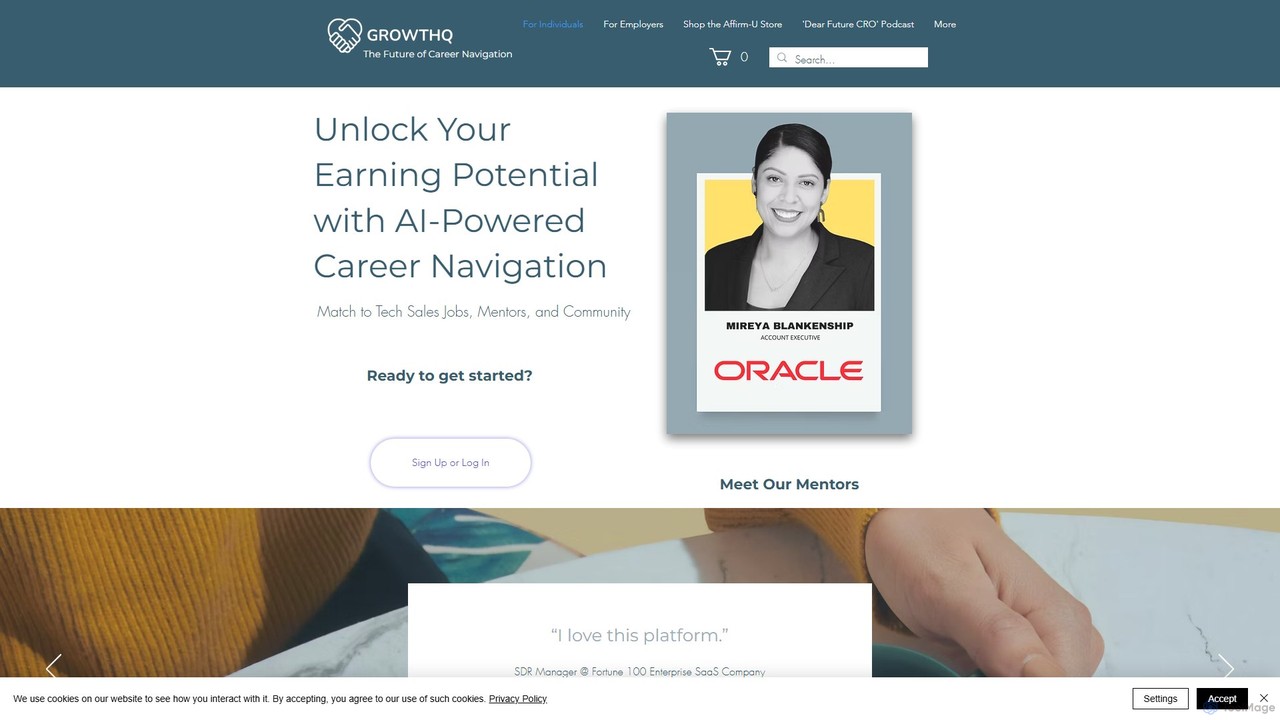
GrowthQ is an AI-powered career navigation platform specializing in the B2B and tech sales industry. It connects professionals with job opportunities, experienced mentors, and a supportive community. The platform creates personalized career roadmaps, offers interview preparation, and delivers custom learning plans to help users achieve their career goals and unlock their earning potential.

Job Search
Visits 5.5KFavorites 129Likes 106
PGs Principles
Free

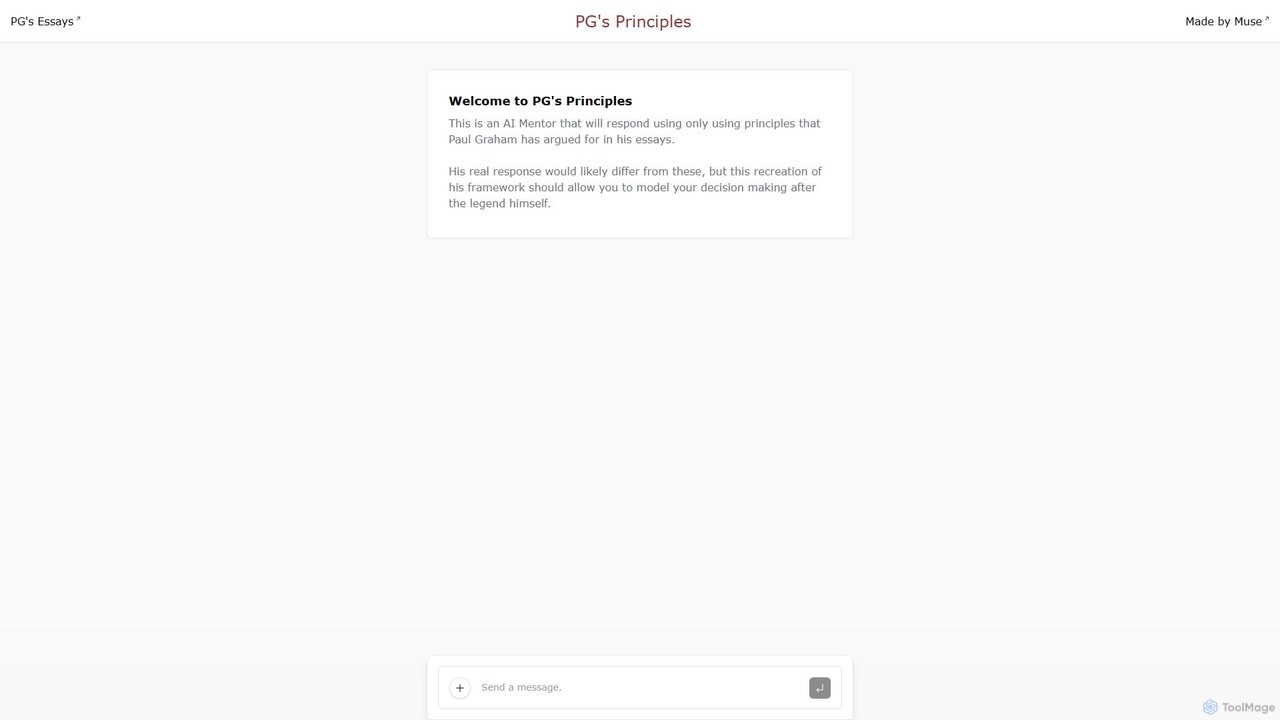
PGs Principles

An AI mentor that provides advice and answers questions based exclusively on the principles and essays of Paul Graham, co-founder of Y Combinator. Ideal for entrepreneurs, founders, and developers seeking guidance.

Startup Tools
Visits 5.4KFavorites 154Likes 160
AI Builder Buddy
Paid

AI Builder Buddy

AI Builder Buddy acts as your on-demand technical co-founder, providing 1-on-1 expert AI engineering support for non-technical founders, product managers, and designers. Get unstuck, build AI agents and apps with confidence, and launch faster with a guaranteed 2-hour response time for any technical roadblock.

Consulting
Visits 6.2KFavorites 167Likes 134

About Mentorship

AI Mentorship tools are platforms that use artificial intelligence to facilitate and scale effective mentoring relationships. They leverage algorithms to intelligently match mentors and mentees, provide structured guidance, and track progress towards specific goals. These tools, a specialized part of the AI Education landscape, are designed to democratize access to valuable guidance, accelerating personal and professional development. By automating administrative tasks and offering data-driven insights, they make mentorship programs more efficient and impactful.

Core Features

  • Intelligent Matching: Uses AI to pair individuals based on skills, experience, goals, and personality traits.
  • Structured Pathways: Provides customizable templates, agendas, and milestones to guide the mentorship journey.
  • Skill Gap Analysis: Identifies development areas and suggests relevant discussion topics or learning resources.
  • Communication & Scheduling: Offers integrated tools for secure messaging, video calls, and calendar synchronization.
  • Program Analytics: Delivers dashboards and reports to measure engagement, satisfaction, and overall program ROI.

Use Cases

These tools are widely adopted in corporate environments for employee onboarding, leadership development, and diversity and inclusion initiatives. Educational institutions use them to connect students with alumni for career guidance. Professional associations and online communities also leverage them to foster knowledge sharing among members.

How to Choose

When selecting an AI Mentorship tool, evaluate the sophistication of its matching algorithm and the level of customization available. Consider the platform's user experience for both mentors and mentees, its integration capabilities with existing HR or learning systems, and the robustness of its analytics and reporting features. Finally, assess the pricing model and its scalability to ensure it aligns with your organization's size and budget.

Mentorship use cases

1

Accelerating Corporate Employee Onboarding

HR managers and team leads in large enterprises use AI Mentorship platforms to streamline the onboarding process for new hires. Upon joining, a new employee completes a profile outlining their skills, role, and development goals. The AI algorithm instantly matches them with a suitable experienced colleague who acts as a mentor. The platform provides a structured 30-60-90 day plan with suggested meeting topics, helping the new hire quickly adapt to the company culture, understand their role, and build internal networks. This significantly reduces ramp-up time and improves first-year employee retention.

2

Connecting University Students with Alumni Mentors

University career services departments implement AI Mentorship tools to connect current students with alumni working in their fields of interest. A student seeking career advice can create a profile specifying their major, industry preferences, and questions. The AI then suggests a list of alumni mentors whose career paths and expertise align with the student's goals. Through the platform, the student can schedule informational interviews, get resume feedback, and gain insights into their target industry. This scalable approach provides students with invaluable real-world guidance that career advisors alone cannot offer.

3

Facilitating Leadership Development Programs

A company's Learning & Development (L&D) department uses an AI Mentorship platform to support its high-potential employee leadership program. The platform matches emerging leaders with senior executives for a 6-month structured mentorship. The AI suggests discussion topics aligned with the company's leadership competencies, such as strategic thinking and team management. It also provides resources and tracks the completion of development goals. This provides a personalized and scalable way to nurture future leaders, ensuring a strong leadership pipeline for the organization.

4

Supporting Diversity and Inclusion Initiatives

A Diversity, Equity, and Inclusion (DEI) officer uses an AI Mentorship tool to create pairings that support underrepresented employees. The AI can be configured to prioritize cross-departmental and cross-level matches, helping to break down silos and increase visibility for diverse talent. By matching junior employees from minority groups with senior leaders, the program fosters sponsorship and provides crucial career navigation support. The platform's analytics help the DEI officer track the program's impact on promotion rates and employee satisfaction among these groups, providing data to justify and improve the initiative.

5

Enabling Peer-to-Peer Knowledge Sharing

In a large, geographically dispersed organization, a knowledge manager uses an AI Mentorship platform to facilitate peer-to-peer learning. An employee needing help with a specific software or skill (e.g., advanced Excel formulas) can submit a request. The AI scans employee skill profiles and identifies colleagues with the required expertise who are willing to help. It then facilitates a short-term, focused mentorship or a one-time help session. This democratizes knowledge, solves problems faster, and fosters a collaborative culture without the need for formal, long-term mentorship commitments.

6

Guiding Startup Founders with Experienced Entrepreneurs

A startup accelerator or incubator program uses an AI Mentorship platform to connect its cohort of founders with a network of experienced entrepreneurs and industry experts. A founder facing a specific challenge, such as fundraising strategy or product-market fit, can be matched with a mentor who has successfully navigated that exact issue. The platform structures the interaction, suggesting key questions and milestones. This provides targeted, just-in-time advice that is critical for early-stage startup survival and growth, scaling the impact of the accelerator's mentor network.

Mentorship FAQ

What is an AI Mentorship tool?

An AI Mentorship tool is a software platform that uses artificial intelligence to create, manage, and optimize mentorship programs. Its primary function is to automate the process of matching mentors with mentees based on data points like skills, career goals, and personality. Beyond matching, these tools provide a structured framework for the relationship with features like goal setting, progress tracking, communication channels, and resource sharing. They are designed to make mentorship more accessible, scalable, and measurable for organizations.

How do I choose the right AI Mentorship platform?

To choose the right platform, consider these key factors:

  • Matching Algorithm: Evaluate its sophistication. Does it consider skills, goals, personality, and learning styles? Can the matching criteria be customized?
  • User Experience: The platform should be intuitive and engaging for both mentors and mentees to encourage adoption and continued use.
  • Program Management Features: Look for robust tools for administrators to set up programs, track participation, send communications, and gather feedback.
  • Analytics and Reporting: Ensure it provides meaningful data on program health, participant satisfaction, and impact on business goals like retention and promotion rates.
  • Integrations: Check if it can integrate with your existing HRIS, LMS, or communication tools (like Slack or Teams) for a seamless workflow.
What's the difference between AI Mentorship and a Learning Management System (LMS)?

The core difference lies in their focus. An LMS is a system for delivering and tracking formal educational content, like courses and training modules. It's a one-to-many content delivery system. In contrast, an AI Mentorship platform is focused on facilitating one-to-one or small group human relationships for development. While an LMS manages content, an AI Mentorship tool manages connections between people. An LMS helps employees learn *what* they need to know, whereas a mentorship platform helps them learn *how* to apply that knowledge and navigate their careers through personalized human guidance.

Who can benefit from using AI Mentorship tools?

A wide range of users can benefit. For organizations, HR and L&D departments use them to scale employee development, improve retention, and build a stronger company culture. For individuals, mentees gain access to experienced guidance to accelerate their career growth, while mentors get a structured way to give back and develop their own leadership skills. Educational institutions use them to bridge the gap between academia and industry by connecting students with alumni. Essentially, anyone looking to implement a structured, scalable, and data-driven mentorship program can benefit.

How does the AI matching process work in these tools?

The AI matching process typically begins with both mentors and mentees completing detailed profiles. This data includes hard skills (like programming languages), soft skills (like communication), career goals, industry experience, job roles, and sometimes even personality traits assessed through questionnaires. The AI algorithm then analyzes this data using techniques like natural language processing (NLP) and machine learning to find the best possible pairings. It goes beyond simple keyword matching to understand the context and compatibility between individuals, often weighting different factors based on the program's specific goals.