ToolMage
Sign in

Best 4 Prompt Engineering AI tools for Education

Popular Prompt Engineering AI tools in Education include Prompt Advance, The Prompt Engineering Institute, AI Content Reactor, and Promptmaster, helping you work more efficiently.

AI Content Reactor
Paid

AI Content Reactor

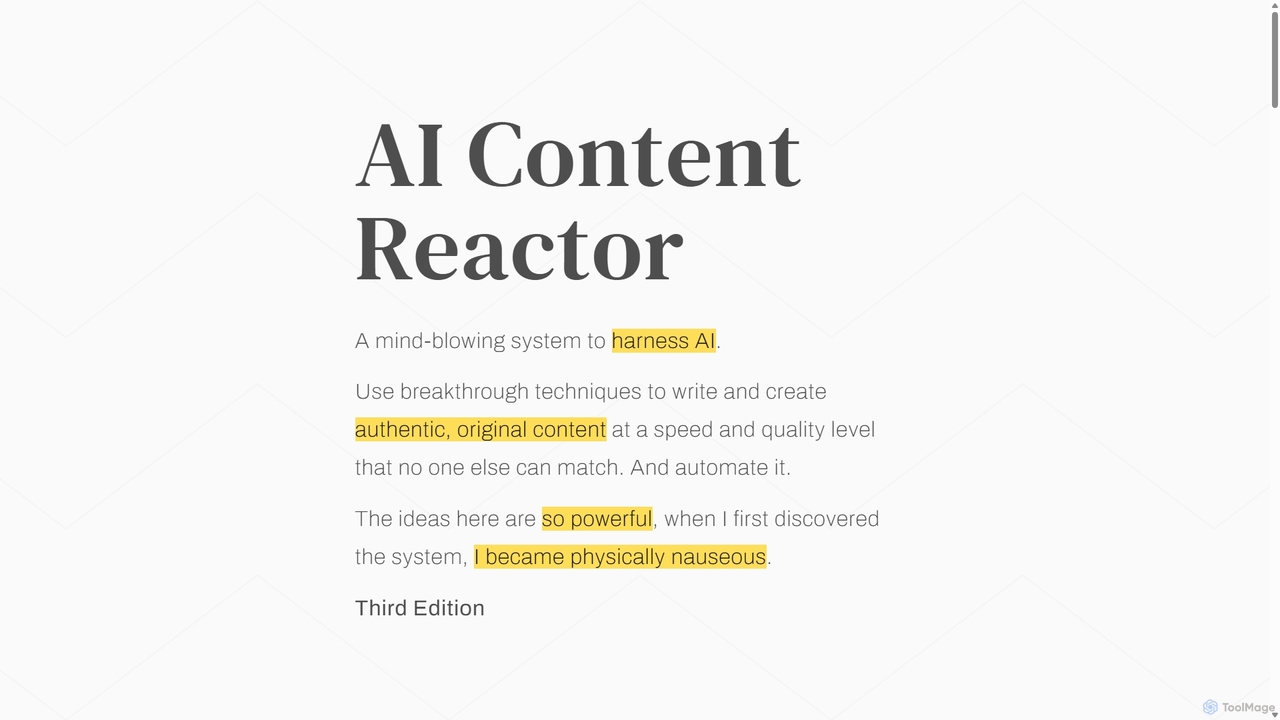
AI Content Reactor is a comprehensive system and course by Rob Lennon that teaches advanced prompt engineering and automation. It empowers creators, marketers, and writers to produce authentic, high-quality, and original content at scale by cloning their unique style and automating the entire content workflow.

Prompt Engineering
Visits 5.6KFavorites 126Likes 104
Promptmaster
Freemium

Promptmaster

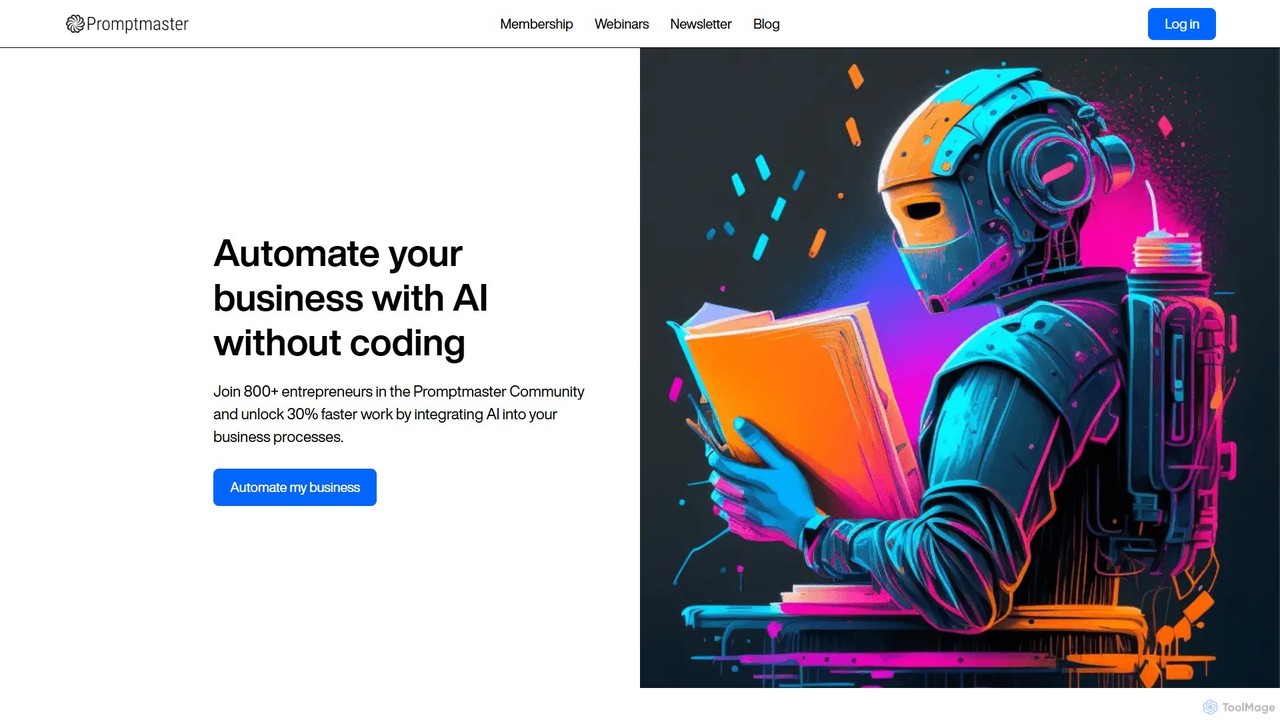
Promptmaster is an educational platform by AI expert Dave Talas, offering a popular newsletter with practical tips, tutorials, and insights on generative AI. It's designed for business owners, professionals, and enthusiasts to master AI tools and stay ahead in the rapidly evolving AI landscape.

Prompt Engineering
Visits 5.5KFavorites 128Likes 139
The Prompt Engineering Institute
Freemium

The Prompt Engineering Institute

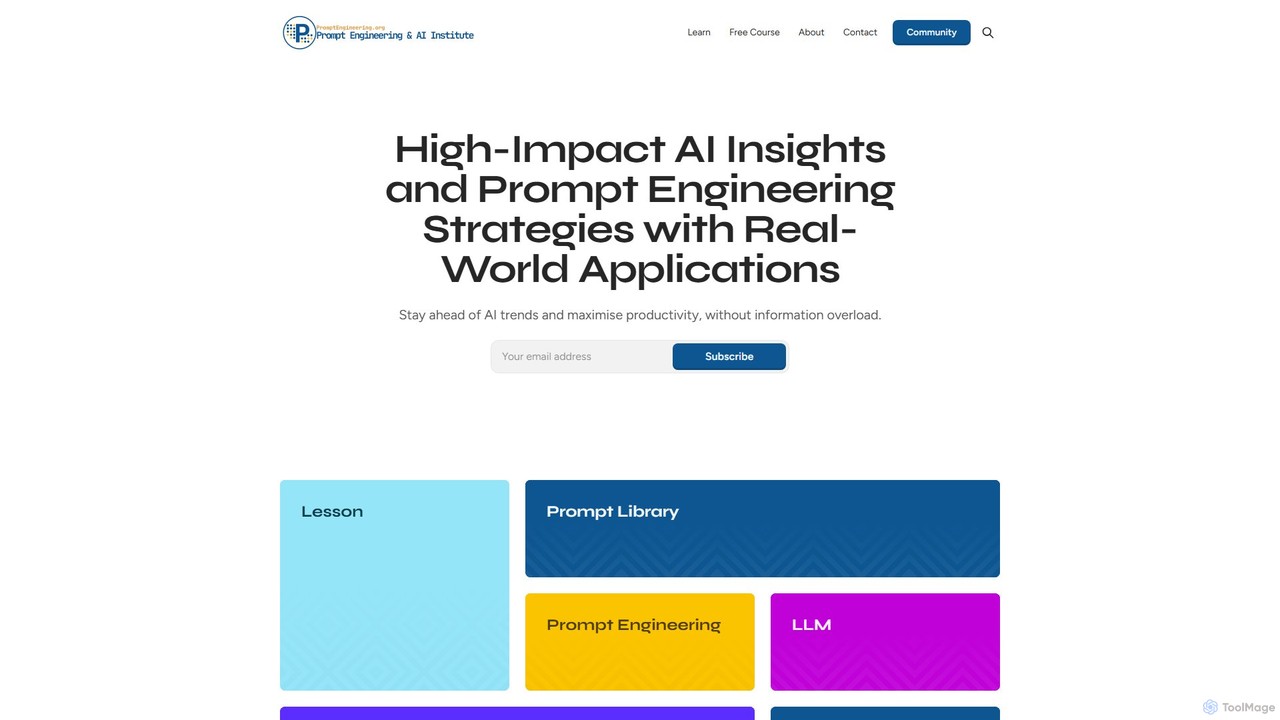
An expert-led educational platform offering high-impact AI insights, prompt engineering strategies, courses, and a prompt library. Founded by Sunil Ramlochan, it helps professionals and businesses master AI, stay ahead of trends, and maximize productivity with real-world applications.

Prompt Engineering
Visits 22.6KFavorites 103Likes 113
Prompt Advance
Free

Prompt Advance

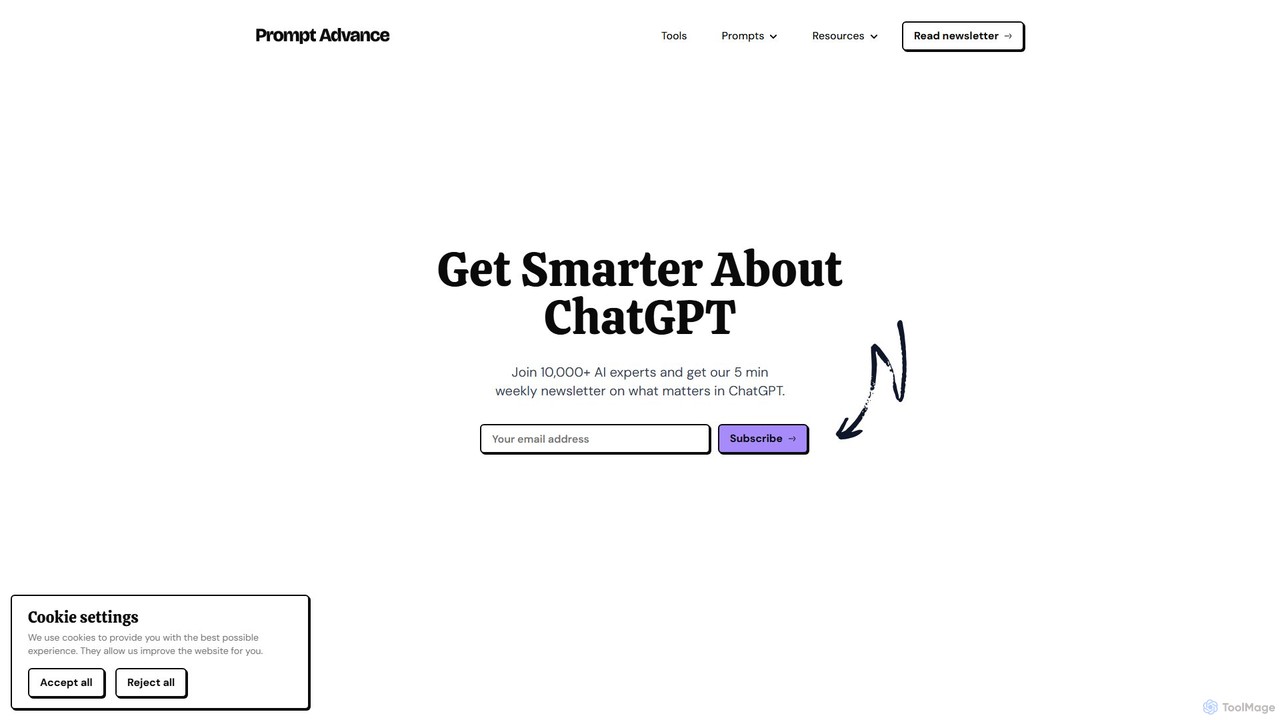
Prompt Advance is an educational platform dedicated to mastering ChatGPT. It offers a free weekly newsletter, an extensive blog with thousands of practical prompts, and a suite of free AI tools, including a prompt optimizer and generator. It's designed for professionals, students, and creators to enhance their productivity and creativity using AI.

Prompt Engineering
Visits 71KFavorites 139Likes 138

About Prompt Engineering

Prompt Engineering tools are specialized platforms for designing, testing, and optimizing instructions for large language models (LLMs). These tools provide a structured environment to move beyond simple trial-and-error, enabling users to systematically refine prompts for accuracy, consistency, and efficiency. By using features like version control, A/B testing, and performance analytics, they transform prompt creation into a data-driven engineering discipline. This is essential for developers and teams building reliable AI applications or standardizing AI-generated content at scale.

Core Features

  • Prompt Templating: Create reusable prompt structures with dynamic variables for different scenarios.
  • Version Control: Track changes to prompts over time, allowing for rollbacks and comparisons.
  • A/B Testing Environment: Compare the performance of different prompt variations against each other with the same inputs.
  • Performance Analytics: Measure and analyze outputs based on metrics like quality, latency, and cost.
  • Collaboration Workspace: Share, comment on, and manage prompts within a team to maintain consistency.

Use Cases

These tools are primarily used by AI developers, machine learning engineers, and content strategy teams. For instance, a developer building a customer service chatbot can use a prompt engineering tool to fine-tune the bot's personality and response accuracy. A marketing team can create a library of tested prompts to ensure all AI-generated copy adheres to brand guidelines.

How to Choose

When selecting a Prompt Engineering tool, consider its compatibility with various LLMs (e.g., GPT series, Claude, Llama). Evaluate the depth of its testing and analytics features. For teams, collaboration capabilities and integration with existing development workflows (like CI/CD pipelines via APIs) are crucial factors. Finally, assess the user interface's complexity and whether it matches your team's technical skill level.

Prompt Engineering use cases

1

Develop a Consistent Chatbot Persona

An AI developer is tasked with creating a customer support chatbot that must maintain a friendly yet professional tone. Using a prompt engineering tool, they create a base system prompt defining the persona. They then use the A/B testing feature to compare variations, such as one that uses more emojis versus one that is more formal. By analyzing user interaction scores and response quality metrics within the tool, the developer can select the optimal prompt that consistently delivers the desired brand voice, reducing development time and improving user experience.

2

Standardize Marketing Copy Generation

A marketing team needs to generate social media posts for multiple product lines while maintaining a consistent brand voice. A content strategist uses a prompt engineering platform to create a shared library of prompt templates. Each template includes placeholders for product names, key features, and target audience. Team members can select a template, fill in the variables, and generate copy. The platform's version control ensures that only approved and tested prompts are used, preventing off-brand messaging and improving the efficiency of content creation across the team.

3

Optimize Prompts for Structured Data Extraction

A data analyst needs to extract specific information, like company names and invoice amounts, from thousands of unstructured text documents. Initially, their prompts produce inconsistent or inaccurate JSON outputs. They use a prompt engineering tool to systematically test different prompt structures, such as adding few-shot examples or specifying the exact output schema. The tool's analytics dashboard allows them to compare the accuracy and error rates of each prompt version. This iterative process helps them find a highly reliable prompt that automates the data extraction task with over 99% accuracy.

4

Learn Prompt Design Principles

A student learning about AI uses a prompt engineering tool as an educational sandbox. They can experiment with concepts like chain-of-thought, zero-shot, and few-shot prompting. The tool's interface allows them to easily compare the outputs from these different techniques side-by-side. By observing how small changes in wording, structure, or examples drastically alter the model's response, they gain a practical, hands-on understanding of how LLMs interpret instructions. This accelerates their learning process far more effectively than just reading theory.

5

Refine Prompts for Complex Code Generation

A software developer is using an LLM to generate complex code snippets, but the initial results contain bugs or are inefficient. Using a prompt engineering platform, they version control their prompts as they add more context, specify coding standards, and provide examples of desired output. They can run test suites against the generated code from different prompt versions to measure correctness and performance. This systematic approach allows them to engineer a prompt that reliably produces high-quality, bug-free code, integrating AI assistance seamlessly into their development workflow.

6

Manage a Collaborative Prompt Library

A large enterprise's AI Center of Excellence needs to govern the use of LLMs across different departments. They use a prompt engineering platform to build and manage a central library of approved prompts. Prompts are categorized by function (e.g., summarization, translation, sentiment analysis) and access is controlled by roles. When a prompt needs updating, a designated prompt engineer can modify it, and the changes are instantly available to all users. This centralized management ensures quality, security, and consistency, preventing the proliferation of ineffective or risky prompts within the organization.

Prompt Engineering FAQ

What are Prompt Engineering tools?

Prompt Engineering tools are software platforms that help users systematically create, test, and manage prompts for AI models like LLMs. Instead of just guessing what might work, these tools provide a structured process. Key features often include version control to track changes, A/B testing to compare different prompts, and analytics to measure performance. They are designed for developers, researchers, and content teams who need to get reliable and consistent results from AI models for applications, content generation, or data analysis.

How do I choose the right Prompt Engineering tool?

Choosing the right tool depends on your specific needs. Consider the following factors:

  • Model Compatibility: Ensure the tool supports the LLMs you use (e.g., OpenAI's GPT series, Anthropic's Claude, Google's Gemini).
  • Key Features: Do you need advanced A/B testing, detailed cost/latency analytics, or robust version control? Prioritize tools with the features most critical to your workflow.
  • Collaboration: If you work in a team, look for features like shared workspaces, commenting, and role-based access control.
  • Integration: Check for API access or integrations with your existing development tools (like GitHub or CI/CD pipelines) to automate your processes.
  • User Experience: Select a tool with an interface that matches your team's technical expertise, whether it's a code-first SDK or a user-friendly GUI.
What's the difference between simple prompt writing and Prompt Engineering?

Simple prompt writing is often an intuitive, trial-and-error process where an individual writes a prompt to get a one-off result. Prompt Engineering, on the other hand, is a systematic and scientific discipline. It involves designing prompts with specific structures, iteratively testing variations, analyzing performance data (like accuracy, cost, and bias), and managing prompts over their lifecycle. Prompt Engineering tools support this discipline by providing the necessary infrastructure for testing, versioning, and collaboration, turning an art into a repeatable engineering process, which is crucial for building production-grade AI systems.

Who should use Prompt Engineering tools?

Prompt Engineering tools are valuable for a range of professionals. AI/ML Engineers and Developers use them to build and productionize reliable LLM-powered applications. Content Creators and Marketers use them to maintain brand consistency and scale content generation. Data Scientists use them to refine prompts for complex data analysis and extraction tasks. Researchers use them to systematically study the behavior of AI models. Essentially, anyone who needs to move from casual, one-off interactions with an LLM to a more structured, scalable, and reliable process can benefit from these tools.

Are Prompt Engineering tools only for developers?

No, not exclusively. While many advanced tools are designed with developers in mind (offering APIs and SDKs), a growing number of platforms feature user-friendly graphical interfaces (GUIs). These GUI-based tools are accessible to non-technical users like marketers, writers, and business analysts. They allow users to create prompt templates, run tests, and analyze results without writing any code. This empowers entire organizations to adopt a more structured approach to using AI, ensuring that the quality and consistency of AI outputs are maintained across all departments, not just within the engineering team.