ToolMage
Sign in

Best 1 Screenwriting AI tools for Education

Popular Screenwriting AI tools in Education include Subtxt, helping you work more efficiently.

Subtxt
Paid

Subtxt

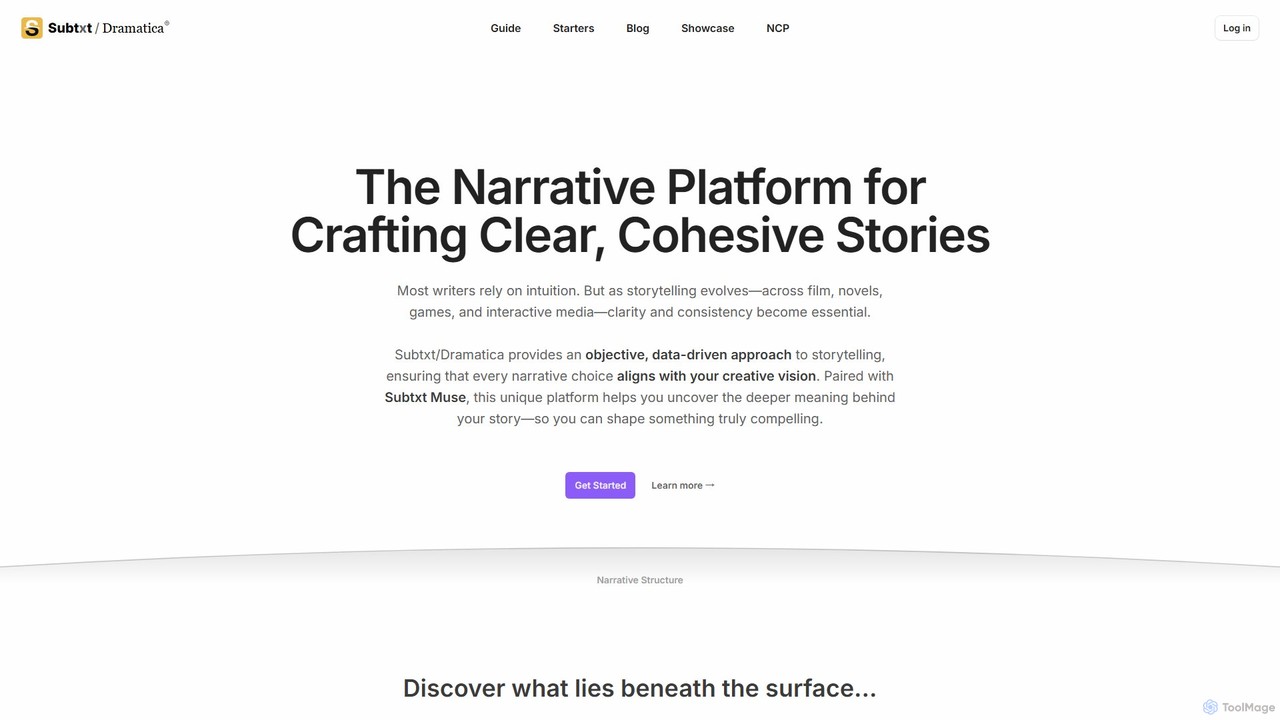
Subtxt is an AI-powered narrative platform designed for writers, screenwriters, and game designers. It uses the Dramatica theory of story to provide an objective, data-driven framework for crafting clear, cohesive, and compelling narratives. Subtxt helps you analyze plot, character, theme, and conflict to ensure your creative vision is structurally sound.

Storytelling
Visits 18.6KFavorites 94Likes 113

About Screenwriting

AI Screenwriting tools are a category of artificial intelligence applications specifically designed to assist writers in the creation and refinement of screenplays for film, television, and theater. These advanced tools leverage natural language processing (NLP) and generation (NLG) to streamline various stages of script development, from initial concept brainstorming to dialogue polishing and structural analysis. They significantly enhance creative workflows, offering innovative solutions for storytellers by automating repetitive tasks and providing creative prompts. As a specialized segment within AI tools for education and creative arts, they empower both seasoned professionals and aspiring writers to develop compelling narratives more efficiently.

Core Features

  • Story Generation: Brainstorm plot ideas, character arcs, and scene outlines.
  • Dialogue Writing: Suggest realistic and contextually appropriate dialogue.
  • Character Development: Create detailed character profiles and backstories.
  • Plot Structuring: Assist in outlining traditional narrative structures like the three-act structure.
  • Feedback & Analysis: Provide insights on pacing, tone, and genre conventions.

Applicable Scenarios

These tools are invaluable for professional screenwriters developing new projects, aspiring writers learning the craft, and content creators needing rapid story ideation. They support individual creators in overcoming writer's block and facilitate team collaboration on complex narratives, accelerating the entire scriptwriting process. From initial concept to final draft, AI screenwriting tools enhance efficiency and creative output.

How to Choose

When selecting an AI screenwriting tool, consider its narrative intelligence and ability to understand genre nuances. Evaluate its customization options for character and plot, integration with existing writing software, and the quality of its dialogue generation. Also, assess its learning curve, the availability of analytical feedback features, and its capacity to support your specific creative workflow and project scale.

Screenwriting use cases

1

Generating Initial Story Concepts

A budding screenwriter uses an AI tool to brainstorm unique plot twists, genre blends, and thematic ideas for a new film project. This helps overcome writer's block by providing diverse creative prompts and narrative starting points, accelerating the initial ideation phase and allowing for exploration of unconventional story angles.

2

Developing Detailed Character Backstories

A TV series writer employs AI to create rich, consistent backstories, personality traits, and motivations for a large ensemble cast. This ensures character depth and coherence across multiple episodes and seasons, saving significant time in manual character bible creation and maintaining narrative consistency for complex story arcs.

3

Automating Scene Outline Creation

A busy film producer or director uses AI to quickly generate scene-by-scene outlines from a high-level synopsis or treatment. This accelerates the pre-production phase by providing a structured framework, allowing for faster visualization and planning of the narrative flow, and ensuring all key plot points are covered efficiently.

4

Refining Dialogue for Authenticity

A playwright or screenwriter utilizes AI to suggest more natural, impactful, and character-specific dialogue for their script. The tool analyzes context and character voice, improving the emotional resonance and realism of conversations, making characters sound more distinct and authentic to their established personalities.

5

Adapting Stories for Different Formats

A content creator uses AI to transform a novel, short story, or even a podcast transcript into a screenplay format. The tool structures the content with appropriate scene headings, action lines, and character cues, making it ready for visual media adaptation and saving considerable time in manual formatting and structural conversion.

6

Analyzing Script Pacing and Structure

A student screenwriter submits their draft to an AI tool for comprehensive feedback on narrative flow, pacing, and adherence to genre conventions. The AI identifies areas where tension could be built, plot holes, or structural inconsistencies, guiding improvements for a more compelling and professionally structured story.

Screenwriting FAQ

What are AI Screenwriting tools?

AI Screenwriting tools are software applications that utilize artificial intelligence, primarily natural language processing (NLP) and natural language generation (NLG), to assist in the various stages of script creation. These tools are designed to streamline the writing process by offering features like plot generation, character development, dialogue suggestions, and structural analysis. They act as intelligent creative assistants, helping writers overcome blocks, refine narratives, and ensure consistency across their screenplays for film, television, and theatrical productions.

How do AI Screenwriting tools assist writers?

AI screenwriting tools assist writers by automating repetitive tasks and providing creative prompts. They can generate initial story ideas, suggest character names and backstories, help outline plot points, and even draft dialogue snippets. Furthermore, some tools offer analytical feedback on script pacing, tone, and adherence to genre conventions, significantly enhancing efficiency and fostering creativity throughout the writing journey, from concept to final draft.

What's the difference between AI Screenwriting tools and traditional screenwriting software?

Traditional screenwriting software primarily focuses on formatting, organization, and collaboration features, ensuring scripts adhere to industry standards. In contrast, AI Screenwriting tools go beyond formatting by actively participating in the creative process. They leverage AI to generate content, offer creative suggestions, analyze narrative elements, and provide intelligent feedback, acting as a co-creator rather than just a word processor. While traditional software is essential for presentation, AI tools enhance the actual content generation and refinement.

Can AI Screenwriting tools replace human writers?

No, AI Screenwriting tools are designed to augment, not replace, human creativity and expertise. While they can generate ideas, dialogue, and plot structures, they lack the nuanced understanding of human emotion, cultural context, and original artistic vision that a human writer possesses. These tools serve as powerful assistants, helping writers overcome blocks, accelerate drafts, and refine their work, but the ultimate creative direction and emotional depth still come from the human storyteller.

What should I look for when choosing an AI Screenwriting tool?

When choosing an AI screenwriting tool, consider its core functionalities, such as story generation, character development, and dialogue assistance, and how well they align with your specific needs. Evaluate its genre specialization and ability to adapt to different narrative styles. Look for user-friendly interfaces, integration capabilities with other writing software, and the level of customization it offers. Finally, assess its pricing model, community support, and the quality of its analytical feedback features to ensure it enhances your workflow effectively.