Education Best in category 1 results Speech Training AI Tool

Popular AI tools in the Speech Training field of Education include Retoria, etc., helping you quickly improve efficiency.

Retoria

Retoria

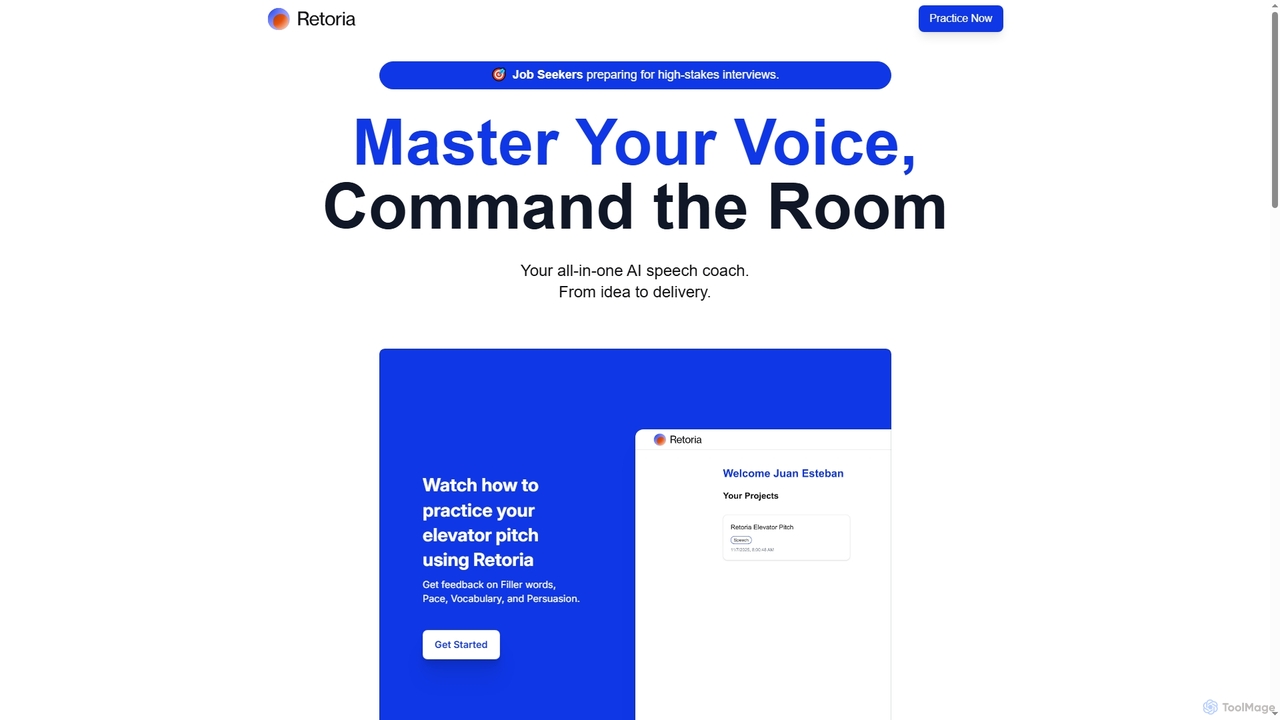
Retoria is an all-in-one AI speech coach designed for professionals and leaders. It helps users master their voice, …

2.7K

About Speech Training

Speech Training tools are AI-powered platforms designed to enhance users' verbal communication skills, ranging from pronunciation and fluency to public speaking and presentation delivery. Leveraging advanced speech recognition and natural language processing, these tools provide personalized feedback and structured exercises. They offer an accessible and effective way for individuals to refine their speaking abilities, making them invaluable for professional development and academic success within the broader field of education.

Core Features

  • Pronunciation Analysis: Identifies and corrects mispronounced words or sounds, often with visual feedback (e.g., phoneme-level analysis).
  • Fluency & Pacing Feedback: Monitors speech speed, pauses, and filler words, suggesting improvements for smoother delivery.
  • Intonation & Pitch Correction: Analyzes vocal tone and pitch patterns, guiding users to express emotions and emphasis more effectively.
  • Public Speaking Simulation: Provides virtual environments for practicing speeches, complete with audience reactions and performance metrics.
  • Accent Reduction Training: Offers targeted exercises and feedback to help users modify or soften their accent for clearer communication.

Use Cases

Speech Training AI tools are utilized across various sectors, from corporate training to individual language learning. Professionals preparing for presentations can practice their delivery and receive real-time feedback on pacing and clarity. Students learning a new language can improve their pronunciation and intonation with personalized guidance. Additionally, individuals aiming to enhance their general communication skills for interviews or daily interactions find these tools highly beneficial for building confidence and articulation.

How to Choose

When selecting a Speech Training AI tool, consider the specific skills you wish to improve, such as pronunciation, public speaking, or accent reduction. Evaluate the accuracy and detail of the AI feedback, the variety of practice exercises offered, and the availability of real-time analysis. Look for tools with intuitive interfaces, customizable learning paths, and compatibility with your devices. Pricing models, whether subscription-based or one-time purchase, should also align with your budget and usage frequency.

Speech TrainingUse Cases

1

Language Learners Improving Pronunciation

A language learner uses a Speech Training AI to practice new vocabulary and phrases in a target language. The tool provides instant feedback on phonetics, stress, and intonation, highlighting specific sounds that need improvement. This allows the learner to correct errors immediately, build muscle memory for correct articulation, and gain confidence in speaking, accelerating their journey towards native-like fluency.

2

Refining Public Speaking for Professionals

Corporate executives and sales professionals can use AI speech training tools to rehearse important presentations or pitches. The AI analyzes their delivery for clarity, pace, filler words, and confidence, providing actionable insights to refine their speaking style, reduce anxiety, and ensure a more impactful and persuasive message to clients or stakeholders.

3

Public Speakers Preparing for Presentations

A professional preparing for a crucial conference presentation utilizes a Speech Training AI's public speaking simulation feature. They practice their speech in a virtual environment, receiving real-time analysis on pacing, volume, filler words, and even simulated audience engagement. This helps them refine their delivery, manage speaking anxiety, and ensure their message is impactful and engaging for the actual event.

4

Improving Pronunciation for Language Learners

Individuals learning a new language can leverage these tools to master native-like pronunciation. By speaking words and sentences, the AI provides immediate, detailed feedback on specific sounds, intonation patterns, and stress, helping learners correct errors quickly and build confidence in their spoken language abilities, accelerating their fluency development.

5

Professionals Enhancing Communication Skills

A manager aims to improve their clarity and assertiveness in team meetings and client interactions. They use a Speech Training tool to record and analyze their daily conversations or practice specific scenarios. The AI identifies areas like mumbling, inconsistent tone, or lack of vocal projection, providing targeted exercises to develop a more authoritative and understandable speaking style, leading to more effective leadership.

6

Preparing for Job Interviews and Academic Presentations

Job seekers and students can practice their responses to common interview questions or deliver academic presentations in a simulated environment. The AI assesses their articulation, coherence, and overall presentation style, offering constructive criticism to help them present themselves more professionally and confidently, increasing their chances of success.

7

Voice Actors Refining Articulation

A voice actor needs to master a specific accent or improve their diction for an audition. They use a Speech Training AI to practice scripts, receiving detailed feedback on every syllable, vowel, and consonant. The tool helps them achieve precise articulation, maintain consistent vocal quality, and accurately mimic regional or character-specific speech patterns, significantly enhancing their performance and versatility.

8

Accent Modification for Global Communication

Professionals working in international environments or individuals seeking to enhance their global intelligibility can use AI speech training for accent modification. The tools provide targeted exercises to adjust specific phonetic elements and intonation, helping users achieve clearer and more universally understood speech without losing their unique identity.

9

Students Practicing Oral Exams/Interviews

A university student preparing for an oral examination or a job interview uses a Speech Training platform to simulate the Q&A process. The AI acts as an interviewer, posing questions and then analyzing the student's responses for clarity, coherence, and confidence. It provides constructive feedback on their answers' structure, vocabulary usage, and overall delivery, helping them perform under pressure.

10

Enhancing Vocal Delivery for Content Creators

Podcasters, YouTubers, and online educators can utilize these tools to improve their vocal delivery, ensuring engaging and professional audio content. The AI analyzes aspects like vocal clarity, volume consistency, and speaking rhythm, enabling creators to produce high-quality narration that captivates their audience and effectively conveys their message.

11

Individuals Overcoming Speech Anxiety

Someone with glossophobia (fear of public speaking) uses a Speech Training tool to gradually build confidence. They start with private, guided exercises, practicing short sentences and gradually progressing to longer speeches in simulated low-pressure environments. The consistent, non-judgmental feedback and measurable progress help them desensitize to speaking situations, reducing anxiety and fostering a more positive relationship with their voice.

12

Therapeutic Support for Speech Impediments

While not a replacement for professional therapy, AI speech training tools can complement traditional speech therapy for individuals with minor impediments or those recovering from vocal issues. They offer consistent practice and objective feedback on articulation and fluency, supporting therapeutic goals and reinforcing learned techniques in a private, accessible setting.

Speech TrainingFrequently Asked Questions