
Dries Depoorter
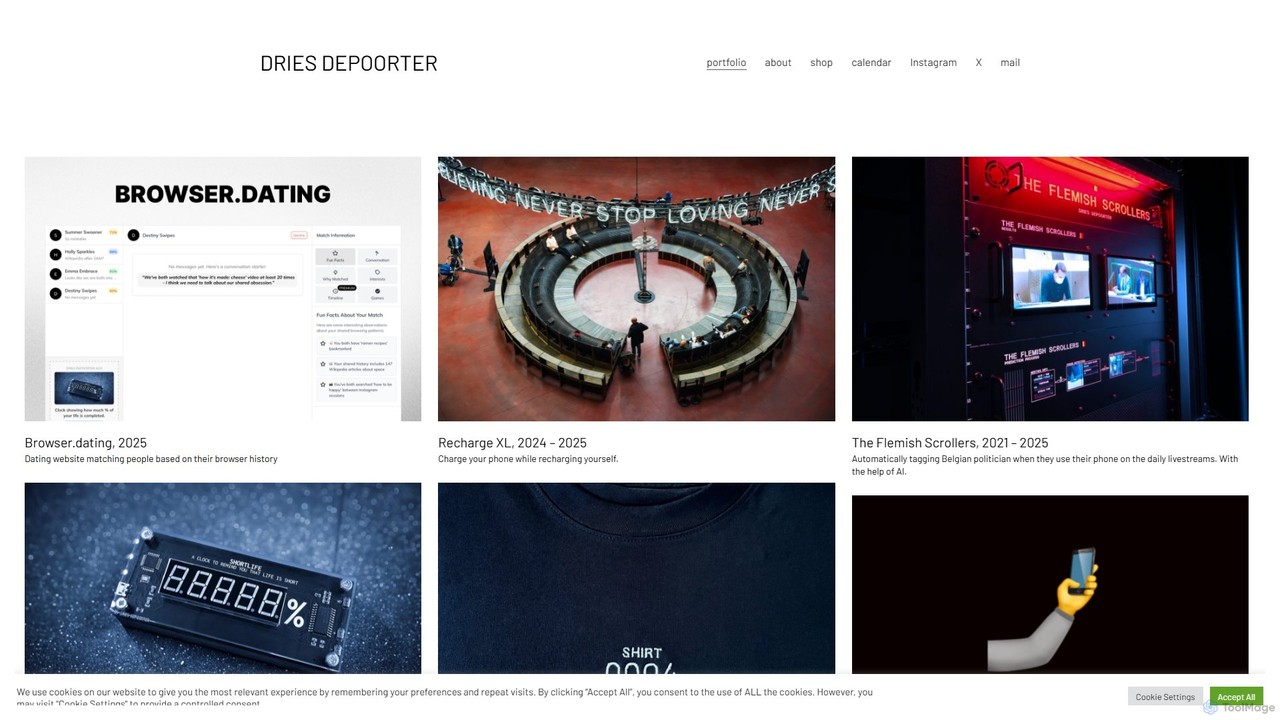
Dries Depoorter is a Belgian technology artist and speaker who explores the themes of privacy, surveillance, and social …
Dries Depoorter is a Belgian technology artist and speaker who explores the themes of privacy, surveillance, and social media through AI-powered installations, apps, and websites. His work critically examines the impact of modern technology on society.
About Technology Ethics
Technology Ethics tools are educational and analytical platforms designed to explore the societal and moral implications of technological advancements, particularly in AI. These tools often use interactive simulations, case studies, and ethical frameworks to help users understand complex concepts like algorithmic bias, data privacy, and accountability. They are essential for fostering responsible innovation by equipping developers, policymakers, and students with the critical thinking skills needed to navigate the ethical challenges of the digital age. The primary goal is to promote the development of technology that is fair, transparent, and beneficial to humanity.
Core Features
- Interactive Case Studies: Presents real-world ethical dilemmas for users to analyze and make decisions.
- Ethical Framework Simulation: Allows application of philosophical frameworks (e.g., utilitarianism, deontology) to tech scenarios.
- Bias Detection Modules: Educational modules that demonstrate how bias can emerge in datasets and algorithms.
- Policy Impact Analysis: Tools to model and understand the potential societal consequences of technology policies.
- Responsible AI Checklists: Guided workflows and checklists to help integrate ethical considerations into the development lifecycle.
Use Cases
These tools are primarily used in academic and corporate settings. Educators in computer science and philosophy use them to teach students about the societal impact of technology. Tech companies employ them for internal training to ensure their developers and product managers build products responsibly. Policymakers and non-profit organizations also use them to research and formulate guidelines for technology governance.
How to Choose
When selecting a Technology Ethics tool, consider your learning objective: are you seeking a general introduction or a deep dive into a specific area like AI fairness? Evaluate the format of the content—interactive simulations may be better for engagement, while text-based resources might offer more depth. Also, consider the target audience of the tool, as some are designed for students and others for industry professionals. Finally, check the credibility and expertise of the content creators.
Technology EthicsUse Cases
University Classroom Instruction on AI Ethics
A computer science professor uses a technology ethics platform to enhance their curriculum. Instead of relying solely on textbooks, they integrate interactive case studies where students must make decisions about deploying a facial recognition system for law enforcement. The tool presents various stakeholder perspectives and potential outcomes, forcing students to apply ethical frameworks like utilitarianism. This hands-on approach helps students grasp the real-world consequences of their future work, moving beyond purely technical considerations to understand their societal responsibilities as engineers.
Corporate Training for Responsible AI Development
A large tech company mandates that its product managers and engineers complete a training module on a technology ethics platform. The module includes a bias detection simulation where teams upload a sample dataset and the tool visualizes potential demographic biases. It then provides a guided checklist for mitigating these biases during model development. This proactive training helps the company reduce the risk of releasing biased products, align its development practices with its ethical principles, and build a culture of responsibility among its technical staff.
Policy Advisor Research and Impact Simulation
A policy advisor working for a government agency uses a technology ethics tool to analyze the potential impact of new data privacy legislation. The tool allows them to simulate how different regulatory approaches might affect innovation, consumer trust, and vulnerable populations. By modeling various scenarios, the advisor can identify unintended consequences and draft more effective, equitable policies. This provides an evidence-based foundation for legislative debates, helping to create regulations that balance technological progress with public protection.
Evaluating New Product Features with an Ethical Checklist
A product manager is proposing a new personalization feature for an e-commerce app. Before development begins, they use a responsible AI checklist tool. The tool guides them through a series of questions about data collection, algorithmic fairness, transparency, and potential for misuse. The process reveals that the proposed feature could inadvertently create filter bubbles or discriminate against certain user groups. Based on this analysis, the team redesigns the feature to include more user control and diversity in recommendations, ensuring it aligns with ethical standards before any code is written.
Journalist Investigating Algorithmic Bias
An investigative journalist is researching bias in automated hiring systems. They use a technology ethics educational tool to understand the technical fundamentals of how such biases can occur, for example, through biased training data or proxy variables. The platform provides case studies of past failures and explains complex concepts in accessible terms. This knowledge allows the journalist to ask more informed questions during interviews with tech companies and to explain the issue clearly to the public in their articles, contributing to greater awareness and accountability.
Student Self-Study for a Capstone Project
A university student is working on a capstone project involving a machine learning model. To ensure their project is ethically sound, they use an online technology ethics resource. The tool provides a structured learning path on topics like fairness metrics and model transparency. They learn how to perform a basic fairness audit on their model's predictions and how to write a 'model card' to document its capabilities and limitations. This self-directed learning not only improves the quality and integrity of their project but also provides them with valuable skills for their future career in tech.