
Education Best in category 1 results Training AI Tool

Popular AI tools in the Training field of Education include askbetina, etc., helping you quickly improve efficiency.

askbetina

askbetina

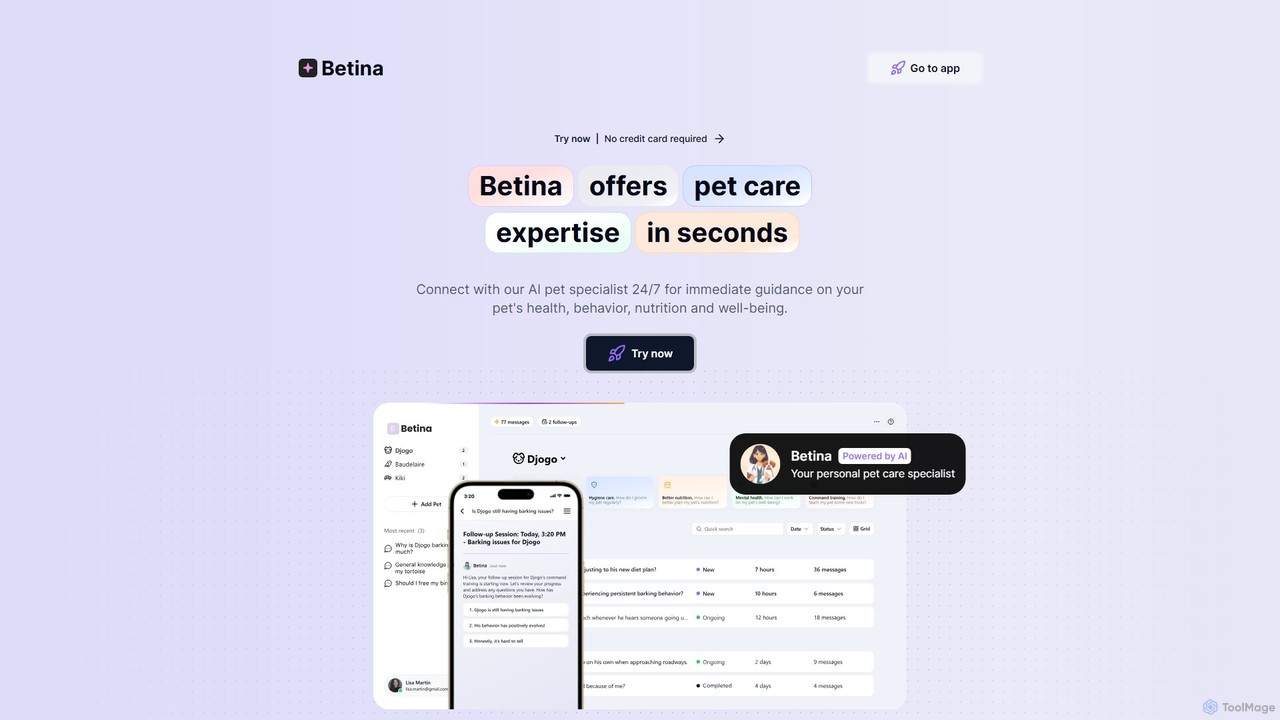
askbetina is an AI-powered pet care specialist providing 24/7 expert advice on your pet's health, behavior, and nutrition. …

4.1K

About Training

AI Training tools are a specialized category within AI Education, designed to enhance skill development and knowledge acquisition through intelligent, adaptive systems. These tools leverage machine learning, natural language processing, and computer vision to offer personalized learning paths, automated feedback, and interactive simulations. They aim to optimize the learning process, making it more efficient, engaging, and tailored to individual needs across various professional and academic domains.

Core Features

  • Personalized Learning Paths: Dynamically adjusts content and pace based on individual learner progress and performance.
  • Adaptive Assessment & Feedback: Provides real-time, targeted feedback and adjusts difficulty of assessments to challenge learners appropriately.
  • Interactive Simulations & Gamification: Offers immersive virtual environments and game-like elements to practice skills in a safe, engaging setting.
  • Automated Content Generation: Creates or curates training materials, quizzes, and exercises based on specified learning objectives.
  • Performance Analytics & Reporting: Tracks learner progress, identifies knowledge gaps, and provides insights for educators or L&D managers.

Applicable Scenarios

AI Training tools are widely adopted in corporate learning and development for employee onboarding, upskilling, and compliance training. They also serve academic institutions by providing personalized tutoring, exam preparation, and supplementary learning resources. Professionals seeking to acquire new technical skills, improve language proficiency, or practice soft skills through simulated scenarios also benefit significantly.

How to Choose

When selecting an AI Training tool, consider its alignment with your specific learning objectives and the level of content customization offered. Evaluate its integration capabilities with existing Learning Management Systems (LMS) and the types of feedback mechanisms it provides. Assess the scalability for your user base, the robustness of its performance analytics, and the overall user experience and ease of use for both learners and administrators.

TrainingUse Cases

1

Automate Corporate Upskilling with Personalized AI Training

HR and L&D managers utilize AI training platforms to deliver tailored upskilling programs for employees. For instance, a software company can deploy an AI tool to train developers on a new programming language, where the AI adapts the curriculum based on each developer's existing knowledge and learning pace, providing instant coding challenges and feedback, significantly reducing training time and improving skill acquisition.

2

AI-Powered Personalized Language Tutoring

Individuals learning a new language use AI training tools as virtual tutors. The AI assesses their proficiency, identifies weak areas (e.g., grammar, pronunciation), and generates custom exercises, dialogues, and vocabulary drills. It provides immediate corrective feedback on spoken and written responses, simulating real conversations and accelerating fluency development compared to traditional methods.

3

Virtual Simulation for Engineering Skill Development

Engineering students or professionals employ AI-driven simulation tools to practice complex technical skills in a risk-free virtual environment. For example, an AI platform can simulate a factory floor or a circuit design process, allowing users to troubleshoot issues, test solutions, and receive AI-guided feedback on their decisions, building practical experience before engaging with real-world systems.

4

AI-Driven Sales Role-Playing and Performance Coaching

Sales teams leverage AI training tools for realistic role-playing scenarios to refine their pitching and negotiation skills. An AI bot acts as a challenging customer, responding dynamically to sales pitches. The AI then analyzes the salesperson's communication, empathy, and objection handling, providing detailed feedback and coaching points to improve future interactions and close more deals.

5

Adaptive AI Tutoring for Academic Exam Preparation

Students preparing for standardized tests or university exams use AI training platforms to identify and address their specific knowledge gaps. The AI analyzes past performance, suggests personalized study plans, and generates practice questions that target areas of weakness. It provides detailed explanations for incorrect answers and tracks progress, helping students optimize their study time and boost confidence.

6

Streamlined Healthcare Compliance Training with AI

Healthcare organizations utilize AI training tools to ensure staff compliance with complex and evolving regulations. The AI delivers interactive modules on topics like patient privacy (HIPAA) or new medical procedures, adapting content based on the learner's role and previous performance. It automates tracking of completion and understanding, ensuring all staff meet mandatory training requirements efficiently and effectively.

TrainingFrequently Asked Questions