ToolMage
Sign in

Best 1 Tutoring Platform for Education

Popular Tutoring Platform in Education include Flalingo, helping you work more efficiently.

Flalingo
Paid

Flalingo

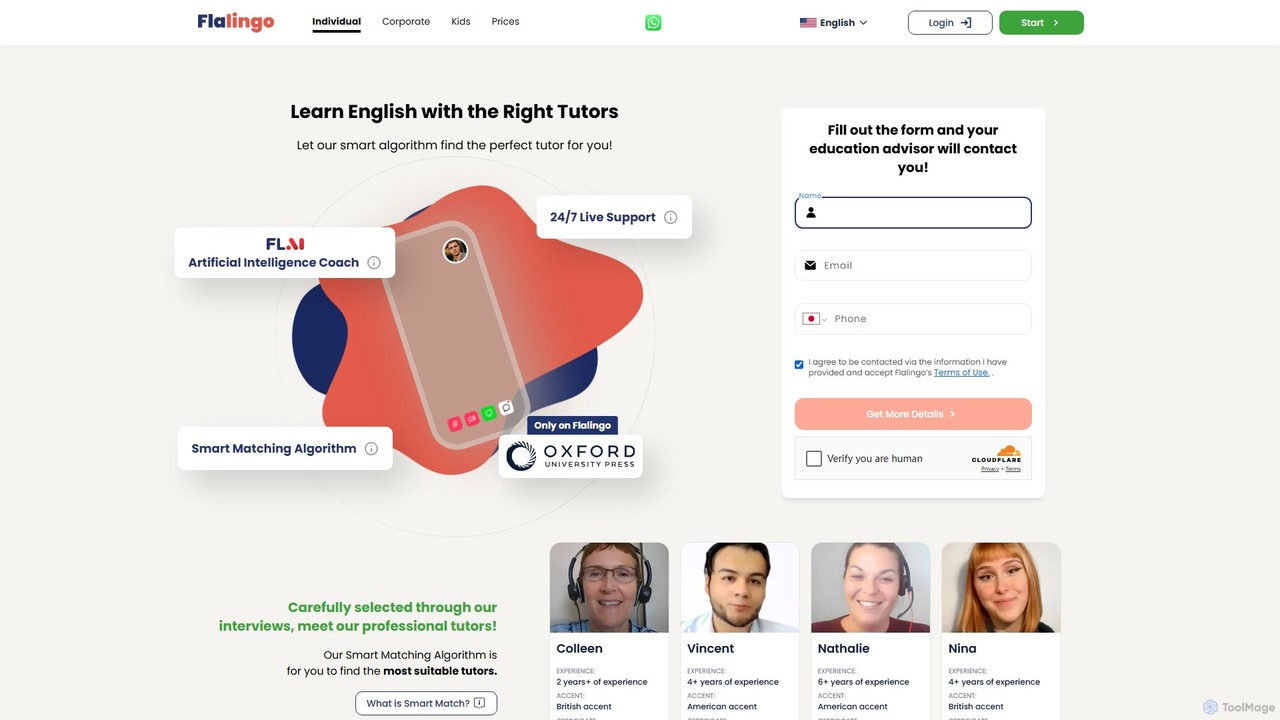
Flalingo is an AI-powered online platform for learning English with native-speaking tutors. It utilizes a smart matching algorithm to connect students with the perfect instructor and features an AI coach, FLAI, which provides detailed feedback, progress reports, and personalized exercises after each lesson.

Language Learning
Visits 439KFavorites 124Likes 131

About Tutoring Platform

AI Tutoring Platforms are a specialized category of educational software that uses artificial intelligence to provide personalized, one-on-one academic support to learners. These platforms leverage machine learning and natural language processing to understand a student's knowledge gaps, adapt to their learning pace, and offer interactive guidance. They serve as a virtual tutor, available 24/7, to explain complex concepts, provide step-by-step problem-solving assistance, and create customized study plans. Unlike passive video lectures, these tools actively engage students in a dynamic learning dialogue.

Core Features

  • Personalized Learning Paths: The AI assesses a student's performance to create a unique curriculum that targets their specific weaknesses and reinforces strengths.
  • Instant, Granular Feedback: Provides real-time, step-by-step explanations for incorrect answers, guiding students to the correct solution without simply giving it away.
  • Adaptive Questioning Engine: Automatically adjusts the difficulty of questions based on the student's responses, ensuring they are always challenged but not overwhelmed.
  • Conversational Learning Interface: Utilizes a chatbot or voice interface to simulate a Socratic dialogue, prompting students with questions to deepen their understanding.
  • Performance Analytics: Generates detailed reports on progress, time spent, and mastery of topics for students, parents, and educators.

Use Cases

These platforms are widely used in K-12 education for homework help and subject mastery, particularly in STEM fields. University students use them for exam preparation and to grasp difficult course material. They are also valuable for standardized test preparation (e.g., SAT, GRE) and for professionals seeking to learn new skills, such as coding or a new language, at their own pace.

How to Choose

When selecting an AI Tutoring Platform, consider the subject matter coverage and its depth. Evaluate the pedagogical approach—does it use inquiry-based learning, direct instruction, or gamification? Assess the sophistication of its AI-driven adaptivity and the quality of its feedback. Finally, review the reporting features and the user interface to ensure it meets the needs of the learner and any supervising adults.

Tutoring Platform use cases

1

Mastering High School Calculus Concepts

A high school student struggling with calculus concepts like derivatives and integrals uses an AI tutoring platform for after-school support. When they get stuck on a homework problem, they input it into the platform. The AI doesn't give the answer directly but instead asks guiding questions like, "What rule do you think applies here?". It provides step-by-step hints and visual aids, allowing the student to arrive at the solution independently. This process reinforces their understanding and builds problem-solving confidence for exams.

2

Personalized Language Conversation Practice

An adult learner preparing to move to Spain uses an AI tutoring platform to improve their conversational Spanish. The platform's AI acts as a conversation partner, engaging the user in realistic dialogues. It provides instant feedback on pronunciation, corrects grammatical errors in real-time, and introduces new vocabulary contextually. The learner can practice anytime without the pressure of speaking with a native human, accelerating their fluency and confidence for real-world interactions.

3

Preparing for Standardized Entrance Exams

A college applicant is preparing for the quantitative section of the GRE. They use an AI tutoring platform that specializes in test prep. The platform starts with a diagnostic test to identify their strengths and weaknesses. Based on the results, it generates a personalized study plan with adaptive practice questions. If the student consistently answers a type of question incorrectly, the AI provides targeted video lessons and drills until the concept is mastered, optimizing their study time for a higher score.

4

On-Demand Coding and Debugging Help

A beginner programmer learning Python gets stuck on a coding assignment involving loops. Instead of searching through forums, they paste their code into an AI tutoring platform. The AI analyzes the code, identifies a logical error in the loop's condition, and explains *why* it's an error. It suggests a correction and provides a simpler, related problem to solve, ensuring the student understands the underlying concept. This immediate, contextual feedback helps them learn debugging skills and programming principles more effectively than static tutorials.

5

Elementary School Reading Comprehension Support

A third-grade student needs to improve their reading comprehension skills. Their parents use an AI tutoring platform with a gamified interface. The student reads short, age-appropriate stories within the app. Afterward, the AI asks questions about the plot, characters, and main idea. If the student answers incorrectly, the AI highlights the relevant passage in the text and provides hints. The platform tracks their progress on skills like inference and identifying context clues, providing parents with a clear report on their child's development.

6

Corporate Upskilling in Data Analytics

An enterprise wants to upskill its marketing team in data analytics. They deploy an AI tutoring platform that offers professional development modules. Each team member progresses through lessons on topics like SQL and data visualization at their own pace. The platform provides interactive exercises and real-world business case studies. The AI adapts the content based on each employee's pre-existing knowledge and performance, ensuring efficient and effective learning. Management can view a dashboard to track the team's overall skill acquisition and readiness for new data-driven projects.

Tutoring Platform FAQ

What is an AI Tutoring Platform?

An AI Tutoring Platform is a software application that uses artificial intelligence to deliver personalized educational instruction. Unlike static online courses, these platforms actively interact with the learner by analyzing their responses, identifying knowledge gaps, and providing real-time, step-by-step guidance. Key features include adaptive questioning, instant feedback, and the creation of customized learning paths to help students master subjects at their own pace, simulating the experience of working with a human tutor.

How do I choose the right AI Tutoring Platform?

To choose the right platform, first consider the specific subjects and academic level it covers. Next, evaluate its teaching methodology—does it align with the learner's style? Look for a high degree of adaptivity, where the AI truly personalizes the content. Other key factors include:

  • Quality of Feedback: Does it offer clear, step-by-step explanations?
  • User Interface: Is it engaging and easy for the target age group to navigate?
  • Reporting Features: Does it provide insightful analytics for parents or teachers?
  • Cost and Subscription Model: Does it fit your budget and offer a free trial?
What's the difference between an AI Tutoring Platform and an online course (LMS)?

The key difference is interactivity and personalization. An online course or Learning Management System (LMS) typically delivers a standardized curriculum through pre-recorded videos and static quizzes to a large audience. An AI Tutoring Platform, however, provides a dynamic, one-on-one learning experience. It actively diagnoses a student's understanding in real-time and adapts the instruction, questions, and feedback specifically to that individual's needs, much like a personal human tutor would.

Who can benefit most from using an AI Tutoring Platform?

A wide range of learners can benefit. K-12 students use them for homework help and to build foundational skills in subjects like math and science. University students leverage them for complex problem-solving and exam preparation. Additionally, they are highly effective for self-directed adult learners, such as individuals preparing for standardized tests (SAT, GMAT), learning to code, or practicing a new language, as they offer flexible, on-demand, and personalized instruction.

How does an AI tutor provide feedback?

An AI tutor provides feedback through a sophisticated, multi-step process. It uses Natural Language Processing (NLP) to understand a student's typed or spoken answer. If the answer is incorrect, the AI doesn't just supply the correct one. Instead, it analyzes the error to diagnose the misconception. It then provides targeted hints, asks guiding questions (the Socratic method), or breaks the problem down into smaller, manageable steps. This interactive feedback loop ensures the student actively participates in correcting their mistake and genuinely learns the concept.