
Education Best in category 1 results University Admissions AI Tool

Popular AI tools in the University Admissions field of Education include Chat University, etc., helping you quickly improve efficiency.

Chat University

Chat University

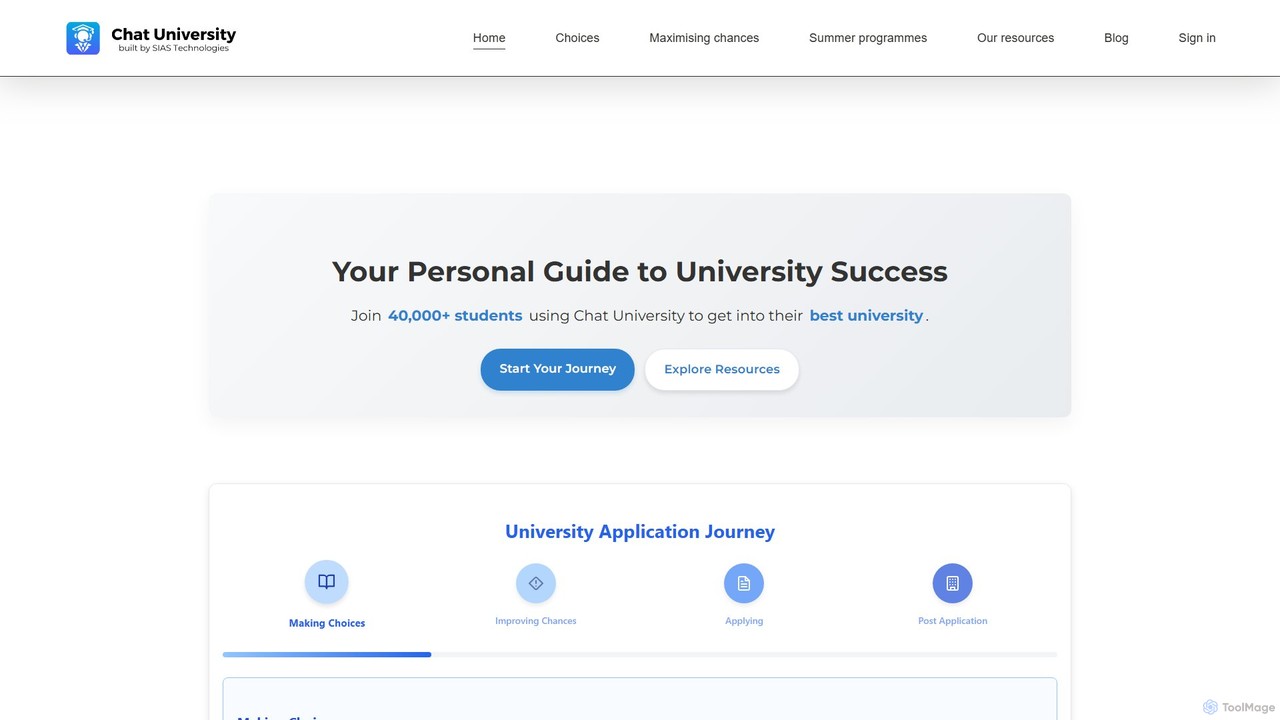
Chat University is an AI-powered personal guide for students navigating the complex university application process. It offers personalized …

67.1K

About University Admissions

AI University Admissions tools are specialized platforms designed to assist applicants in navigating the complex college and university application process. Leveraging natural language processing (NLP) and generative AI, these tools provide data-driven feedback on essays, simulate admission interviews, and help strategize application components. Their primary value lies in offering personalized, accessible guidance to help students strengthen their profiles and present their stories more effectively. This focused support can be instrumental in improving the clarity, impact, and overall quality of an application.

Core Features

  • Essay Analysis & Enhancement: Provides real-time feedback on grammar, style, tone, and structure of personal statements and supplemental essays.
  • Interview Simulation: Offers a platform to practice common admissions interview questions with an AI, giving feedback on answer content and delivery.
  • Application Strategy: Helps students identify suitable universities based on their academic profile, interests, and goals.
  • Brainstorming Assistance: Generates ideas and helps structure thoughts for compelling application narratives.

Applicable Scenarios

These tools are primarily used by high school students applying for undergraduate programs, current college students seeking to transfer, and individuals applying to graduate or professional schools. International students also find them valuable for adapting their applications to different educational systems and language nuances. They are used throughout the application timeline, from initial school research to final essay polishing.

Selection Criteria

When choosing an AI University Admissions tool, consider the specific features you need most (e.g., essay feedback vs. interview prep). Evaluate the quality and depth of the AI-generated feedback. Prioritize platforms with strong data privacy and security policies to protect your personal information. Finally, consider the pricing model and whether it aligns with your budget and the duration of your application process.

University AdmissionsUse Cases

1

Refining a Personal Statement Essay

A high school senior is struggling to articulate their passion for computer science in their personal statement. They use an AI University Admissions tool to analyze their draft. The AI provides suggestions to replace generic phrases with specific examples from their coding projects, improves the narrative flow by reordering paragraphs, and flags sentences that sound cliché. The result is a more authentic and impactful essay that clearly demonstrates their skills and motivation, strengthening their application to competitive tech programs.

2

Practicing for an Alumni Interview

A candidate for an MBA program has an upcoming interview with a university alumnus. They use an AI interview simulator to practice. The platform presents them with common behavioral questions like 'Tell me about a time you led a team.' After each response, the AI provides feedback on the clarity of their answer, use of the STAR method (Situation, Task, Action, Result), and speaking pace. This practice helps the candidate build confidence and refine their stories, allowing them to perform more professionally during the actual interview.

3

Building a Balanced College List

An international student is overwhelmed by the number of universities in the US and is unsure which ones are a good fit. They use an AI tool that analyzes their academic profile (GPA, test scores), extracurriculars, and desired major. The tool generates a categorized list of 'reach,' 'match,' and 'safety' schools, along with data on acceptance rates and financial aid for international students. This provides a structured starting point for their research, saving them dozens of hours and helping them focus on schools where they have a realistic chance of admission.

4

Optimizing Extracurricular Activity Descriptions

A student has a long list of extracurriculars but struggles to describe them concisely for the Common App, which has a strict character limit. They input their activities into an AI tool. The AI helps rephrase descriptions using strong action verbs, quantifies achievements (e.g., 'managed a budget of $500' instead of 'handled money'), and ensures the descriptions highlight leadership and impact. This process transforms a simple list of activities into a powerful summary of the student's contributions and skills, making that section of the application more compelling.

5

Generating Outlines for Recommendation Letters

A student needs to ask a teacher for a letter of recommendation but wants to provide helpful materials. They use an AI tool to create a 'brag sheet.' The student inputs key projects they completed in the class, specific skills they learned, and anecdotes that show their character. The AI organizes this information into a structured outline with clear headings. The student can then give this organized document to their teacher, making it much easier for the recommender to write a detailed and personalized letter that highlights specific, impactful examples.

6

Checking Application Consistency Before Submission

Before hitting the final submit button, a student wants to ensure their entire application tells a cohesive story. They upload their personal statement, supplemental essays, and activity descriptions into an AI analysis tool. The tool cross-references the documents, highlighting potential inconsistencies in tone or narrative. For example, it might flag that their passion for environmental science, central to their main essay, is not mentioned in any of their supplemental responses. This final check helps the student align all parts of their application, presenting a unified and stronger profile to the admissions committee.

University AdmissionsFrequently Asked Questions