Engineering Best in category 1 results Structural Analysis AI Tool

Popular AI tools in the Structural Analysis field of Engineering include CalcForge, etc., helping you quickly improve efficiency.

CalcForge

CalcForge

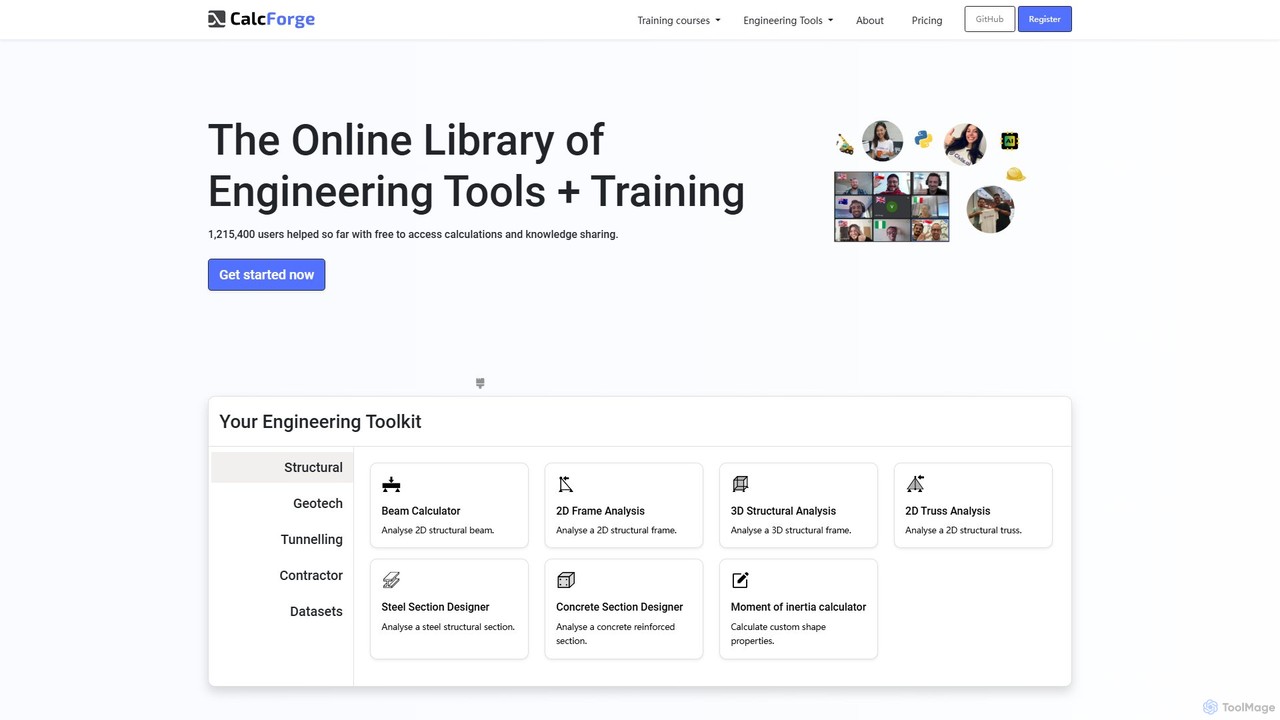
CalcForge is an open-source, community-driven platform offering a library of engineering calculators for civil, structural, mechanical, and electrical …

27.7K

About Structural Analysis

AI Structural Analysis tools are specialized software that use artificial intelligence to evaluate the integrity, stability, and performance of physical structures. These tools leverage machine learning algorithms to automate complex simulations like Finite Element Analysis (FEA), predict material behavior, and optimize designs for strength and efficiency. They enable engineers to rapidly iterate on designs, identify potential failure points before prototyping, and create lighter, stronger, and more resilient structures. This AI-driven approach significantly accelerates the engineering workflow compared to traditional manual simulation methods.

Core Features

  • Automated Simulation Setup: AI algorithms automatically generate optimal meshes and configure simulation parameters, reducing manual setup time.
  • Predictive Failure Analysis: Utilizes machine learning to forecast stress concentrations, fatigue life, and potential points of failure under various load conditions.
  • Generative Design & Topology Optimization: Suggests novel, high-performance structural designs that minimize weight while meeting specific performance constraints.
  • Real-time Performance Monitoring: Integrates with sensor data from physical assets to create digital twins for predictive maintenance and health monitoring.
  • Material Behavior Prediction: Models and predicts the performance of complex or novel materials, reducing the need for extensive physical testing.

Use Cases

These tools are crucial in industries like civil engineering for designing earthquake-resistant buildings, aerospace for optimizing aircraft components, and automotive for enhancing vehicle crashworthiness. Mechanical engineers also use them to analyze the durability of machine parts and industrial equipment.

How to Choose

When selecting a tool, consider the specific types of analysis required (e.g., static, dynamic, thermal), its integration capabilities with your existing CAD software, the comprehensiveness of its material library, and the computational resources it demands. Also, evaluate the user interface complexity and the vendor's technical support.

Structural AnalysisUse Cases

1

Optimizing Aerospace Component Design

Aerospace engineers use AI Structural Analysis tools to design lightweight yet robust components like wing ribs or landing gear. By inputting performance requirements such as load capacity and material constraints, the AI generates and simulates hundreds of design variations using topology optimization. This process identifies the most efficient material layout, drastically reducing component weight without compromising safety. The result is improved fuel efficiency and performance, achieved in a fraction of the time required by traditional trial-and-error design cycles.

2

Assessing Seismic Performance of Buildings

Civil engineers and architects leverage these tools to simulate the impact of seismic events on building designs. The AI can model complex interactions between structural elements and ground motion, predicting stress distribution and potential failure points with high accuracy. This allows for the proactive reinforcement of vulnerable areas and validation of compliance with safety codes. This predictive analysis helps create safer, more resilient structures for earthquake-prone regions before construction begins.

3

Enhancing Vehicle Crashworthiness

In the automotive industry, engineers use AI-driven structural analysis to simulate vehicle crash scenarios. The software predicts how a car's chassis and body will deform upon impact, helping to design safer passenger compartments and crumple zones. AI models can run thousands of virtual crash tests rapidly, exploring different materials and structural configurations to maximize occupant safety while minimizing vehicle weight. This accelerates the development of vehicles that meet and exceed stringent safety standards.

4

Predicting Fatigue Life of Mechanical Parts

Mechanical engineers designing industrial machinery or heavy equipment rely on AI tools to predict the fatigue life of critical components like gears, bearings, and shafts. The software simulates millions of operational cycles under varying loads to identify areas prone to metal fatigue. This predictive insight allows for design improvements that extend the component's service life and prevent unexpected failures, leading to more reliable and durable machinery and reducing maintenance costs.

5

Designing Wind Turbine Structures

For renewable energy projects, engineers use AI structural analysis to design wind turbine towers and blades. The tools simulate complex aerodynamic and environmental loads, such as extreme wind gusts and turbulence, to ensure structural integrity over a decades-long lifespan. AI-powered optimization helps find the ideal balance between material cost, weight, and durability, resulting in more efficient and cost-effective wind energy generation systems.

6

Analyzing Biomedical Implant Stress

Biomedical engineers apply AI structural analysis to design and validate medical implants like artificial hips or dental crowns. The software simulates the biomechanical loads these devices will experience inside the human body over many years. This analysis ensures the implant can withstand daily activities without failing or causing damage to surrounding tissue. It helps in selecting the best materials and shapes for long-term biocompatibility and patient safety.

Structural AnalysisFrequently Asked Questions