TheNoah
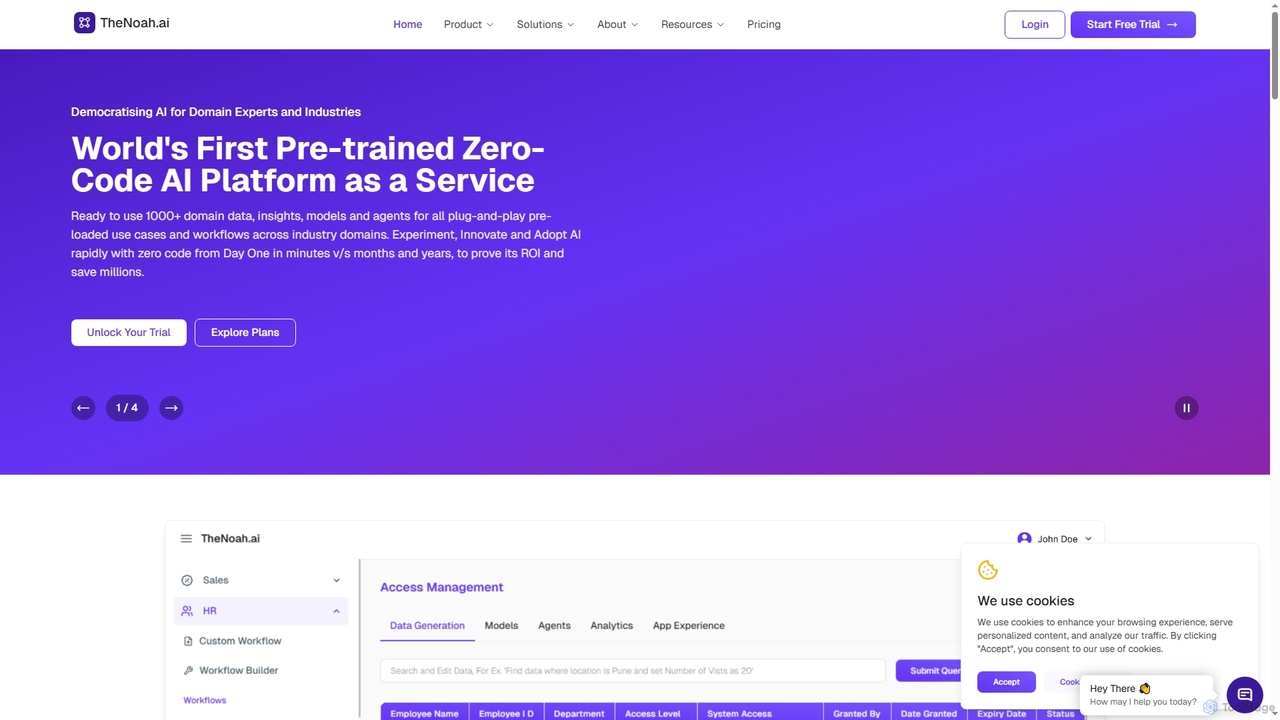
TheNoah is the world's first pre-trained, zero-code AI platform designed for enterprises and domain experts. It offers over …
TheNoah is the world's first pre-trained, zero-code AI platform designed for enterprises and domain experts. It offers over 1000 ready-to-use domain-specific models, AI agents, and data simulation capabilities to rapidly automate workflows, generate actionable insights, and accelerate AI adoption across industries without requiring technical expertise.
About Ai Automation
AI Automation tools are a class of advanced software solutions designed to leverage artificial intelligence to automate complex, repetitive, and data-intensive tasks across enterprise operations. These tools integrate AI capabilities like machine learning, natural language processing, and computer vision with traditional automation frameworks, enabling businesses to achieve unprecedented levels of operational efficiency, accuracy, and scalability.
Core Features
- Intelligent Process Automation (IPA): Combines RPA with AI to handle unstructured data, make decisions, and adapt to changing conditions.
- Natural Language Processing (NLP): Enables tools to understand, interpret, and generate human language for tasks like customer service and document processing.
- Machine Learning (ML) for Predictive Automation: Utilizes algorithms to learn from data, predict outcomes, and trigger automated actions proactively.
- Computer Vision: Allows automation systems to "see" and interpret visual information, enhancing tasks like quality control and data extraction from images.
Applicable Scenarios
AI Automation is widely adopted in sectors requiring high-volume data processing and complex decision-making. It's crucial for finance departments automating invoice reconciliation, HR teams streamlining onboarding, and customer service centers deploying intelligent chatbots for instant support. IT operations also benefit significantly from automated incident response and system monitoring.
How to Choose
When selecting an AI Automation platform, consider its integration capabilities with existing enterprise systems, the breadth and depth of its AI functionalities (e.g., NLP, ML models), scalability to handle future growth, and ease of deployment and management. Evaluate vendor support, security features, and the total cost of ownership, including licensing and implementation services, to ensure alignment with your business objectives and technical expertise.

Ai AutomationUse Cases
Automating Customer Service Inquiries
Customer service managers can deploy AI automation tools to handle routine customer inquiries, process support tickets, and provide instant answers through intelligent chatbots. By leveraging NLP, these tools understand customer intent, route complex issues to human agents, and automate follow-up communications, significantly reducing response times and improving customer satisfaction while freeing up human agents for more critical tasks.
Streamlining Financial Operations
Finance departments utilize AI automation to streamline tasks such as invoice processing, expense report reconciliation, and fraud detection. AI-powered systems can automatically extract data from various document formats, match invoices with purchase orders, flag discrepancies, and even initiate payment workflows, drastically reducing manual errors and accelerating financial closing cycles.
Enhancing HR Onboarding and Management
HR professionals can automate the entire employee onboarding process, from document collection and background checks to system access provisioning. AI automation tools can intelligently guide new hires through necessary steps, answer common HR questions, and ensure compliance with regulations, creating a smoother, more efficient onboarding experience and reducing administrative burden on HR staff.
Optimizing IT Operations and Incident Response
IT teams leverage AI automation for proactive system monitoring, automated incident detection, and rapid response. AI algorithms analyze log data and network traffic to identify anomalies, predict potential outages, and automatically trigger remediation actions or alert relevant personnel, minimizing downtime and improving the overall reliability of IT infrastructure.
Automating Data Extraction and Report Generation
Business analysts and data teams use AI automation to extract relevant information from vast amounts of unstructured data, such as contracts, emails, and web pages. These tools can then automatically compile this data into customized reports and dashboards, providing timely insights for decision-making without the need for extensive manual data preparation and aggregation.
Personalizing Marketing Campaigns at Scale
Marketing professionals employ AI automation to personalize customer interactions and optimize campaign performance across multiple channels. AI analyzes customer behavior and preferences to segment audiences, recommend relevant products or content, and automate the delivery of tailored messages at optimal times, leading to higher engagement rates and improved conversion metrics.