
Enterprise Best in category 1 results Compliance AI Tool

Popular AI tools in the Compliance field of Enterprise include Liminal, etc., helping you quickly improve efficiency.

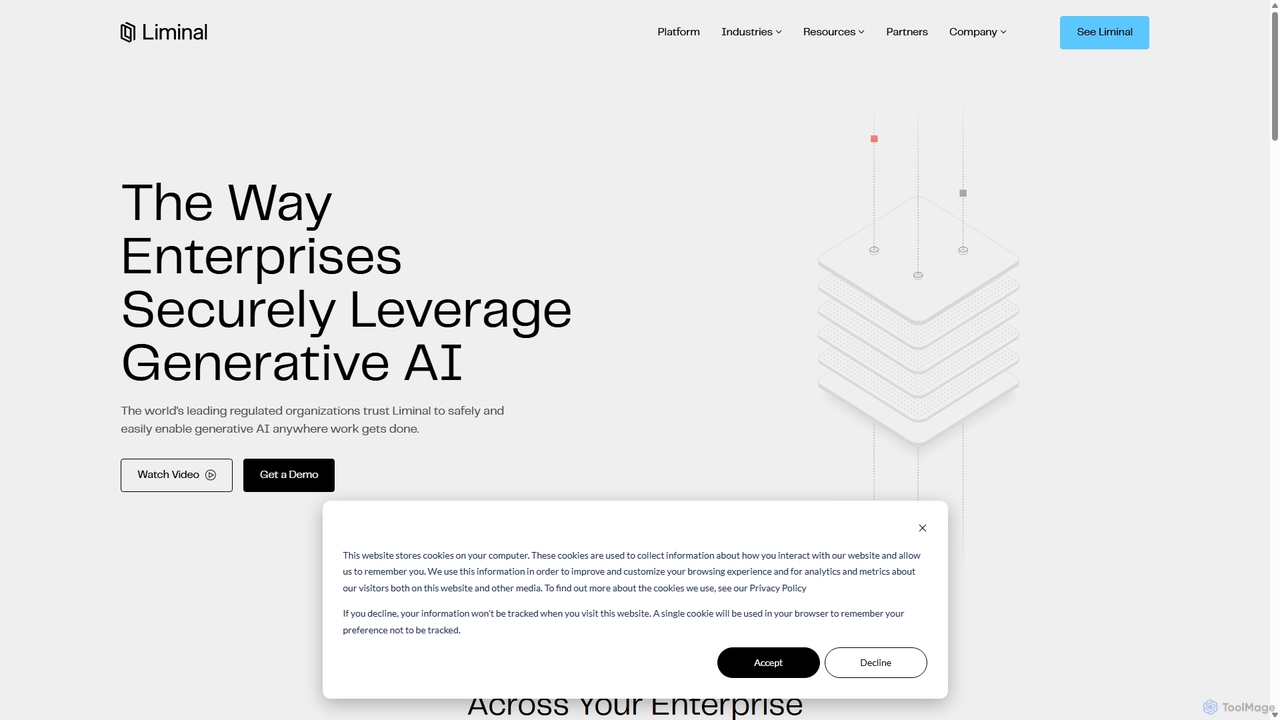
Liminal

Liminal

Liminal is an enterprise-grade security platform designed to help organizations safely adopt and leverage generative AI. It provides …

21.8K

About Compliance

AI Compliance tools are specialized software that leverage artificial intelligence to help organizations automate the monitoring, management, and adherence to regulatory and internal policies. These tools utilize Natural Language Processing (NLP) and machine learning to analyze vast amounts of data, identifying potential risks and ensuring rules are followed. They are crucial for reducing manual effort, minimizing human error, and maintaining a robust compliance posture in complex legal environments. This proactive approach helps businesses avoid costly fines and reputational damage.

Core Features

  • Regulatory Intelligence: Automatically tracks and interprets updates to laws and regulations relevant to your industry.
  • Automated Risk Detection: Scans documents, communications, and transactions to flag potential compliance violations in real-time.
  • Policy Lifecycle Management: Streamlines the creation, distribution, and tracking of internal policies and employee attestations.
  • Audit Trail & Reporting: Generates comprehensive, audit-ready reports and maintains an immutable log of compliance activities.
  • Communication Surveillance: Monitors electronic communications like email and chat to detect misconduct or policy breaches.

Use Cases

These tools are vital in highly regulated sectors such as finance, healthcare, and energy. Financial institutions use them for trade surveillance and anti-money laundering (AML) checks, while healthcare organizations apply them to ensure HIPAA compliance in patient data handling. They are also used across industries for managing GDPR/CCPA data privacy requirements and automating internal audits.

How to Choose

When selecting an AI Compliance tool, first evaluate its coverage of specific regulations relevant to your business (e.g., FINRA, HIPAA, GDPR). Assess its integration capabilities with your existing systems like email servers or CRM. Consider the sophistication of its AI models for accuracy and false positive rates. Finally, review the reporting and dashboard features to ensure they meet your auditing and management oversight needs.

ComplianceUse Cases

1

Automating Financial Trade Surveillance

For investment banks and trading firms, compliance officers use AI tools to monitor millions of trades and electronic communications daily. The system's NLP capabilities analyze emails, chat logs, and voice calls for suspicious language related to insider trading or market manipulation. Machine learning algorithms detect anomalous trading patterns that deviate from a trader's normal behavior, automatically flagging high-risk activities for immediate review. This replaces manual spot-checks, reducing the risk of multi-million dollar fines from regulators like the SEC or FINRA.

2

Ensuring HIPAA Compliance in Healthcare

Hospitals and healthcare providers handle sensitive patient health information (PHI) and must adhere to strict HIPAA rules. An AI compliance tool continuously monitors access to electronic health records (EHR). It establishes a baseline of normal access patterns for each employee role. If a nurse from the cardiology department accesses records in oncology without a valid reason, the system instantly flags it as a potential breach. This proactive monitoring helps prevent data theft and ensures the organization is prepared for HIPAA audits.

3

Streamlining GDPR & CCPA Data Requests

A global e-commerce company receives numerous Data Subject Access Requests (DSARs) under GDPR and CCPA. Manually finding, compiling, and redacting a user's data across dozens of systems is slow and error-prone. An AI compliance tool automates this workflow. It uses data discovery to locate all personal information associated with a requester, classifies it, and generates a report for review. This reduces the response time from weeks to hours, ensuring legal deadlines are met and avoiding penalties for non-compliance.

4

Proactive Contractual Risk Management

Legal teams in large enterprises manage thousands of active contracts, each with unique obligations and compliance clauses. An AI tool scans this entire contract repository to extract and categorize key terms, such as renewal dates, liability limits, and data processing requirements. It automatically alerts stakeholders of upcoming deadlines or identifies contracts with non-standard or high-risk clauses. This prevents missed obligations and ensures all business agreements align with corporate policy and regulatory standards.

5

Reviewing Marketing Materials for Regulatory Adherence

In the pharmaceutical or financial industries, marketing content is heavily regulated to prevent misleading claims. A marketing compliance team uses an AI tool to pre-screen advertisements, brochures, and social media posts. The AI checks the content against a knowledge base of regulations (e.g., FDA, FTC rules), flagging unapproved claims, missing disclaimers, or inappropriate language. This accelerates the review cycle, reduces legal risk, and ensures all public-facing communication is compliant before publication.

6

Managing Global Anti-Corruption Policy Training

A multinational corporation needs to ensure all 50,000 employees complete mandatory annual anti-bribery and corruption training. An AI-powered compliance platform automates the entire process. It distributes training modules tailored to different roles and regions, tracks completion rates in real-time, and sends automated reminders. The system also manages policy attestations, creating a defensible audit trail that proves the company's commitment to ethical conduct, which is crucial for satisfying regulations like the FCPA (Foreign Corrupt Practices Act).

ComplianceFrequently Asked Questions