ToolMage
Sign in

Best 6 Movies AI tools for Entertainment

Popular Movies AI tools in Entertainment include Gnod, movietoemoji, infinityflicks, Plot Snippets, Movikas, and MovieMatey, helping you work more efficiently.

Movikas
Free

Movikas

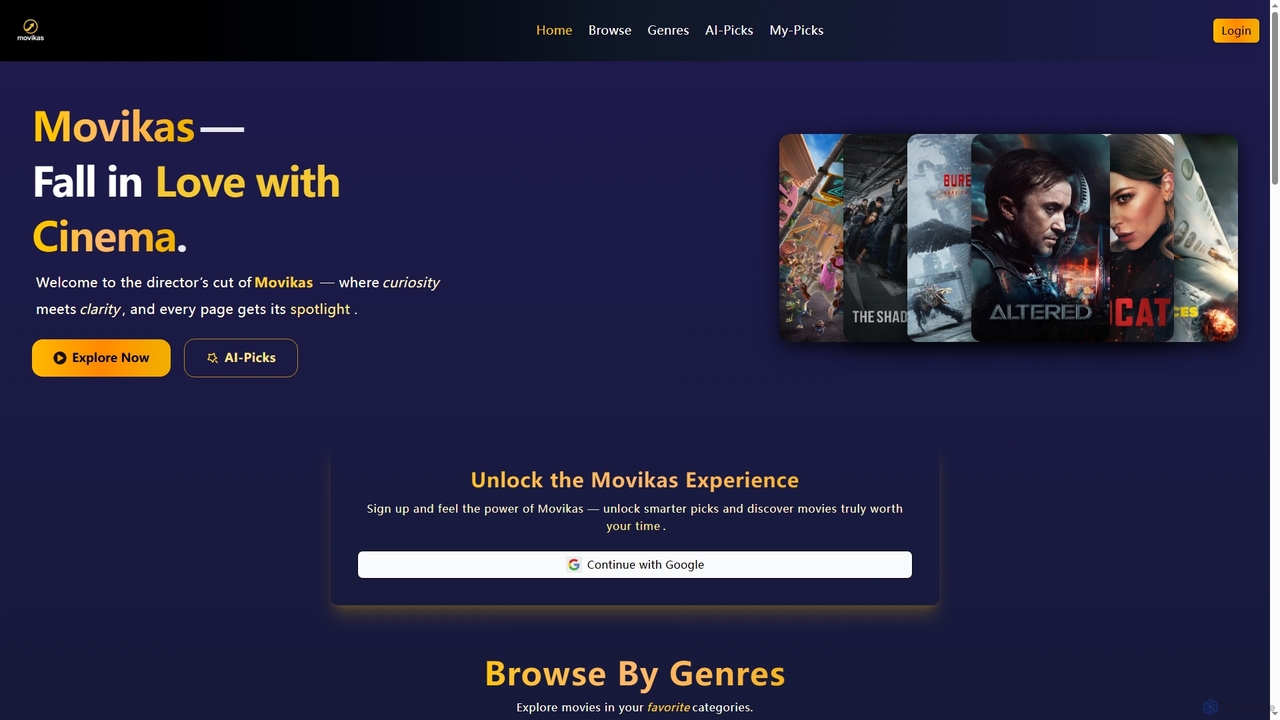
Movikas is an AI-powered movie recommendation platform designed to help cinema lovers discover films truly worth their time. It offers personalized AI picks, curated lists by its creator, and extensive browsing options by genre, trends, and ratings to ensure you find the perfect movie for any mood.

Recommendation Engine
Visits 5.8KFavorites 142Likes 145
MovieMatey
Free

MovieMatey

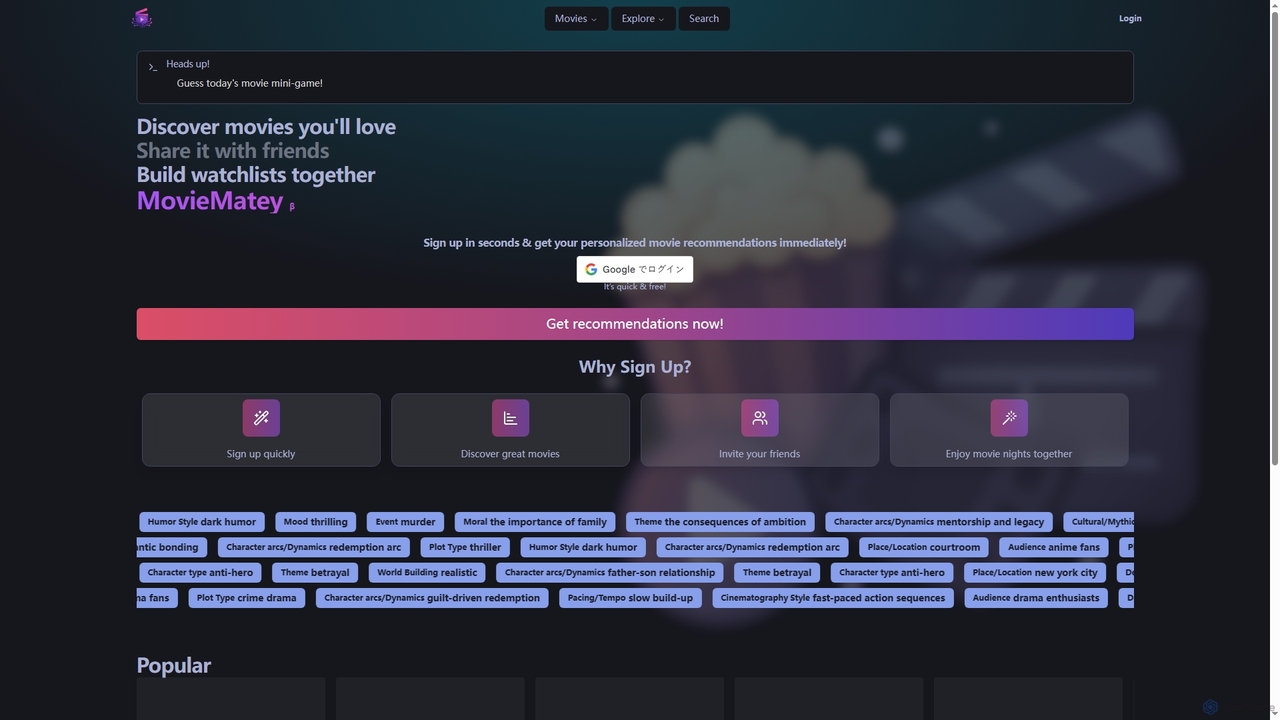
MovieMatey is a free movie discovery platform offering personalized recommendations. Users can find films using detailed tags, build collaborative watchlists with friends, and test their cinema knowledge with a daily guessing game.

Movies
Visits 5.8KFavorites 132Likes 127
infinityflicks
Freemium

infinityflicks

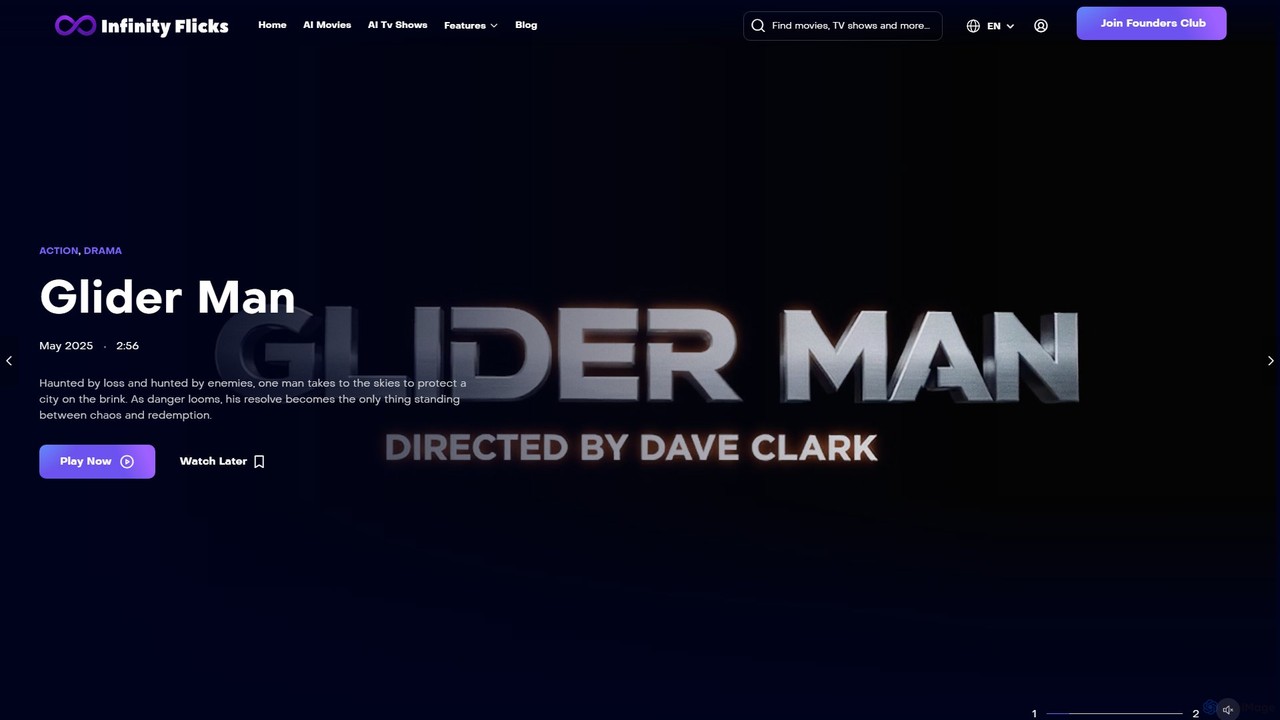
infinityflicks is a pioneering streaming platform dedicated exclusively to AI-generated movies and TV shows. Discover a constantly growing library of original content across various genres like sci-fi, drama, and anime. Watch for free with ad support, or join the Founders Club to directly fund visionary AI creators and help shape the future of cinema.

Movies
Visits 7.3KFavorites 138Likes 154
Plot Snippets
Free

Plot Snippets

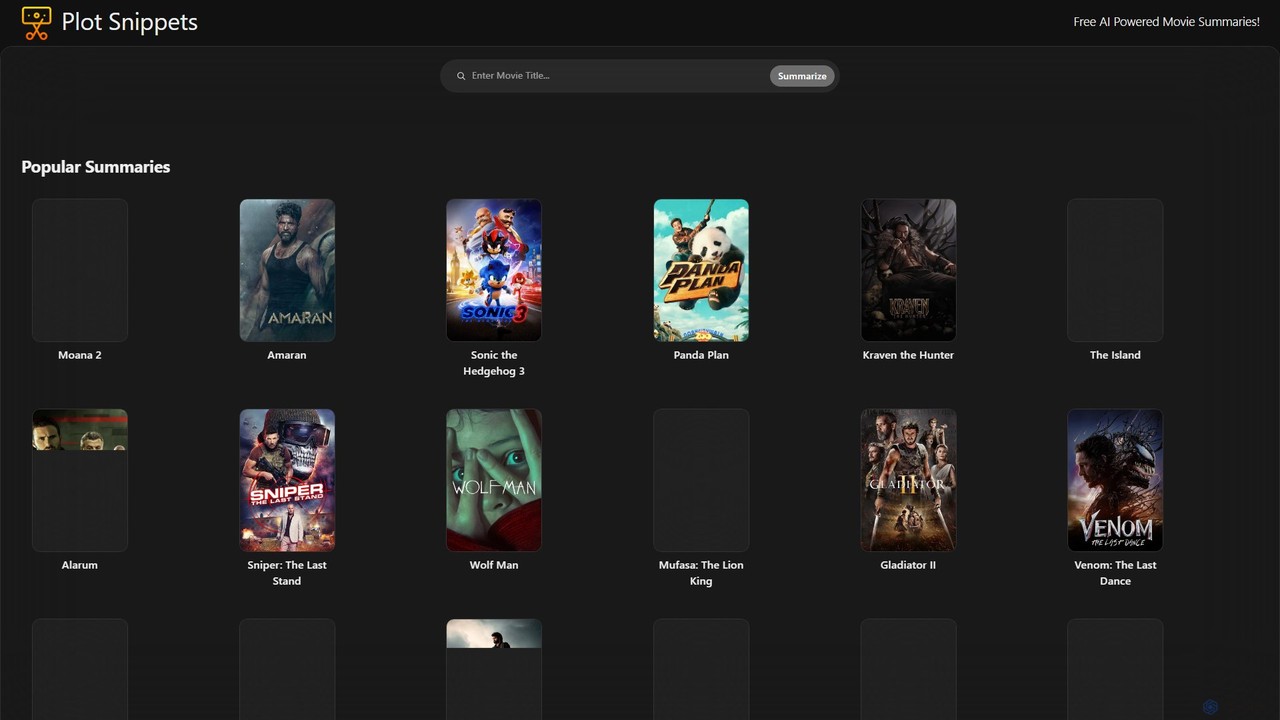
Plot Snippets is a free AI-powered tool that generates concise summaries for a vast library of movies. It helps users quickly understand a film's plot, provides 'Why Watch' analysis for different audiences, and offers recommendations for similar movies, making it easier to decide what to watch next.

Media Literacy
Visits 6KFavorites 128Likes 126
movietoemoji
Free

movietoemoji

movietoemoji is a fun AI-powered tool that creatively translates movie titles into a series of emojis. Simply enter a film's name, and the AI generates a clever emoji sequence representing its plot or title. It's perfect for social media games, movie quizzes, or sharing film recommendations in a unique, visual way. This free and easy-to-use web tool brings a playful twist to movie fandom.

Movies
Visits 9.7KFavorites 142Likes 132
Gnod
Free

Gnod

Gnod (Global Network of Discovery) is a suite of AI-powered discovery engines designed to help you find new music, movies, authors, and art based on your tastes. It also features a versatile meta-search tool for comparing results from various search engines.

Recommendation Engine
Visits 44.1KFavorites 136Likes 132

About Movies

AI Movie tools are a specialized class of software designed to assist in the creation, analysis, and discovery of cinematic content. These tools leverage machine learning algorithms to automate or enhance tasks ranging from scriptwriting and storyboarding to video editing and special effects. Their primary value lies in streamlining complex production workflows, offering creative inspiration, and enabling deeper content analysis for filmmakers and enthusiasts alike. This technology empowers creators to produce higher-quality films more efficiently and helps audiences discover movies in novel ways.

Core Features

  • AI Scriptwriting Assistance: Generates plot ideas, character dialogues, and scene descriptions to overcome writer's block.
  • Automated Video Editing: Intelligently identifies and assembles key scenes, suggests cuts, and performs basic color correction.
  • VFX and Post-Production Automation: Simplifies complex tasks like rotoscoping, object removal, and motion tracking.
  • Content Analysis and Prediction: Analyzes scripts or footage to predict audience reception or identify thematic elements.
  • AI-Powered Dubbing and Subtitling: Automatically generates and syncs multilingual audio tracks and subtitles for global distribution.

Use Cases

These tools are widely used by independent filmmakers to manage limited budgets, film students for academic projects, and large production studios to accelerate post-production pipelines. Streaming services also utilize them for content recommendation and accessibility enhancements like automated subtitling. Marketing teams employ them to quickly generate trailers and promotional materials by identifying the most engaging clips from a film.

How to Choose

When selecting an AI movie tool, first identify its primary function in your workflow—pre-production (writing), production (VFX), or post-production (editing). Evaluate the quality and controllability of the AI's output. Consider its integration capabilities with standard software like Adobe Premiere Pro or DaVinci Resolve. Finally, assess the pricing model and whether it aligns with your project's scale, from individual creators to enterprise-level studios.

Movies use cases

1

Brainstorming a Script for an Indie Film

An independent screenwriter is facing writer's block while developing a new sci-fi thriller. Using an AI scriptwriting tool, they input their basic premise and character profiles. The AI generates several potential plot twists, dialogue variations for a key scene, and even suggests alternative endings. This doesn't write the script for them, but it provides a wealth of creative prompts, helping the writer explore new narrative directions and complete their first draft 30% faster than their usual process.

2

Automating VFX Rotoscoping in Post-Production

A post-production studio is working on a fantasy film with numerous scenes requiring characters to be isolated from complex backgrounds. Manually rotoscoping frame-by-frame would take weeks. They use an AI-powered VFX tool that analyzes the footage and automatically generates precise masks around the moving characters. An artist then only needs to perform minor clean-up on a few complex frames, reducing the total time spent on rotoscoping by over 80% and freeing up artists for more creative compositing tasks.

3

Generating Multilingual Subtitles for Global Release

A film distribution company needs to prepare a movie for international release in 15 different languages. Creating and timing subtitles for each language manually is a massive undertaking. They use an AI subtitling platform that first transcribes the original dialogue with high accuracy. Then, it translates the transcription into the target languages and automatically syncs the new subtitles to the film's audio cues. This automated process delivers accurate, time-coded subtitle files for all languages in a matter of hours instead of weeks, ensuring a timely global launch.

4

Creating a Quick Storyboard for a Film Pitch

A director needs to create a compelling visual pitch for investors but lacks the time and resources for a professional storyboard artist. They use an AI image generation tool specialized for cinematic styles. By writing detailed scene descriptions—like "A wide shot of a lone astronaut on a red, dusty planet looking at two suns"—the AI generates multiple high-quality storyboard panels in various artistic styles. This allows the director to quickly assemble a professional-looking visual narrative, effectively communicating their vision and securing funding for the project.

5

Analyzing a Script for Box Office Potential

A production studio receives hundreds of scripts annually and needs an efficient way to screen them. They use an AI script analysis tool to process submissions. The AI evaluates each script based on criteria like plot structure, character arc complexity, dialogue sentiment, and genre conventions. It then generates a report that scores the script's potential for commercial success and highlights its strengths and weaknesses. This allows studio executives to quickly identify promising projects and focus their resources on scripts with the highest likelihood of resonating with audiences.

6

Finding a Movie by Describing a Scene

A user vaguely remembers a movie they saw years ago but can't recall the title or actors. They only remember a specific, unusual scene. They use an AI-powered movie search engine and type in a natural language query: "What's that movie where a team enters dreams inside of other dreams?" The AI, trained on vast amounts of film data, synopses, and reviews, correctly identifies the film as "Inception." This provides a powerful and intuitive way for users to rediscover films based on memorable moments rather than precise metadata.

Movies FAQ

What are AI Movie tools?

AI Movie tools are specialized software applications that use artificial intelligence to assist in various stages of filmmaking and film consumption. Unlike general entertainment AI, they focus specifically on cinematic processes. Key functions include AI-assisted scriptwriting, automated video editing, generating storyboards from text, simplifying complex visual effects (VFX), and powering intelligent movie recommendation engines. They act as powerful assistants for creators and discovery tools for audiences.

How do I choose the right AI movie tool?

Choosing the right tool depends on your specific needs. Consider the following factors:

  • Production Stage: Are you in pre-production (scriptwriting, storyboarding), production (on-set assistance), or post-production (editing, VFX, sound)? Select a tool specialized for that stage.
  • Functionality: Do you need a creative partner for ideas, or an automation tool for repetitive tasks like rotoscoping or subtitling?
  • Integration: Check if the tool integrates with your existing software, such as Adobe Premiere Pro, Final Cut Pro, or DaVinci Resolve.
  • Skill Level: Some tools are user-friendly for beginners, while others require technical expertise. Choose one that matches your skill set.
Can AI tools replace screenwriters or film editors?

No, AI movie tools are designed to be collaborators, not replacements. For a screenwriter, an AI can generate ideas or dialogue options to overcome writer's block, but it lacks the human understanding of nuance, emotion, and cultural context needed to write a compelling story. Similarly, for an editor, an AI can perform tedious tasks like making initial cuts or syncing audio, but the final creative decisions about pacing, emotional impact, and storytelling still require the skill and intuition of a human professional.

What's the difference between AI movie tools and standard video editors?

Standard video editors like Adobe Premiere Pro or Final Cut Pro are powerful manual toolsets; they require the user to make every decision, from each cut to every color grade. AI movie tools, on the other hand, introduce automation and intelligence into the process. They can analyze content to suggest edits, automatically perform complex tasks like motion tracking, or even generate content like scripts or storyboards. Often, the most powerful workflows involve using AI tools as plugins within standard video editors to combine the best of both worlds.

Who benefits most from using AI Movie tools?

A wide range of users can benefit, but some key groups include:

  • Independent Filmmakers: AI tools can help them achieve high production values on a limited budget by automating time-consuming tasks.
  • Film Students: They provide an accessible way to learn complex processes like editing and VFX, and to quickly visualize creative ideas.
  • Production Studios: Large studios use AI to accelerate workflows, analyze scripts for market viability, and streamline post-production pipelines, saving significant time and money.
  • Content Distributors & Streaming Platforms: AI is crucial for generating subtitles, creating personalized recommendations, and analyzing viewing data to inform content acquisition.