ToolMage
Sign in

Best 1 Conferences AI tools for Events

Popular Conferences AI tools in Events include The Generative Beings, helping you work more efficiently.

The Generative Beings
Freemium

The Generative Beings

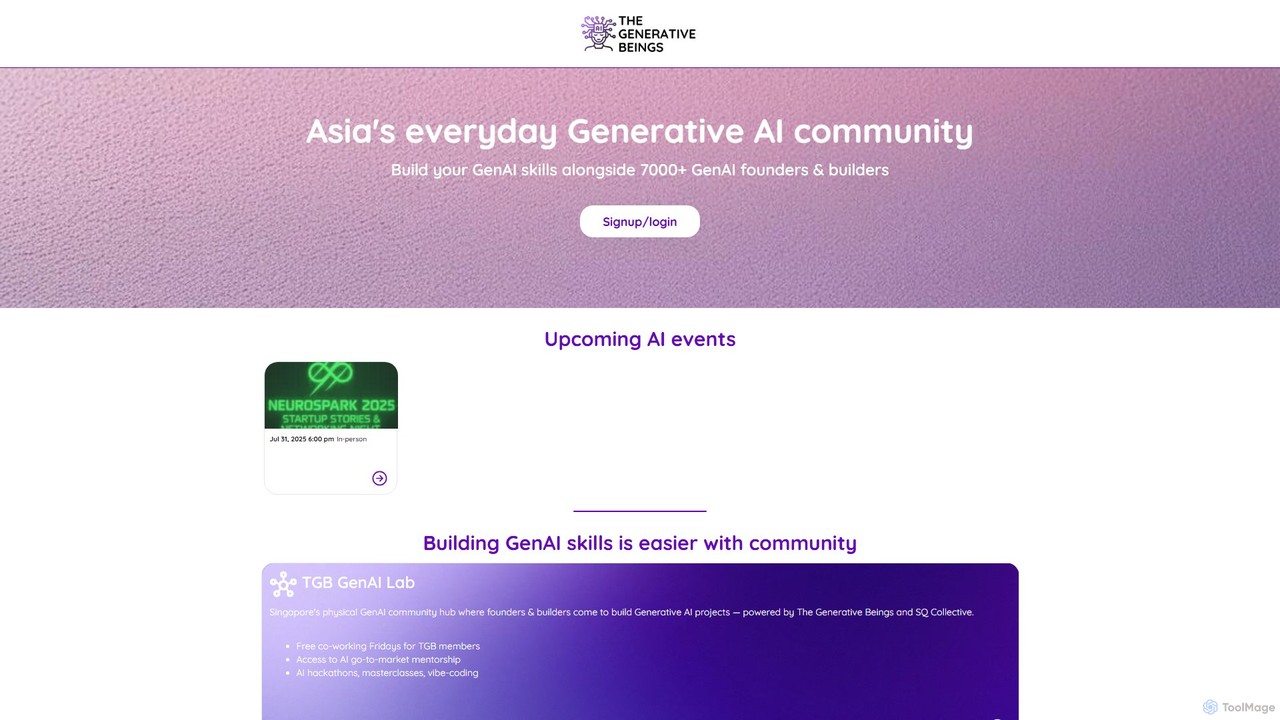
The Generative Beings is a leading community platform for over 7,000 Generative AI founders, builders, and experts in Asia. It provides a comprehensive ecosystem for learning, networking, and collaboration through online resources, a physical hub in Singapore (TGB GenAI Lab), and a wide range of events like hackathons, masterclasses, and mixers. It's the go-to destination for anyone looking to connect with the Asian GenAI scene, find jobs, discover new tools, and stay ahead of industry trends.

Professional Networking
Visits 6.2KFavorites 123Likes 112

About Conferences

AI Conferences are specialized gatherings that bring together experts, researchers, developers, and enthusiasts to explore the latest advancements in artificial intelligence. These events serve as crucial platforms for sharing cutting-edge research, discussing emerging trends, and fostering collaborations across various AI domains. Attendees gain invaluable insights into new technologies, practical applications, and the future direction of AI, making them essential for professional development and industry networking. They are a cornerstone of the AI ecosystem, facilitating the rapid dissemination of knowledge and accelerating innovation.

Core Features

  • Knowledge Exchange: Access keynote speeches, in-depth paper presentations, and dynamic panel discussions from leading AI minds and industry pioneers, covering a wide spectrum of topics from theoretical breakthroughs to practical implementations.
  • Networking Opportunities: Connect with a diverse range of peers, potential collaborators, mentors, and recruiters through dedicated networking sessions, social events, and exhibition floors, fostering valuable professional relationships within the global AI community.
  • Latest Research & Trends: Discover groundbreaking research papers, explore emerging technologies, and stay abreast of future industry directions, ethical considerations, and policy developments shaping the AI landscape.
  • Skill Development: Participate in hands-on workshops, intensive tutorials, and technical sessions designed to enhance practical AI skills, learn new frameworks, and master advanced tools directly from experts.
  • Innovation Showcase: Explore vibrant exhibition halls featuring new AI products, services, and startup innovations, offering a firsthand look at the commercial applications and future potential of artificial intelligence.

Applicable Scenarios

AI Conferences are vital for a diverse range of professionals seeking to advance their expertise and impact. Researchers attend to present their latest findings, receive peer feedback, and identify new avenues for study. Developers and engineers utilize these events to learn about new AI frameworks, tools, and best practices, directly from the creators and early adopters. Business leaders and strategists attend to identify potential AI solutions for their enterprises, understand market shifts, and scout for talent. Furthermore, students and career changers find conferences invaluable for exploring career paths, connecting with potential employers, and gaining a comprehensive overview of the AI landscape and its various specializations.

How to Choose

Selecting the right AI Conference involves considering several key factors to maximize your investment. Firstly, evaluate the focus area of the conference to ensure it aligns precisely with your specific interests, such as machine learning, natural language processing, computer vision, or AI ethics. Secondly, assess the speaker lineup and agenda for the relevance, expertise, and quality of the content presented. Thirdly, consider the networking opportunities available, including dedicated sessions, social events, and the typical attendee demographics. Finally, factor in the format (virtual, in-person, or hybrid), location, and overall cost to ensure it meets your logistical and budgetary requirements, and always check the conference's reputation and past reviews within the AI community for credibility.

Conferences use cases

1

Presenting Groundbreaking AI Research

AI researchers and academics utilize conferences to formally present their latest findings, experimental results, and theoretical contributions to a global audience of peers. This process involves submitting papers, undergoing peer review, and delivering presentations, which is crucial for gaining recognition, receiving feedback, and advancing their specific field of study within artificial intelligence. It also opens doors for potential collaborations and funding opportunities.

2

Mastering New AI Frameworks and Tools

Software developers and machine learning engineers attend specialized workshops and technical sessions at AI conferences to acquire practical skills in emerging AI frameworks like PyTorch or TensorFlow, or new tools for MLOps. These hands-on sessions provide direct instruction from experts, allowing participants to build working prototypes, troubleshoot challenges, and integrate new capabilities into their projects, significantly accelerating their professional development.

3

Strategic Networking for Career Advancement

AI professionals, from junior engineers to senior executives, leverage conferences for strategic networking. They connect with industry leaders, potential employers, mentors, and collaborators through dedicated networking events, exhibition booths, and informal discussions. This helps in identifying new career opportunities, gaining insights into industry trends, and building a robust professional network that can support long-term career growth and innovation.

4

Identifying AI Solutions for Enterprise Challenges

Business leaders, CTOs, and enterprise architects attend AI conferences to explore cutting-edge AI solutions that can address specific business challenges, such as enhancing customer service with chatbots or optimizing supply chains with predictive analytics. They engage with vendors, attend case study presentations, and participate in discussions to evaluate different technologies, understand implementation complexities, and make informed decisions about AI adoption within their organizations.

5

Staying Ahead of Emerging AI Trends and Ethics

Data scientists, AI strategists, and policymakers attend conferences to stay informed about the rapidly evolving landscape of AI, including new research paradigms, ethical considerations, and regulatory developments. Keynote speeches and panel discussions provide high-level insights into the future direction of AI, helping them anticipate market shifts, adapt strategies, and ensure responsible AI development and deployment within their respective fields.

6

Fostering Cross-Disciplinary AI Collaborations

Researchers and practitioners from diverse fields, such as healthcare, finance, or environmental science, attend AI conferences to find opportunities for cross-disciplinary collaboration. They seek AI experts to integrate machine learning into their domain-specific problems, leading to innovative solutions like AI-driven drug discovery or climate modeling. These interactions facilitate the exchange of knowledge and resources, accelerating progress in complex, real-world applications.

Conferences FAQ

What are AI Conferences and what is their primary purpose?

AI Conferences are organized events that gather professionals, researchers, and enthusiasts from the artificial intelligence community. Their primary purpose is to facilitate the exchange of knowledge, present new research findings, discuss emerging trends, and foster collaboration. These events typically feature keynote speeches, paper presentations, panel discussions, and often include workshops and exhibition areas showcasing new AI products and services.

Why should I consider attending an AI Conference?

Attending an AI Conference offers numerous benefits. For researchers, it's a platform to present work and receive peer feedback. Developers can learn about new tools and frameworks through workshops. Business professionals can identify AI solutions, scout talent, and understand market trends. Everyone benefits from networking with industry leaders, discovering cutting-edge research, and staying updated on the rapid advancements and ethical considerations within the AI landscape, which is crucial for professional growth.

How do AI Conferences differ from AI Workshops?

While both are types of AI events, AI Conferences primarily focus on broad knowledge dissemination, research presentations, and high-level discussions. They cover a wide range of topics and emphasize networking and strategic insights. In contrast, AI Workshops are typically more focused, hands-on, and intensive, designed for practical skill development in a specific tool, framework, or technique. Workshops aim to teach participants how to *do* something, while conferences aim to inform and connect.

What types of content and activities can I expect at a typical AI Conference?

A typical AI Conference offers a rich variety of content. You can expect inspiring keynote speeches from prominent figures in AI, paper presentations detailing new research, and panel discussions on critical industry topics or ethical dilemmas. Many conferences also feature poster sessions for informal research sharing, exhibition halls where companies showcase their latest AI products and services, and sometimes tutorials or workshops for deeper dives into specific technical areas. Networking events are also a common feature.

What are the best strategies for effective networking at an AI Conference?

To maximize networking at an AI Conference, start by researching attendees and speakers beforehand to identify key contacts. Prepare a concise elevator pitch about yourself and your work. Actively participate in Q&A sessions, attend social events, and visit exhibition booths to initiate conversations. Don't just collect business cards; aim for meaningful interactions. Follow up promptly after the conference, perhaps by connecting on LinkedIn or sending a brief email, to solidify new connections and potential collaborations.