ToolMage
Sign in

Best 2 Audience Engagement AI tools for Events

Popular Audience Engagement AI tools in Events include StreamAlive and Pigeonhole Live, helping you work more efficiently.

StreamAlive
Freemium

StreamAlive

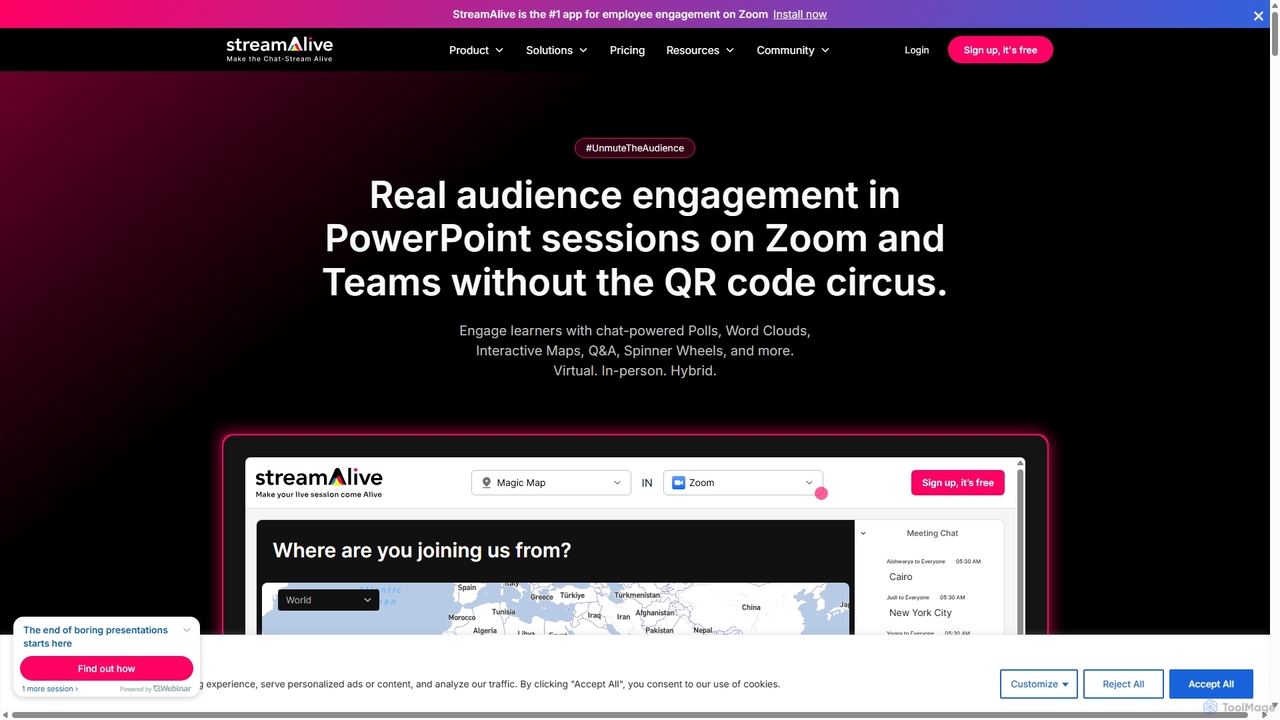
StreamAlive is an AI-powered audience engagement tool for live sessions on platforms like Zoom, Teams, and YouTube. It transforms passive presentations into interactive experiences using chat-powered features like polls, word clouds, interactive maps, and Q&A. Its AI can automatically generate engagement questions from your presentation material, making it easy for trainers, educators, and presenters to keep their audience captivated without complex setups or QR codes.

Training
Visits 48.9KFavorites 161Likes 151
Pigeonhole Live
Freemium

Pigeonhole Live

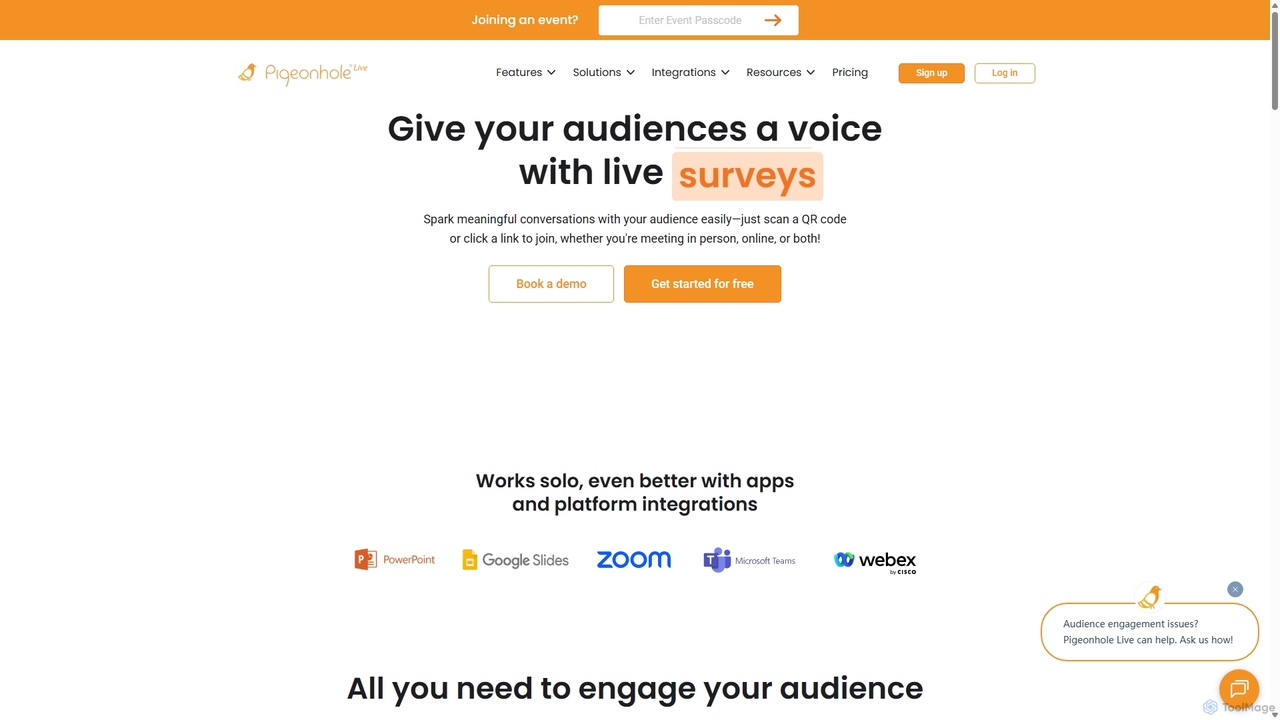
Pigeonhole Live is a comprehensive audience engagement platform designed for meetings, events, and conferences. It empowers organizers to boost participation through interactive tools like live Q&A with AI translation, polls, word clouds, quizzes, and surveys, creating a more inclusive and memorable experience for both in-person and virtual attendees.

Collaboration
Visits 42.5KFavorites 116Likes 125

About Audience Engagement

Audience Engagement tools are AI-powered solutions designed to enhance interaction and participation during events, presentations, and live sessions. These tools leverage technologies like natural language processing and real-time analytics to foster dynamic communication. They aim to transform passive attendees into active participants, driving deeper connection and memorable experiences. By automating interactive elements, they significantly boost the overall impact and effectiveness of any gathering.

Core Features

  • Real-time Polling & Q&A: Facilitate instant feedback and questions from attendees, displayed and managed live.
  • Interactive Quizzes & Games: Engage participants with gamified elements to test knowledge and encourage competition.
  • Sentiment Analysis: Monitor audience mood and feedback during sessions to adapt content or delivery in real-time.
  • Personalized Content Delivery: Tailor information or follow-up based on individual attendee interactions and preferences.
  • Networking Facilitation: Use AI to suggest relevant connections between attendees based on profiles and interests.

Use Cases

Event organizers use these tools to create dynamic virtual or hybrid conferences, ensuring attendees remain captivated. Educators can deploy them in classrooms or online lectures to gauge student comprehension and stimulate discussion. Marketing teams leverage them for interactive webinars, transforming product demos into engaging dialogues.

How to Choose

When selecting Audience Engagement tools, consider the specific event type (virtual, hybrid, in-person) and audience size. Evaluate the range of interactive features offered, such as live polling, Q&A, and networking capabilities. Look for seamless integration with existing event platforms and robust analytics for post-event insights. User-friendliness for both organizers and attendees is also crucial for successful adoption.

Audience Engagement use cases

1

Enhancing Interaction in Virtual Conferences

Virtual event organizers often struggle to maintain attendee attention. AI-powered Audience Engagement tools allow them to integrate live polls, Q&A sessions, and interactive breakout rooms directly into the virtual platform. This transforms passive viewing into active participation, leading to higher retention rates and more valuable attendee feedback, ultimately boosting event ROI.

2

Boosting Participation in Live Workshops

Workshop facilitators can use these tools to break the ice and keep energy levels high. By deploying quick quizzes or word clouds at key moments, they can instantly gather opinions and test understanding. This immediate feedback loop helps facilitators adjust their pace and content, ensuring the workshop remains relevant and engaging for every participant, fostering a more collaborative learning environment.

3

Personalizing Attendee Experience at Hybrid Events

Hybrid events present a challenge in catering to both in-person and remote audiences. AI engagement platforms can offer personalized content recommendations or networking suggestions based on attendee profiles and real-time interactions. This ensures that whether someone is physically present or joining remotely, they receive a tailored experience that maximizes their engagement and perceived value from the event.

4

Gathering Real-time Feedback During Product Launches

During a new product launch webinar, marketing teams need immediate insights into audience reactions. Engagement tools enable live sentiment analysis of chat comments and instant feedback surveys. This allows presenters to address concerns on the fly, highlight popular features, and gather crucial data for post-launch strategy adjustments, ensuring the message resonates effectively with the target market.

5

Facilitating Dynamic Q&A for Expert Panels

Expert panel discussions can become one-sided without effective audience interaction. AI-driven Q&A platforms allow attendees to submit questions, upvote others, and even filter by topic. This ensures the most relevant and popular questions are addressed, making the session more democratic and engaging, and providing panelists with direct insight into audience interests.

6

Driving Engagement in Educational Webinars

Educators hosting webinars can leverage interactive elements to prevent audience drop-off. Integrating short polls after each module or using gamified challenges can reinforce learning and keep participants focused. These tools provide immediate insights into comprehension levels, allowing instructors to clarify complex topics or revisit areas where understanding is low, leading to more effective knowledge transfer.

Audience Engagement FAQ

What are AI Audience Engagement tools?

AI Audience Engagement tools are software solutions that use artificial intelligence to create more interactive and captivating experiences for participants in events, meetings, and presentations. They go beyond basic communication by analyzing audience behavior, facilitating dynamic interactions like live polls and Q&A, and often personalizing content delivery. Their core aim is to transform passive observers into active, involved participants, thereby enhancing the overall impact and memorability of any gathering.

How do I choose the best AI tool for audience engagement?

To choose the best AI tool for audience engagement, consider your event type (virtual, hybrid, in-person) and audience size. Evaluate the specific features you need, such as live polling, Q&A, networking, or sentiment analysis. Check for integration capabilities with your existing event platforms, ease of use for both organizers and attendees, and the quality of analytics provided. Finally, assess the pricing model against your budget and the level of customer support offered.

What's the difference between general 'Events' tools and 'Audience Engagement' tools?

General 'Events' tools, often found in the parent category, typically cover broad event management aspects like registration, ticketing, scheduling, and venue logistics. In contrast, 'Audience Engagement' tools are a specialized subset focused specifically on enhancing interaction during the event itself. While event management tools handle the 'how to run an event,' engagement tools focus on 'how to make the event interactive and impactful' for attendees, often leveraging AI for dynamic, real-time interactions.

What specific AI features enhance audience engagement?

AI enhances audience engagement through several key features. These include real-time sentiment analysis of chat or verbal feedback, which helps presenters gauge mood and adjust. AI can also power intelligent Q&A moderation, prioritizing questions based on relevance or upvotes. Personalized content recommendations, smart networking suggestions, and adaptive gamification elements that adjust difficulty based on participant performance are also common AI-driven features, making interactions more dynamic and tailored.

What are the main benefits of using AI for audience engagement?

The main benefits of using AI for audience engagement include significantly increased participant interaction and satisfaction, leading to more memorable events. AI tools provide real-time insights into audience sentiment and comprehension, allowing for immediate adjustments to content or delivery. They also streamline interactive processes like Q&A and polling, saving organizer time. Ultimately, these tools help convert passive attendees into active contributors, fostering a stronger sense of community and delivering richer data for post-event analysis and improvement.