
PartyPilotAI
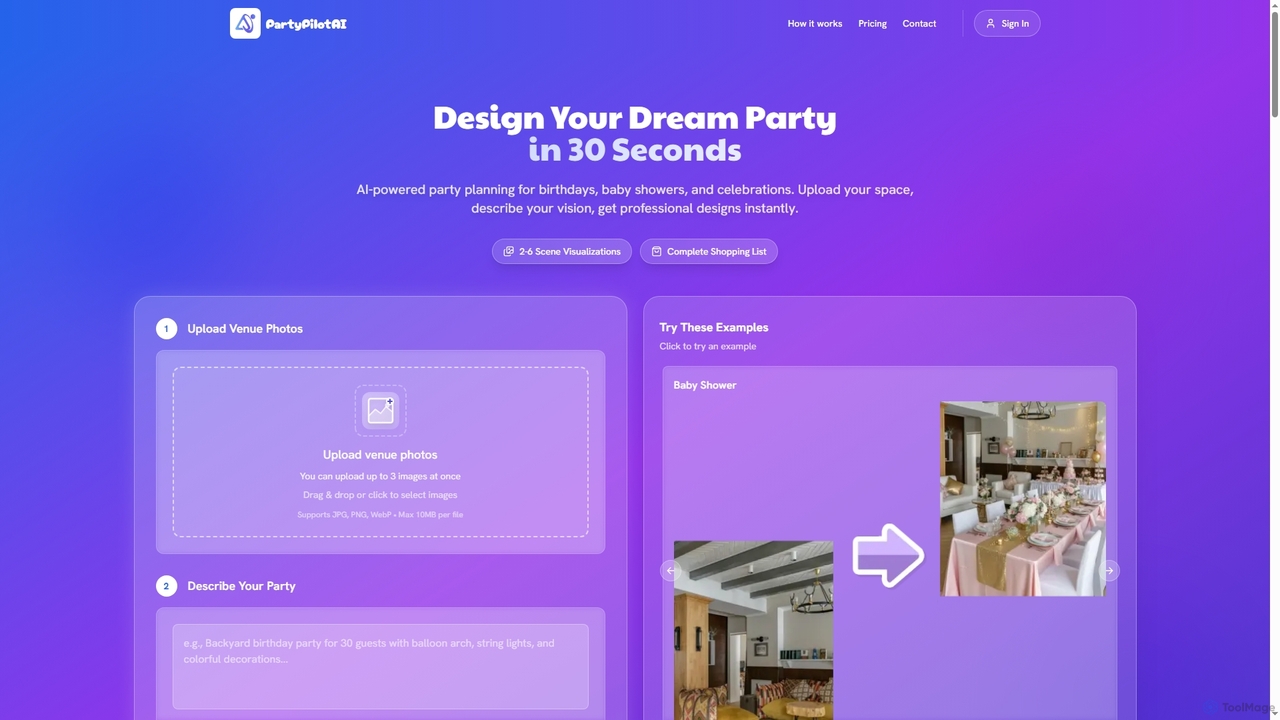
PartyPilotAI is an AI-powered party planner that transforms any space into a dream celebration venue in just 30 …
PartyPilotAI is an AI-powered party planner that transforms any space into a dream celebration venue in just 30 seconds. Simply upload photos of your space, describe your vision, and instantly receive photorealistic designs, floor plans, and a complete shopping list.
About Planning
AI Planning tools for events are specialized applications that use artificial intelligence to automate and optimize the complex process of organizing gatherings. These tools leverage machine learning and predictive analytics to handle tasks like budget forecasting, venue sourcing, and agenda scheduling. They empower event managers to streamline logistics, enhance attendee engagement, and make data-driven decisions, moving beyond simple checklists. Unlike general project management software, they offer event-specific intelligence for resource allocation and risk assessment.
Core Features
- Intelligent Venue Sourcing: Recommends optimal venues based on capacity, budget, location, and attendee data.
- Automated Scheduling: Creates conflict-free agendas and timelines by balancing speaker availability, session popularity, and breaks.
- Budget Forecasting: Uses historical data and market trends to predict event costs and suggest savings.
- Attendee Engagement Analytics: Analyzes attendee behavior to suggest personalized experiences and networking opportunities.
- Vendor Management: Streamlines communication, contract tracking, and performance evaluation for multiple vendors.
Use Cases
These tools are primarily used by corporate event planners, wedding coordinators, conference organizers, and community managers. For instance, a large tech conference can use AI to generate personalized schedules for thousands of attendees. A wedding planner might use it to manage vendor contracts and budget allocations, while a marketing team can optimize the schedule for a product launch event to maximize press coverage.
How to Choose
When selecting an AI Planning tool, consider the scale and type of your events. Evaluate its integration capabilities with CRM and marketing automation platforms. Assess the sophistication of its analytics and reporting features for measuring ROI. Also, consider the user interface's intuitiveness for your team and the pricing model's alignment with your event frequency and size.
PlanningUse Cases
Optimizing Corporate Conference Logistics
An event manager for a multinational corporation is tasked with organizing an annual sales conference for 500 attendees. Using an AI Planning tool, they input constraints like budget, required breakout rooms, and attendee travel origins. The AI analyzes thousands of venue options, shortlisting the top three based on cost-effectiveness and accessibility. It then generates an optimized agenda that minimizes session overlaps and maximizes networking time, automatically scheduling speakers based on their availability. This reduces planning time by over 40% and improves attendee satisfaction scores.
Creating a Personalized Wedding Itinerary
A wedding planner is managing a complex wedding with multiple events over a weekend. They use an AI Planning tool to coordinate vendors, guest accommodations, and transportation. By inputting guest RSVPs and dietary restrictions, the tool helps generate an optimal seating chart that considers social dynamics. It also creates a master timeline for the wedding party and all vendors, sending automated reminders for key deadlines like payments and final confirmations. This ensures a smooth, synchronized execution and frees up the planner to focus on creative details.
Forecasting Budget for a Music Festival
The organizing committee for an annual music festival needs to create a reliable budget. They use an AI Planning tool that analyzes historical data from previous years, including ticket sales, vendor costs, and security expenses. The AI model also incorporates external factors like inflation rates and competing events. It generates a detailed budget forecast with a 95% confidence interval, highlighting areas of potential cost overruns. This allows the committee to secure appropriate funding, negotiate better deals with vendors, and set ticket prices strategically for maximum profitability.
Scheduling a Multi-Track Academic Conference
An academic institution is organizing a three-day conference with over 200 presentations across 10 parallel tracks. Manually creating a schedule is prone to conflicts and inefficiencies. The conference chair uses an AI Planning tool to automate this process. They upload all presentation details, author availability, and topic keywords. The AI algorithm generates a conflict-free schedule in minutes, grouping related topics in the same sessions and ensuring popular speakers don't clash. It also optimizes room assignments based on predicted attendance for each session, preventing overcrowding.
Managing Vendor Logistics for a Trade Show
A trade show organizer coordinates with hundreds of exhibitors and service vendors. They use an AI Planning platform to create a central hub for all vendor communications, contracts, and deadlines. The system automatically tracks insurance certificate submissions and payment schedules, sending alerts for any pending items. It also features an intelligent floor plan designer that suggests optimal booth placement for exhibitors based on their industry, size, and potential for synergy with neighboring booths, enhancing traffic flow and exhibitor satisfaction.
Assessing Risks for an Outdoor Charity Run
A non-profit organization is planning a large-scale outdoor charity run. The event planner uses an AI tool to conduct a comprehensive risk assessment. The tool analyzes weather forecast data, historical incident reports for similar events, and local traffic patterns. It identifies potential risks such as extreme weather, medical emergencies, and route congestion. Based on this analysis, the AI suggests contingency plans, including alternative routes, placement of medical stations, and communication protocols for volunteers, ensuring a safer event for all participants.