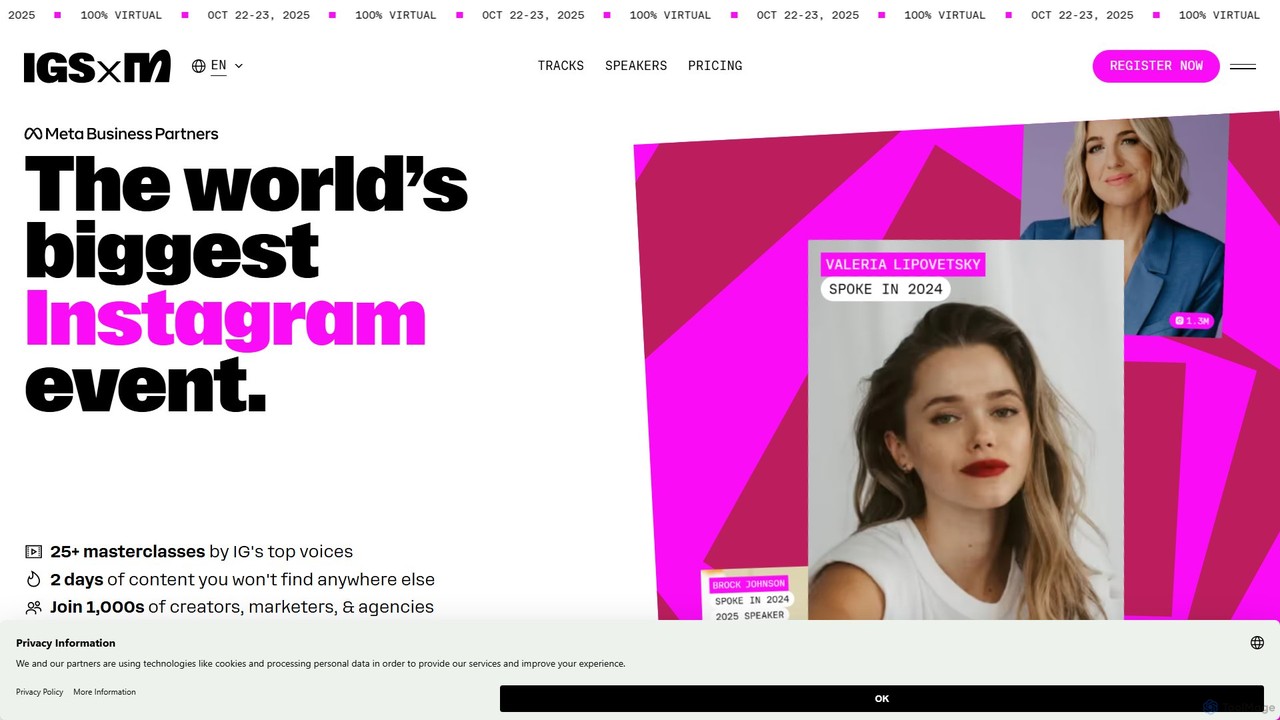
Virtual Conferences are AI-powered platforms designed to host immersive, interactive online events, extending the reach and engagement beyond physical limitations. These tools leverage advanced AI for features like personalized networking, intelligent content recommendations, and real-time analytics, transforming traditional gatherings into dynamic digital experiences. They enable organizations to connect global audiences, facilitate knowledge sharing, and foster community building with enhanced efficiency and measurable impact.
Core Features
- AI-driven Networking: Facilitates intelligent attendee matching based on interests, roles, and goals to foster meaningful connections.
- Interactive Session Management: Supports live polls, Q&A, breakout rooms, and virtual whiteboards for dynamic audience engagement.
- Virtual Exhibition Halls: Offers customizable digital booths for sponsors and exhibitors with interactive content and lead capture capabilities.
- Real-time Translation & Captioning: Provides multilingual support to break down language barriers for a truly global audience.
- Advanced Analytics & Reporting: Tracks attendee engagement, session popularity, and ROI with detailed, actionable insights.
Applicable Scenarios
Large corporations utilize virtual conference platforms for global sales kick-offs, internal training summits, and investor relations meetings, ensuring consistent messaging and broad participation across different time zones. Academic institutions host international research symposiums and student career fairs, making cutting-edge knowledge accessible worldwide. Event management companies leverage these tools to create scalable, engaging online versions of their annual industry trade shows and professional development conferences.
How to Choose
When selecting a virtual conference platform, prioritize scalability to accommodate varying attendee numbers and event sizes. Evaluate the level of customization offered for branding and user experience, ensuring it aligns with your event's identity. Consider integration capabilities with existing CRM, marketing automation, and registration systems for seamless workflows. Assess the platform's interactive features, networking tools, and analytics dashboards to maximize engagement and measure success effectively. Finally, robust security protocols and reliable technical support are crucial for a smooth and secure event.