
Events Best in category 1 results Virtual Event Platform AI Tool

Popular AI tools in the Virtual Event Platform field of Events include Remo, etc., helping you quickly improve efficiency.

Remo

Remo

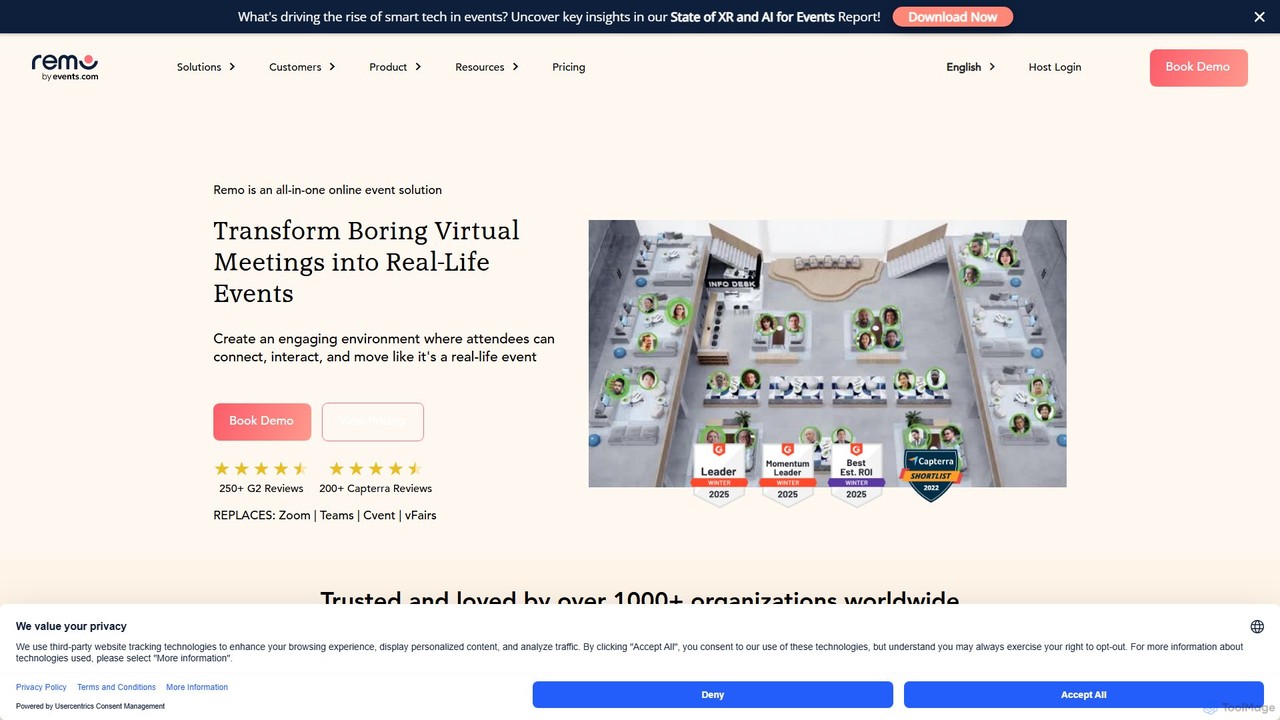
Remo is an all-in-one virtual event platform designed to create immersive and engaging online experiences. It replaces traditional …

108.4K

About Virtual Event Platform

A Virtual Event Platform is a comprehensive software solution designed to host interactive and engaging events entirely online. These platforms leverage AI and real-time communication technologies to replicate the experience of a physical event, offering features like live streaming, audience engagement tools, and virtual networking spaces. They enable organizations to reach a global audience, reduce logistical costs, and gather detailed data on attendee behavior. The primary value lies in creating immersive digital experiences that go beyond simple video conferencing.

Core Features

  • Interactive Live Streaming: Broadcast high-definition video with tools for real-time Q&A, polls, and live chat to boost audience participation.
  • Virtual Expo & Sponsor Booths: Create digital booths where sponsors can showcase products, share content, and interact with attendees via chat or video.
  • AI-Powered Networking: Facilitate connections between attendees through AI matchmaking algorithms, virtual lounges, and one-on-one meeting schedulers.
  • Engagement Analytics: Track key metrics such as session attendance, dwell time, content downloads, and interaction rates to measure event success.
  • On-Demand Content Hub: Host recorded sessions and event materials in a library for attendees to access post-event, extending the event's lifecycle.

Use Cases

Virtual Event Platforms are widely used by corporate marketing teams for product launches and user conferences, by human resources for virtual career fairs and internal town halls, and by professional associations for hosting international congresses and educational webinars. Educational institutions also use them for virtual open days and online learning summits.

How to Choose

When selecting a platform, consider its scalability to handle your expected audience size. Evaluate the depth of its engagement features, such as breakout rooms and gamification. Check for integration capabilities with your existing CRM and marketing automation tools. Finally, assess the level of customization available for branding and the robustness of its analytics dashboard.

Virtual Event PlatformUse Cases

1

Hosting a Global Tech Conference

An event manager for a multinational tech company is tasked with organizing their annual developer conference. By using a Virtual Event Platform, they can create a multi-track, multi-day event accessible to a global audience without the need for travel. The platform supports high-quality keynote streams, interactive breakout sessions with live Q&A, and virtual sponsor booths where partners can showcase their APIs and services. AI-powered networking tools suggest connections between attendees, fostering a sense of community and leading to valuable professional relationships.

2

Conducting a University Virtual Career Fair

A university's career services department uses a Virtual Event Platform to connect students with top employers. Recruiters set up branded virtual booths with company information, job postings, and videos. Students can browse booths, submit resumes, and engage in one-on-one text or video chats with company representatives. The platform's scheduling tool allows for pre-booked interviews, streamlining the recruitment process. After the event, the university receives detailed analytics on student engagement and employer interactions, helping them measure the fair's success.

3

Executing a Corporate Product Launch

A marketing team is launching a new software product to a global audience of journalists, partners, and potential customers. They use a Virtual Event Platform to create a dynamic launch event. The event features a polished keynote presentation from the CEO, followed by live, interactive product demos led by product managers in separate virtual rooms. A digital press kit is available for download in a virtual media lounge. The platform captures lead information from all registrants and tracks which sessions they attended, providing the sales team with valuable, qualified leads to follow up on.

4

Facilitating a Hybrid Company All-Hands Meeting

A company with offices worldwide needs to conduct its quarterly all-hands meeting. To accommodate both in-office and remote employees, they use a Virtual Event Platform that supports hybrid events. The live presentation from headquarters is streamed to all virtual attendees. Remote employees can participate in real-time polls and submit questions through a moderated Q&A feature, ensuring their voices are heard alongside their in-person colleagues. The platform integrates both audiences, fostering a unified company culture regardless of employee location.

5

Running a Professional Association's Webinar Series

A medical association offers a series of accredited webinars for its members. Using a Virtual Event Platform, they can manage registrations, process payments, and host the live sessions. During the webinars, presenters share slides and engage with the audience through polls and Q&A. The platform automatically tracks attendance and engagement, which is necessary for issuing continuing education credits. After each live event, the recording is added to an on-demand content library, allowing members to access valuable educational material at their convenience.

6

Creating an Immersive Virtual Trade Show

An industry association replaces its annual physical trade show with a virtual one. Using a Virtual Event Platform, they build a 3D virtual exhibition hall where attendees can navigate between exhibitor booths. Each booth is customizable, allowing exhibitors to display product videos, offer downloadable brochures, and host live Q&A sessions. The platform's gamification features, like a leaderboard for visiting booths, encourage attendees to explore the entire show. This approach significantly reduces costs for both the organizer and exhibitors while expanding the event's reach to a global audience.

Virtual Event PlatformFrequently Asked Questions