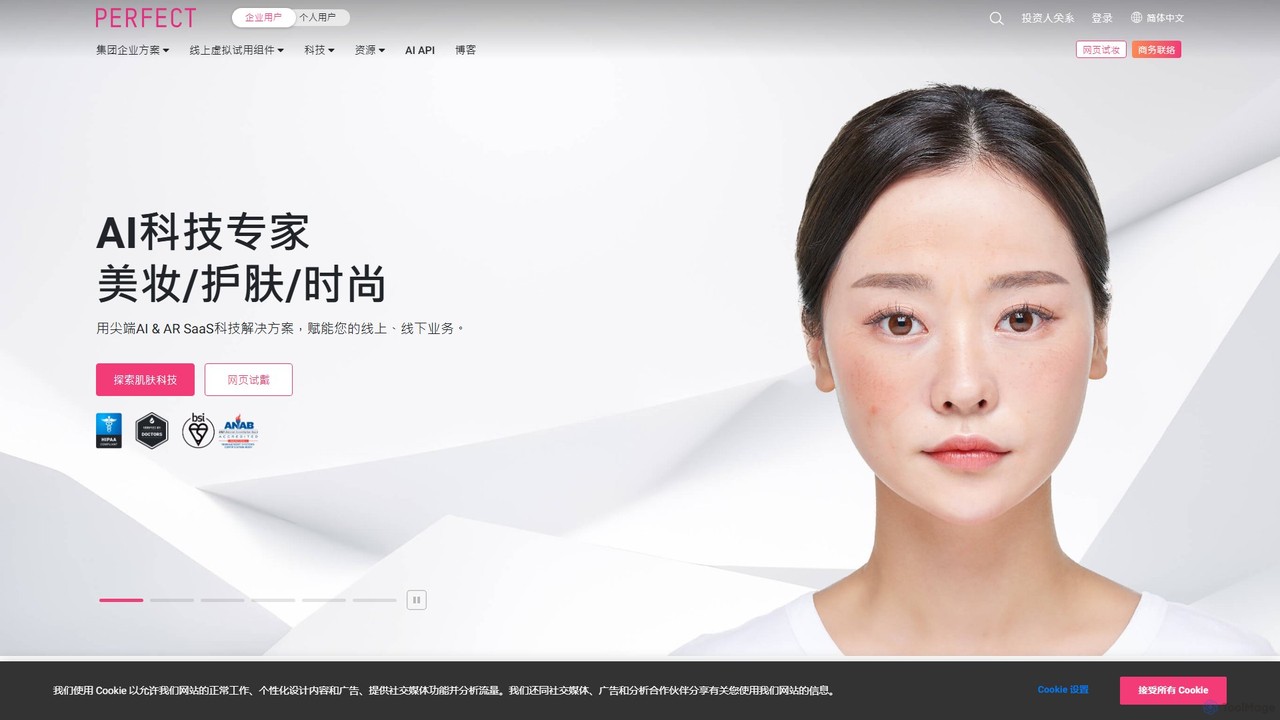
Perfect Corp
Perfect Corp is a leading SaaS provider offering AI and AR solutions for the beauty and fashion industries. …
Perfect Corp is a leading SaaS provider offering AI and AR solutions for the beauty and fashion industries. Its technology enables hyper-realistic virtual try-on for makeup, hair, and accessories, alongside advanced AI skin analysis. By integrating these tools, brands can enhance their e-commerce and in-store experiences, driving sales, increasing customer engagement, and delivering personalized shopping journeys at scale.
About Beauty Tech
Beauty Tech tools are a class of AI-driven applications designed to analyze, simulate, and personalize beauty and skincare experiences. They utilize computer vision to assess skin conditions and facial features, and employ augmented reality (AR) for real-time virtual try-ons of makeup or hairstyles. The primary value of these tools lies in empowering consumers to make more confident purchasing decisions and providing brands with data-driven insights. This technology bridges the gap between digital browsing and physical product experience.
Core Features
- Virtual Try-On (VTO): Uses AR to realistically overlay makeup products, hair colors, or accessories onto a user's live video or photo.
- AI Skin Analysis: Scans a user's face to detect and quantify skin concerns such as wrinkles, dark spots, acne, and hydration levels.
- Personalized Recommendations: Suggests specific products or skincare routines based on the results of AI analysis and user preferences.
- Shade Matching: Analyzes skin tone to find the perfect foundation or concealer shade from a brand's product line.
- Trend Forecasting: Aggregates and analyzes social media and sales data to predict upcoming beauty trends.
Use Cases
Beauty Tech is primarily adopted by e-commerce cosmetic brands to enhance their online stores, allowing customers to try products virtually before buying. It's also used by physical retailers in the form of smart mirrors for an interactive in-store experience. Skincare companies leverage these tools to offer personalized routine recommendations, increasing customer engagement and loyalty.
How to Choose
When selecting a Beauty Tech tool, consider the accuracy and realism of the AR and AI analysis. For businesses, evaluate the ease of integration with existing e-commerce platforms (like Shopify or Magento). Also, assess the breadth of the product catalog it supports and review the provider's data privacy policy to ensure user information is handled responsibly.
Beauty TechUse Cases
Enhance E-commerce with Virtual Makeup Try-On
For an online cosmetics store, integrating a Virtual Try-On (VTO) feature is a powerful way to boost sales. A potential customer visiting the website can use their device's camera to see how different shades of lipstick, eyeshadow, or foundation look on their face in real-time. This interactive experience reduces purchase uncertainty, significantly lowers product return rates, and increases conversion rates by helping shoppers make confident color choices without needing physical samples.
Generate Personalized Skincare Routines
A user looking for a new skincare regimen can use an AI skin analysis tool. By uploading a selfie, the AI analyzes their skin for concerns like hydration, acne, wrinkles, and dark spots. Based on this data, the tool generates a personalized daily and nightly routine, recommending specific products (cleansers, serums, moisturizers) tailored to their unique skin needs. This helps users navigate the overwhelming skincare market and find effective products faster, fostering brand loyalty for the product provider.
Find the Perfect Foundation Shade Online
Finding the right foundation shade is a common challenge for online shoppers. A Beauty Tech tool with shade matching capabilities solves this problem. A user can use their phone's camera to scan their skin tone under natural light. The AI algorithm then analyzes the skin's undertones and shade, comparing it against a brand's entire foundation range to recommend the top 1-3 best matches. This eliminates guesswork, reduces returns of incorrectly purchased shades, and significantly improves the customer's shopping experience.
Create Engaging Social Media Content
A beauty influencer or content creator can use a virtual try-on tool to produce dynamic content efficiently. Instead of spending hours applying and removing different makeup looks, they can use an AR tool to showcase 10 different lipstick shades in a single short video. This allows them to demonstrate a wider range of products to their audience, create interactive polls ('Which shade do you like best?'), and keep their content fresh and engaging without the extensive time and product cost associated with physical application.
Power In-Store Smart Mirror Experiences
For a physical retail store, a smart mirror equipped with Beauty Tech offers a futuristic shopping experience. Shoppers can stand in front of the mirror and instantly try on dozens of makeup products or hair colors with a simple gesture or voice command. This creates a hygienic, 'no-touch' environment and allows customers to experiment with bold looks they might be hesitant to try physically. The mirror can also recommend complementary products, acting as a digital beauty advisor to drive upsells and enhance customer engagement.
Guide New Product Development with Data
A cosmetics brand's R&D team can leverage aggregated, anonymized data from their AI skin analysis tool. By analyzing trends from thousands of users, they can identify common, unmet skincare needs, such as a rising concern for 'maskne' or hyperpigmentation in a specific demographic. This data-driven insight allows them to develop new products that directly address real-world customer problems, reducing the risk of launching products that don't resonate with the market.