Clothes Changer
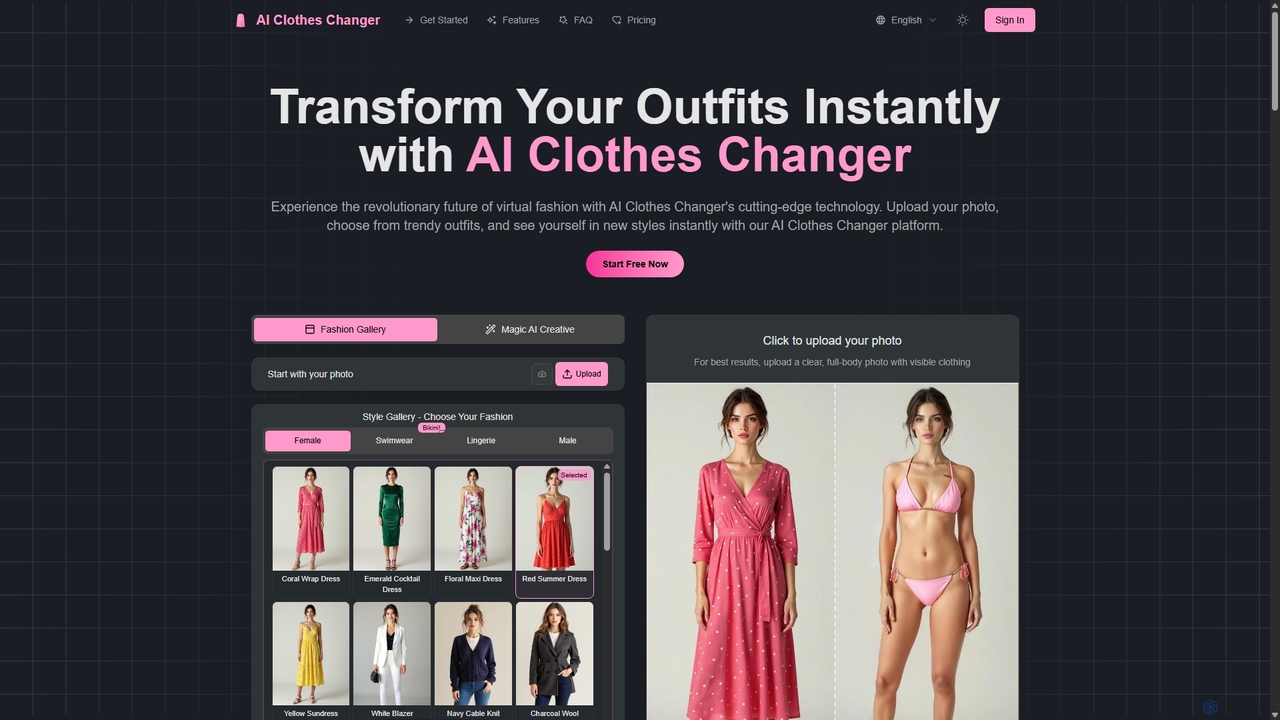
An AI-powered virtual try-on platform that allows users to instantly change outfits in their photos. Upload a photo, …
An AI-powered virtual try-on platform that allows users to instantly change outfits in their photos. Upload a photo, choose from a vast library of styles, and visualize new looks realistically for personal styling, content creation, or e-commerce.
About E Commerce
E Commerce AI tools are a category of artificial intelligence solutions designed to optimize and automate various aspects of online retail operations. Leveraging machine learning, natural language processing, and computer vision, these tools enhance customer experience, streamline backend processes, and drive sales growth for businesses operating in the digital marketplace. They are particularly vital for online fashion brands seeking to personalize shopping journeys and manage vast product catalogs efficiently.
Core Features
- Personalized Recommendations: AI algorithms analyze customer behavior to suggest relevant products, increasing conversion rates.
- Automated Customer Service: AI chatbots and virtual assistants handle inquiries, provide support, and guide shoppers 24/7.
- Product Content Optimization: AI generates or refines product descriptions, images, and SEO tags for better visibility and appeal.
- Demand Forecasting & Inventory: Predictive AI models analyze sales data to optimize stock levels and prevent overstocking or shortages.
- Fraud Detection: AI identifies suspicious transactions and patterns to protect businesses and customers from financial loss.
Applicable Scenarios
Online retailers, fashion brands, dropshippers, and marketplaces use these tools to automate marketing campaigns, personalize product displays, manage customer interactions, and optimize supply chains. They are crucial for scaling operations and maintaining competitiveness in the fast-paced e-commerce environment.
How to Choose
Consider the specific e-commerce platform integration, the scope of automation needed (e.g., marketing, customer service, logistics), scalability for growth, and the accuracy of AI models for your product catalog. Evaluate the ease of implementation and the vendor's support for seamless operation.

E CommerceUse Cases
Generating Personalized Product Recommendations
E-commerce managers use AI to analyze browsing history and purchase patterns, automatically displaying tailored product suggestions to individual shoppers. This significantly boosts cross-selling and upselling opportunities, leading to higher average order values and improved customer satisfaction by presenting highly relevant items, especially for diverse fashion catalogs.
Automating Customer Support with AI Chatbots
Online retailers deploy AI-powered chatbots to handle common customer inquiries, provide instant answers about orders, shipping, and product details. This frees up human agents for complex issues, ensures 24/7 support, and improves response times, leading to higher customer satisfaction and reduced operational costs for e-commerce businesses.
Optimizing Product Descriptions and SEO
Content teams leverage AI to generate compelling, SEO-friendly product descriptions and meta tags for thousands of items. This ensures higher search engine rankings, improved product discoverability on e-commerce platforms, and consistent brand voice across a large inventory, crucial for fashion retailers with extensive product lines.
Predictive Demand Forecasting for Inventory
Supply chain managers utilize AI to analyze historical sales data, market trends, and seasonal fluctuations, accurately predicting future demand. This optimizes inventory levels, reduces waste from overstocking, and prevents stockouts for popular products, ensuring efficient operations and maximizing profitability for e-commerce businesses.
Creating AI-Powered Virtual Try-On Experiences
Fashion e-commerce brands integrate AI tools that allow customers to virtually try on clothing or accessories using augmented reality (AR) technology. This enhances the online shopping experience, reduces return rates by improving fit confidence, and provides an engaging, interactive way for shoppers to visualize products before purchase.
Detecting and Preventing E-commerce Fraud
Online payment teams employ AI systems to monitor transaction data in real-time, identifying suspicious activities, fraudulent patterns, and potential chargebacks. This proactive approach protects revenue, safeguards customer trust, and minimizes financial losses for e-commerce businesses by quickly flagging and preventing fraudulent transactions.