VAIVR
VAIVR is an AI-powered virtual try-on (VTO) solution for the fashion industry. It uses precision body modeling and …
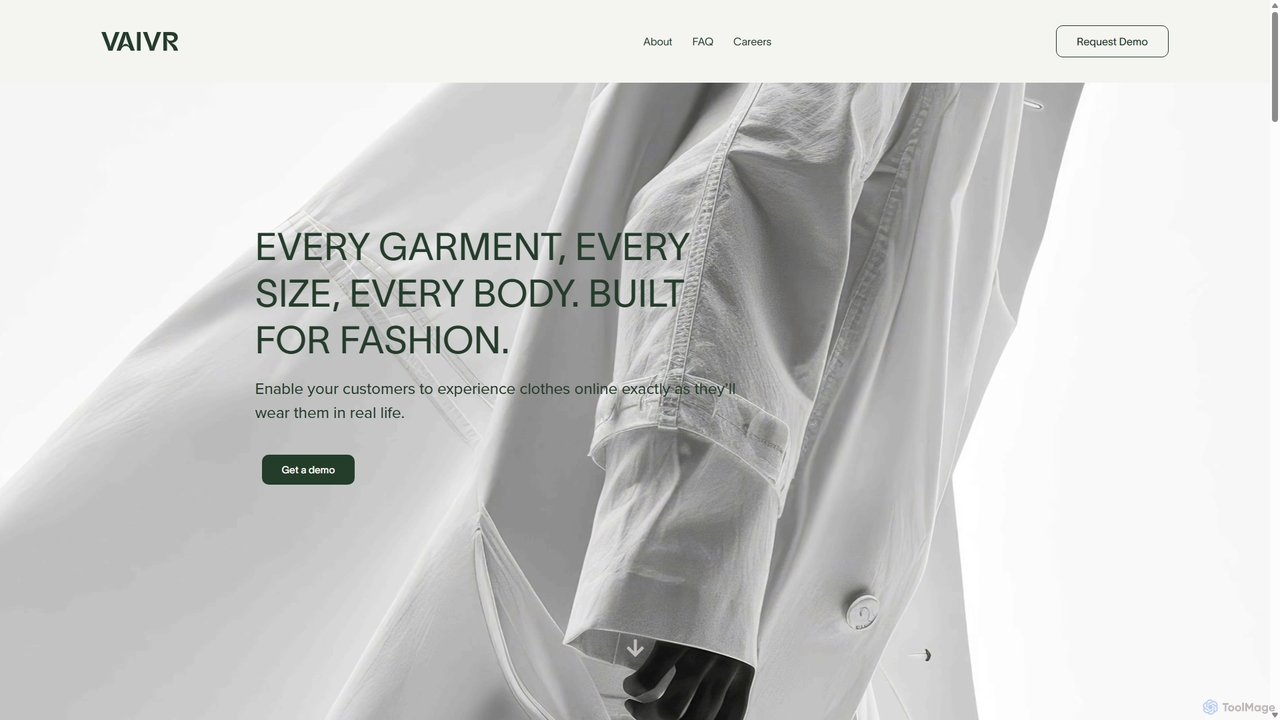
VAIVR is an AI-powered virtual try-on (VTO) solution for the fashion industry. It uses precision body modeling and true-to-life fabric simulation to create dynamic video previews, allowing customers to see how garments will look, move, and fit on their specific body type. This technology is designed to revolutionize e-commerce by increasing conversions, reducing return rates, and building customer confidence.
SpreeAI
SpreeAI offers a cutting-edge, AI-powered virtual try-on solution for fashion e-commerce brands. Its photorealistic technology allows customers to …
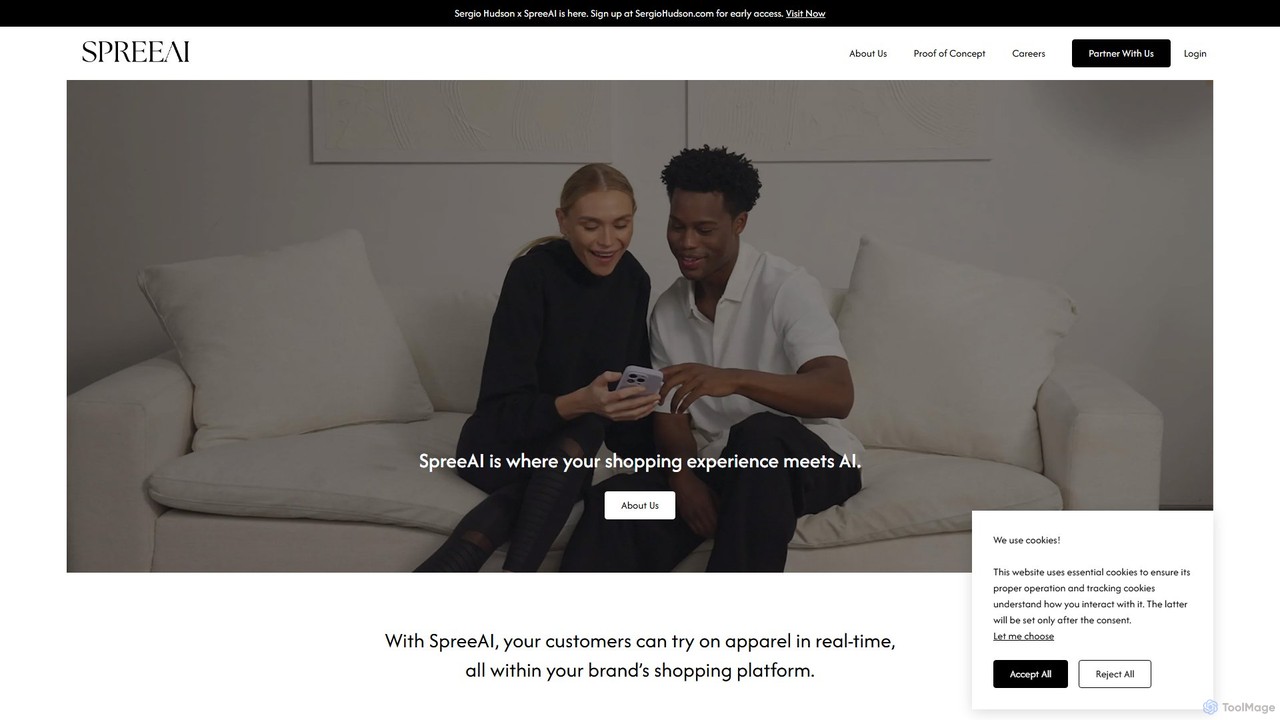
SpreeAI offers a cutting-edge, AI-powered virtual try-on solution for fashion e-commerce brands. Its photorealistic technology allows customers to see how clothes look on their own bodies in real-time, directly on the retailer's website or app. This immersive experience is designed to boost customer confidence, increase conversion rates, and significantly reduce product returns, providing a competitive edge in the digital fashion landscape.
About Retail Tech
Retail Tech AI tools are a class of software that uses artificial intelligence to optimize and automate operations within the retail sector, particularly in dynamic industries like fashion. These tools analyze vast amounts of data—from sales history to customer behavior—to power features like predictive forecasting and personalization. They help fashion brands and retailers enhance the customer shopping experience, manage inventory more effectively, and make data-driven decisions to increase profitability.
Core Features
- Personalized Recommendations: Analyzes user browsing and purchase history to suggest relevant products.
- Demand Forecasting: Predicts future sales trends for specific items to optimize stock levels and reduce waste.
- Virtual Try-On (VTO): Uses AR and AI to allow customers to virtually see how apparel or accessories look on them.
- Dynamic Pricing Optimization: Automatically adjusts product prices based on demand, competition, and inventory data.
- AI-Powered Chatbots: Provides instant customer support for order tracking, returns, and product inquiries 24/7.
Use Cases
These tools are essential for online fashion e-commerce stores, multi-channel brands, and brick-and-mortar retailers. They are used by merchandising teams to plan inventory, marketing teams to create personalized campaigns, and store managers to improve in-store experiences and layouts based on foot traffic analysis.
How to Choose
When selecting a Retail Tech tool, consider its integration capabilities with your existing e-commerce platform (e.g., Shopify, Magento). Evaluate the accuracy of its AI models for forecasting and personalization, its scalability to handle traffic peaks, and its data privacy compliance. Also, assess the user interface's ease of use for non-technical team members.
Retail TechUse Cases
Enhance E-commerce Personalization
An online fashion retailer uses an AI Retail Tech tool to analyze real-time user behavior, including clicks, time spent on pages, and past purchases. Based on this data, the AI engine dynamically personalizes the homepage for each visitor, showcasing products and categories they are most likely to be interested in. This results in a more engaging shopping experience, leading to higher conversion rates and increased average order value by presenting relevant items at the right moment.
Optimize Inventory for Seasonal Collections
A fashion brand preparing for its new spring collection uses an AI demand forecasting tool. The tool analyzes historical sales data, current market trends, social media sentiment, and even weather forecasts to predict which items will be bestsellers and in which sizes. This allows the brand to optimize its production orders, avoiding overstocking on less popular items and preventing stockouts of high-demand products, thereby maximizing revenue and minimizing waste.
Reduce Returns with Virtual Try-On
An online shoe store integrates a Virtual Try-On (VTO) feature powered by AI and augmented reality. Customers can use their smartphone camera to see how different sneakers would look on their feet. The AI also recommends the best size based on a photo of their foot. This immersive experience helps customers make more confident purchasing decisions, significantly reducing the rate of returns due to poor fit or style mismatch, which in turn saves the company on logistics and restocking costs.
Automate Visual Merchandising
An e-commerce manager for a large apparel site uses an AI tool to automate visual merchandising. Instead of manually arranging products on category pages, the AI analyzes product images and performance data. It automatically organizes the grid to be visually appealing, placing complementary colors and styles together, while also prioritizing bestsellers and high-margin items. This saves the merchandising team hours of manual work each week and creates a more dynamic and conversion-optimized storefront.
Manage Customer Service During Peak Sales
During a Black Friday sale, a fashion retailer's customer service team is overwhelmed with inquiries. They deploy an AI-powered chatbot on their website and social media. The chatbot instantly answers common questions about discount codes, shipping times, and return policies. For complex issues, it collects the customer's information and creates a ticket for a human agent. This system handles over 70% of incoming queries, freeing up human agents to focus on high-value problems and ensuring no customer is left waiting.
Analyze In-Store Shopper Behavior
A brick-and-mortar fashion store uses AI-powered cameras and sensors to analyze shopper behavior anonymously. The system tracks foot traffic patterns, identifies popular 'hot zones' and 'cold zones' within the store, and measures dwell time at specific displays. The store manager uses these insights to optimize the store layout, place high-margin items in high-traffic areas, and A/B test different product displays to see which ones attract more attention, ultimately increasing in-store sales.