ToolMage
Sign in

Best 1 Shopping Assistant for Fashion

Popular Shopping Assistant in Fashion include shopencore, helping you work more efficiently.

shopencore
Free

shopencore

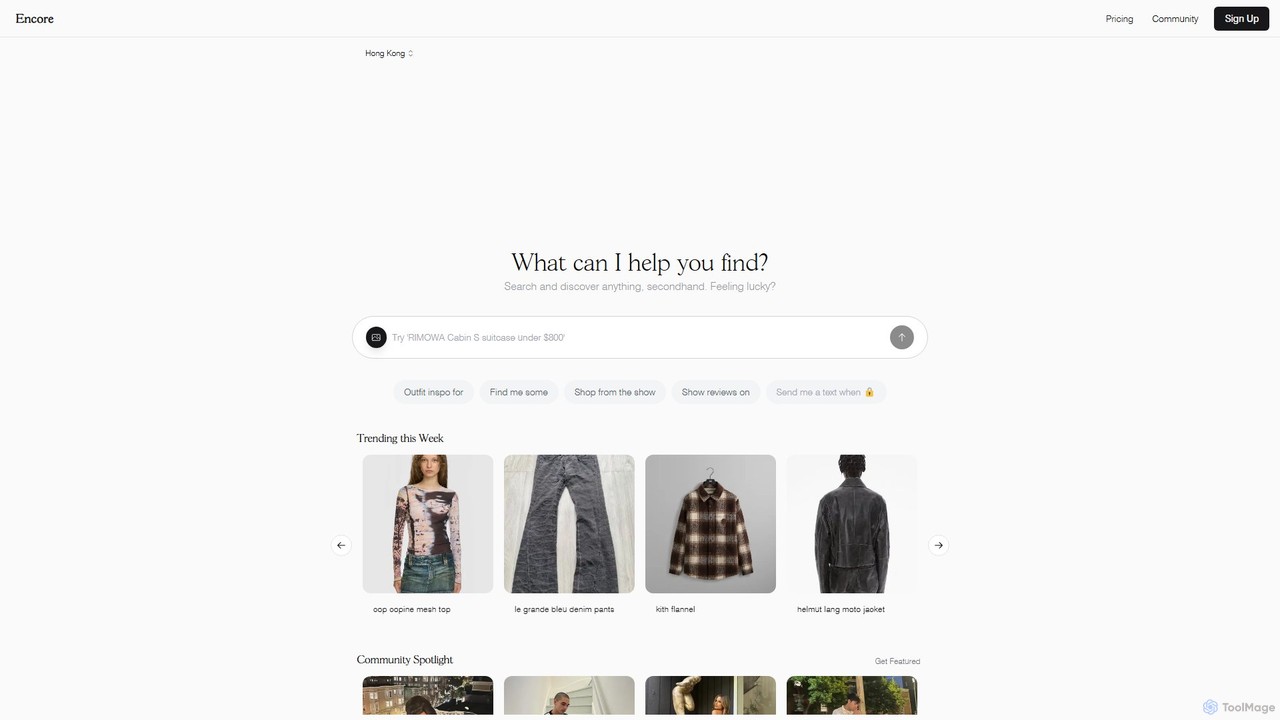
An AI-powered search engine for the secondhand market. Use natural language or image uploads to discover and compare deals on vintage fashion, furniture, electronics, and collectibles from across the web, all in one place.

Price Comparison
Visits 26.1KFavorites 167Likes 161

About Shopping Assistant

Shopping Assistant tools are AI-powered applications designed to enhance and personalize the online retail experience, particularly within the fashion sector. They leverage machine learning algorithms to analyze user behavior, style preferences, and product data to provide tailored recommendations. These assistants streamline the discovery-to-purchase journey by automating tasks like price comparison, deal hunting, and review analysis. Their primary value lies in transforming standard e-commerce browsing into an interactive, efficient, and confident decision-making process.

Core Features

  • Personalized Recommendations: Suggests clothing and accessories based on your browsing history, purchase patterns, and stated style preferences.
  • Price Tracking & Coupon Hunting: Automatically monitors prices for specific items across multiple retailers and applies the best available coupons at checkout.
  • Visual Search: Allows users to upload an image of an outfit or item to find visually similar products available for purchase.
  • Fit & Size Prediction: Utilizes user measurements and crowd-sourced data to recommend the most accurate size for a specific brand or garment, reducing returns.
  • Review Summarization: Aggregates and analyzes customer reviews to provide a concise summary of a product's pros and cons.

Use Cases

These tools are primarily used by online shoppers, from casual buyers to dedicated fashion enthusiasts, seeking a more efficient and personalized experience. They are often integrated as browser extensions, standalone mobile apps, or features within major e-commerce platforms. Fashion bloggers and influencers also use them to create curated shopping lists and find shoppable alternatives for their followers.

How to Choose

When selecting a Shopping Assistant, consider its integration capabilities (browser extension vs. mobile app), the breadth of its retailer network for price comparisons, and the sophistication of its personalization engine. Evaluate its user interface for ease of use and check its privacy policy to understand how your shopping data is handled. For fashion, tools with strong visual search and size prediction features offer significant advantages.

Shopping Assistant use cases

1

Discovering the Perfect Outfit for an Event

A user needs to find a dress for a friend's wedding. Instead of endlessly scrolling through websites, they use a Shopping Assistant. They input key criteria like 'cocktail attire,' 'color: blue,' and 'budget: under $150.' The AI analyzes these inputs along with the user's past preferences and presents a curated list of dresses from various retailers. It even suggests matching shoes and accessories, helping the user visualize and assemble a complete, stylish outfit in a fraction of the time.

2

Finding the Best Price on a Desired Item

A shopper wants to buy a specific pair of designer sneakers but knows the price varies across stores. They use a Shopping Assistant browser extension. After navigating to the product page on one site, the assistant automatically scans the web and displays a list of other retailers selling the same sneakers, highlighting the lowest price. The user also sets a price drop alert. Two weeks later, they receive a notification that the sneakers are on sale for 20% off and the assistant automatically applies an additional 5% coupon at checkout, ensuring the maximum possible savings.

3

Replicating a Style Seen on Social Media

A user sees an influencer wearing a stylish trench coat on Instagram and wants to find it or something similar. They take a screenshot and upload it to their Shopping Assistant app. Using visual search technology, the AI identifies the exact coat and provides a direct link to buy it. It also generates a list of more affordable, visually similar alternatives from various brands. This allows the user to 'shop the look' instantly, bridging the gap between style inspiration and actual purchase without manual searching.

4

Ensuring the Right Fit for Online Purchases

A consumer is hesitant to buy a pair of jeans online from a new brand, fearing they won't fit. Their Shopping Assistant has a size prediction feature. The user inputs their height, weight, and measurements once. When browsing the jeans, the assistant compares the brand's size chart and customer feedback with the user's profile. It then recommends a specific size (e.g., 'Size 28 is recommended for a slim fit') and provides a confidence score. This data-driven advice helps the user purchase the correct size on the first try, significantly reducing the likelihood of a return.

5

Curating a Seasonal Wardrobe on a Budget

A fashion-conscious user wants to refresh their wardrobe for the upcoming fall season without overspending. They set a budget of $300 and select 'fall essentials' and 'minimalist style' as preferences in their Shopping Assistant. The AI then generates a curated shopping list featuring versatile pieces like a neutral-colored sweater, dark-wash jeans, and ankle boots from various retailers. It prioritizes items currently on sale and creates several potential outfits from the suggested pieces, demonstrating their value and versatility, all while staying within the user's budget.

6

Aggregating and Understanding Product Reviews

Before purchasing an expensive winter coat, a cautious buyer wants to ensure its quality and warmth. The product page has over 500 reviews. Instead of reading them manually, the user activates their Shopping Assistant. The tool scans all reviews in seconds and provides a summary, highlighting common themes. For example: 'Pros: Very warm, waterproof. Cons: Runs a size large, zipper can be stiff.' This AI-powered summary allows the buyer to make a quick, informed decision and confidently choose the right size, saving significant time and avoiding potential purchase regret.

Shopping Assistant FAQ

What is an AI Shopping Assistant?

An AI Shopping Assistant is a software tool that uses artificial intelligence to simplify and personalize the online shopping experience. It acts as a smart companion that can provide personalized product recommendations, automatically find and apply coupons, track prices for deals, and even help with sizing and style choices. Unlike a simple search bar, it learns from your behavior to offer a more curated and efficient way to shop, especially for fashion items.

How do I choose the right Shopping Assistant?

To choose the right Shopping Assistant, consider these factors:

  • Platform: Do you prefer a browser extension for desktop shopping or a dedicated mobile app for shopping on the go?
  • Retailer Coverage: Ensure it supports the stores you frequently shop at for effective price comparison and coupon application.
  • Key Features: For fashion, look for strong visual search, style recommendation, and size prediction capabilities.
  • Privacy: Review the privacy policy to understand how your browsing and purchase data is used.
What's the difference between a Shopping Assistant and a simple price tracker?

A simple price tracker focuses on one task: monitoring the price of a specific item and alerting you when it drops. An AI Shopping Assistant is much more comprehensive. While it includes price tracking, its main purpose is to enhance the entire shopping journey. It offers personalized discovery, style recommendations, visual search, and review analysis—features a basic price tracker lacks. In essence, a price tracker saves you money on items you've already found, while a shopping assistant helps you discover new items and save money on them.

What key features should I look for in a Fashion Shopping Assistant?

For fashion-focused shopping, prioritize assistants with these features:

  • Visual Search: The ability to 'shop the look' from a photo is crucial for finding specific or similar styles.
  • Advanced Style Personalization: Look for tools that let you define your style preferences in detail (e.g., brands, colors, silhouettes) for better recommendations.
  • Size and Fit Prediction: A reliable size recommender is one of the most valuable features, as it reduces the hassle and cost of returns.
  • Outfit Curation: Some advanced assistants can suggest how to pair a new item with pieces you might already own or other complementary items, acting as a virtual stylist.
How do AI Shopping Assistants save users money?

AI Shopping Assistants save users money through several automated processes. First, they automatically search for and apply the best available coupon codes at checkout, a task many shoppers forget to do. Second, they enable easy price comparison across dozens of retailers for the same item, ensuring you don't overpay. Finally, many offer price drop alerts, notifying you when an item on your wishlist goes on sale. By combining these features, they systematically ensure you pay the lowest possible price for your purchases.