DataSetIQ
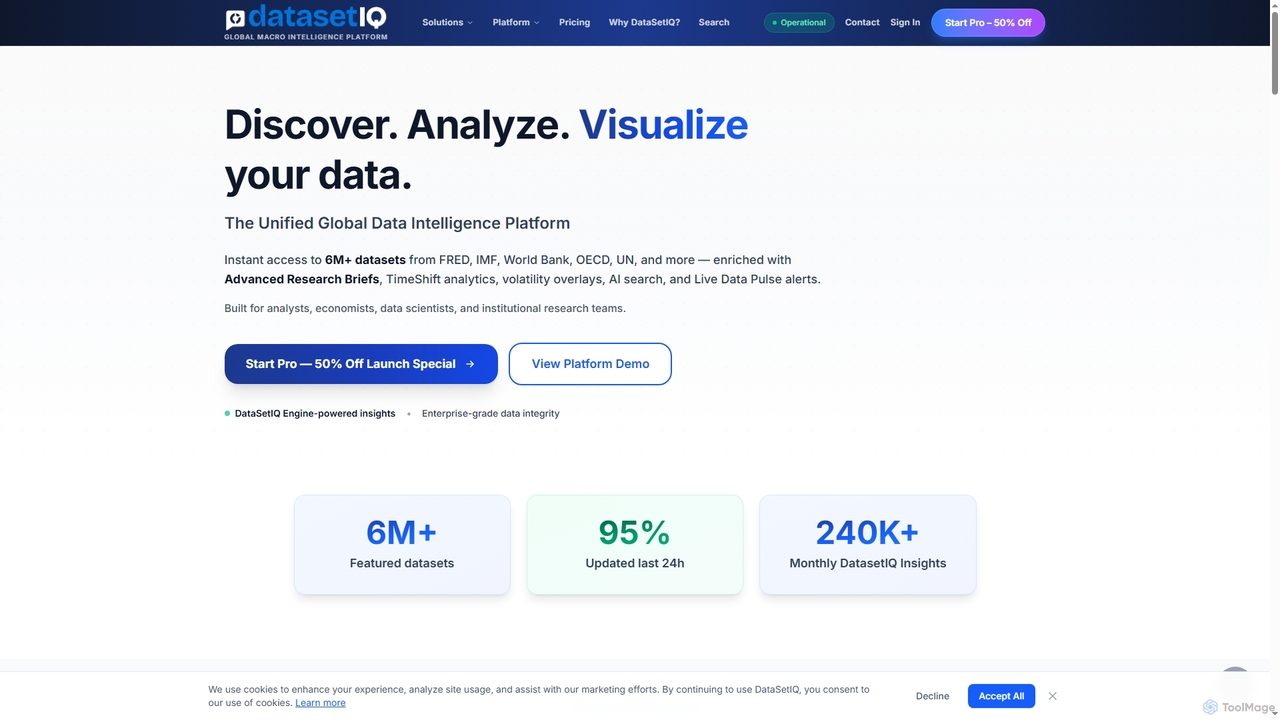
An AI-powered global macro data intelligence platform providing instant access to over 6 million datasets from sources like …
An AI-powered global macro data intelligence platform providing instant access to over 6 million datasets from sources like FRED, IMF, and the World Bank. It offers advanced analytics, AI-generated research briefs, and real-time alerts for analysts, economists, and data scientists, serving as a cost-effective alternative to traditional data terminals.
Endex
Endex is an AI-powered agent designed as an Excel add-in to automate complex financial analysis and data workflows. …
Endex is an AI-powered agent designed as an Excel add-in to automate complex financial analysis and data workflows. It integrates with public financial data sources, reasons over data like an analyst, and generates auditable reports, significantly boosting productivity for financial professionals.
AI Excel Bot
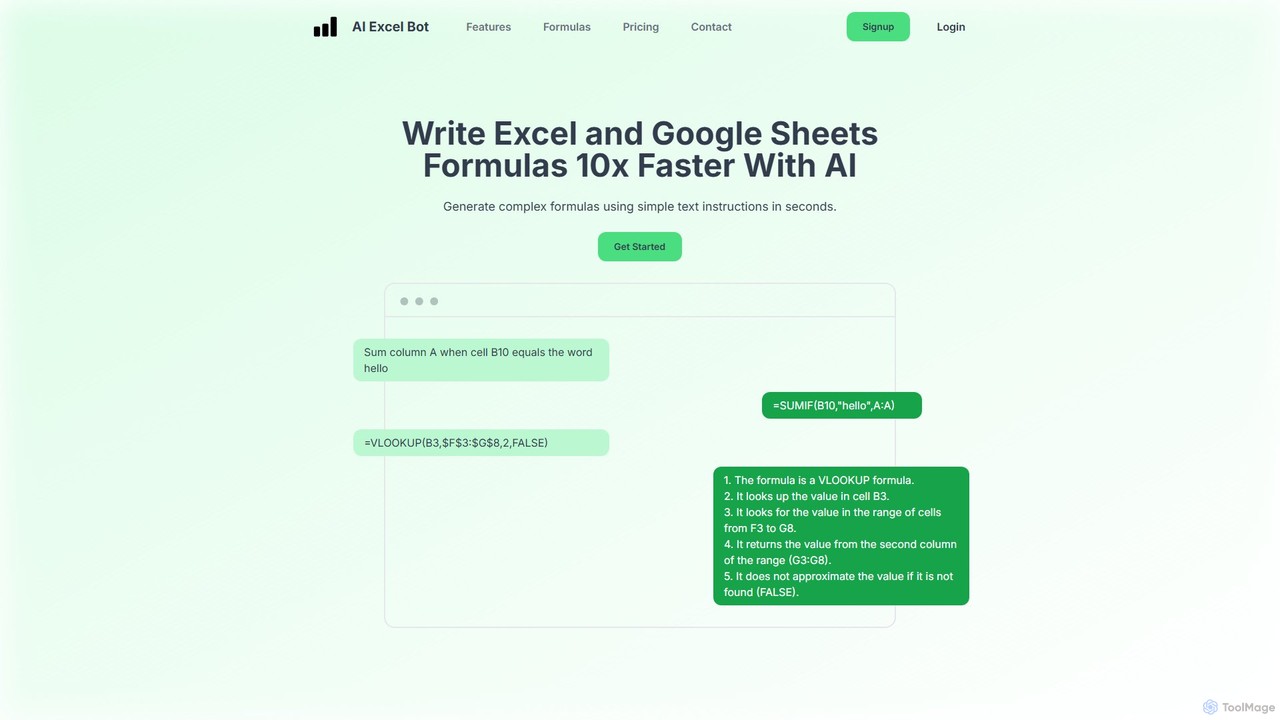
AI Excel Bot is an AI-powered assistant that generates complex Excel and Google Sheets formulas from simple text …
AI Excel Bot is an AI-powered assistant that generates complex Excel and Google Sheets formulas from simple text instructions in seconds. It also creates and explains VBA code to automate tasks. Ideal for users of all skill levels, it saves time, boosts productivity, and helps you master spreadsheet functionalities. With a web app, Chrome extension, and Excel add-in, it integrates seamlessly into your workflow.

Aion
Aion is an AI-powered executive assistant designed for CEOs, founders, and business leaders. It streamlines strategic decision-making by …
Aion is an AI-powered executive assistant designed for CEOs, founders, and business leaders. It streamlines strategic decision-making by providing data-driven insights, automated reporting, and intelligent communication support, allowing you to focus on growth and innovation.
Hebbia
Hebbia is an enterprise-grade AI platform designed for finance, legal, and corporate sectors. It enables firms to build …
Hebbia is an enterprise-grade AI platform designed for finance, legal, and corporate sectors. It enables firms to build custom AI agents that automate complex data analysis, document review, and multi-step workflows. By leveraging its proprietary Matrix architecture, Hebbia transforms vast amounts of unstructured data into actionable, transparent insights, significantly accelerating processes like due diligence, contract analysis, and market research.
Agent Herbie
Agent Herbie is a specialized AI research agent for founders, analysts, and executives. It automates market research, competitor …
Agent Herbie is a specialized AI research agent for founders, analysts, and executives. It automates market research, competitor analysis, and data-driven report generation by integrating web, video, and internal data sources. It provides deep, actionable insights to support strategic business decisions, offering more thorough results than general AI chatbots. It supports multiple languages and connects to premium data brokers.
Rose
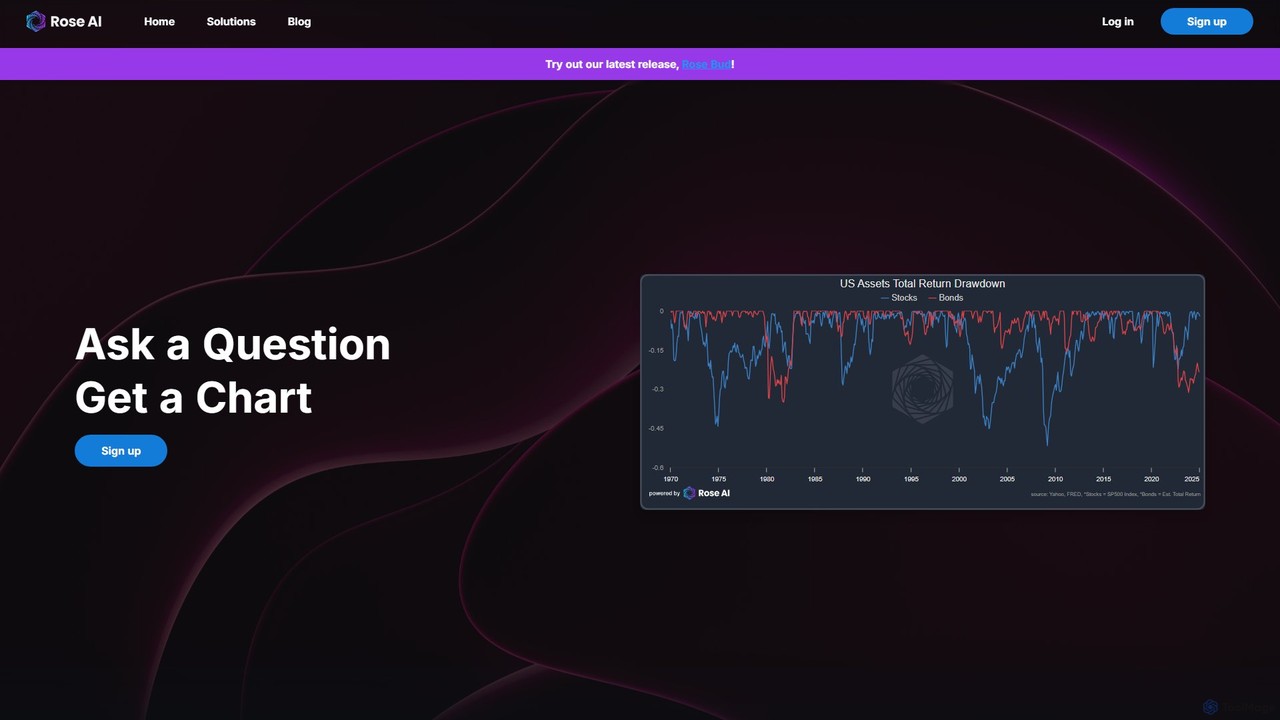
Rose is an AI-powered data platform designed for financial analysts and decision-makers. It leverages advanced language models to …
Rose is an AI-powered data platform designed for financial analysts and decision-makers. It leverages advanced language models to simplify data discovery, analysis, and visualization. Users can ask questions in natural language to instantly generate charts and insights from diverse data sources. The platform emphasizes data traceability, collaboration, and creating compelling data narratives, streamlining the entire financial research process.

fin-gpt.ai
fin-gpt.ai is a powerful AI-driven platform for the finance industry. It leverages a specialized large language model to …
fin-gpt.ai is a powerful AI-driven platform for the finance industry. It leverages a specialized large language model to provide deep financial data analysis, market trend insights, and investment research automation. It empowers financial professionals and individual investors to make smarter, data-driven decisions by transforming complex financial information into actionable intelligence.
Analyst Intelligence
Analyst Intelligence is an AI-powered data analytics platform built on Google Cloud, designed for FP&A, Rev Ops, and …
Analyst Intelligence is an AI-powered data analytics platform built on Google Cloud, designed for FP&A, Rev Ops, and BI teams. It simplifies data consolidation, cleaning, and analysis through a no-code interface and AI-assisted SQL. The platform centralizes data in a secure Google BigQuery warehouse, enabling advanced forecasting, automated reporting, and seamless integration with tools like Google Sheets, without requiring engineering resources.
gptagent
gptagent has rebranded to Julius, an AI data analyst that allows you to analyze data and files using …
gptagent has rebranded to Julius, an AI data analyst that allows you to analyze data and files using natural language. Upload structured data, ask questions, and instantly generate visualizations, perform statistical analysis, and build models without writing any code. It transforms complex data tasks into simple conversations.

Sourcetable
Sourcetable is an AI-powered spreadsheet that combines the functionality of traditional spreadsheets with an AI data analyst. It …
Sourcetable is an AI-powered spreadsheet that combines the functionality of traditional spreadsheets with an AI data analyst. It allows users to connect to live data sources, ask questions in plain English, generate formulas, create charts, and automate reports. By integrating AI, Python, and SQL capabilities directly into the spreadsheet interface, Sourcetable empowers users of all skill levels to perform complex data analysis, cleaning, and visualization tasks effortlessly, turning raw data into actionable insights in seconds.
Finsheet
Finsheet is a powerful add-on for Excel and Google Sheets, providing institutional-grade financial data directly into your spreadsheets. …
Finsheet is a powerful add-on for Excel and Google Sheets, providing institutional-grade financial data directly into your spreadsheets. Access over 30 years of historical and real-time data for global stocks, ETFs, forex, and cryptocurrencies. With simple, no-code functions, investors and analysts can easily perform market research, build financial models, and monitor portfolios without leaving their favorite spreadsheet application.

InternAI (Shusheng)
InternAI (Shusheng) is a comprehensive suite of open-source, high-performance foundation models developed by Shanghai AI Laboratory. It covers …
InternAI (Shusheng) is a comprehensive suite of open-source, high-performance foundation models developed by Shanghai AI Laboratory. It covers language, multimodality, weather forecasting, aerospace design, 3D modeling, finance, and scientific research, aiming to empower global innovation.
About Data Analysis
Data Analysis AI tools are specialized platforms that leverage artificial intelligence to process, interpret, and derive actionable insights from complex datasets, particularly within the financial sector. These tools utilize machine learning algorithms, natural language processing, and advanced statistical models to identify patterns, predict trends, and detect anomalies. Their primary value lies in transforming raw financial data into strategic intelligence, enabling more informed decision-making, optimizing financial operations, and mitigating risks efficiently.
Core Features
- Automated Data Ingestion: Automatically collects and integrates financial data from diverse sources like market feeds, transaction logs, and public reports.
- Advanced Pattern Recognition: Identifies subtle trends, correlations, and recurring behaviors within vast financial datasets that human analysts might miss.
- Predictive Modeling & Forecasting: Develops sophisticated models to forecast market movements, assess credit risk, and predict future financial performance.
- Anomaly and Fraud Detection: Pinpoints unusual transactions, suspicious activities, or data outliers indicative of potential fraud or operational issues.
- Interactive Data Visualization: Presents complex analytical results through intuitive dashboards and charts, making insights accessible to non-technical users.
Applicable Scenarios
These tools are indispensable for financial institutions, investment firms, and corporate finance departments. They are used by quantitative analysts for algorithmic trading strategies, risk managers for real-time threat assessment, and business intelligence teams for strategic planning. Specific applications include optimizing investment portfolios, enhancing regulatory compliance, and personalizing financial product offerings.
How to Choose
When selecting an AI Data Analysis tool, consider its compatibility with your existing financial data infrastructure and data sources. Evaluate the depth and breadth of its analytical capabilities, including specific algorithms for risk, fraud, or market prediction. Assess its visualization features for clarity and customizability, and ensure it meets industry-specific compliance and security standards. Finally, consider its integration potential with other financial systems and the level of technical expertise required for operation.
Data AnalysisUse Cases
Automated Financial Report Generation
Investment analysts often spend significant time compiling quarterly or annual financial reports. AI Data Analysis tools can automate this process by ingesting raw financial statements, market data, and economic indicators, then generating comprehensive, customizable reports with key performance indicators, trend analyses, and predictive summaries. This frees analysts to focus on strategic insights rather than manual data aggregation, significantly reducing reporting cycles and improving accuracy.
Real-time Market Trend Prediction
For day traders and portfolio managers, understanding market sentiment and predicting price movements is crucial. AI Data Analysis tools continuously monitor vast streams of financial news, social media, and historical trading data to identify emerging trends and potential market shifts. By applying machine learning models, these tools can provide real-time buy/sell signals or risk alerts, enabling faster, data-driven trading decisions and potentially maximizing returns while minimizing exposure.
Credit Risk Assessment for Loan Applications
Loan officers and credit departments face the challenge of accurately assessing borrower creditworthiness. AI Data Analysis tools analyze a wide array of applicant data, including credit history, income stability, spending patterns, and even alternative data sources, to generate a precise credit risk score. This automation streamlines the loan approval process, reduces human bias, and improves the accuracy of risk predictions, leading to lower default rates and more efficient lending operations.
Fraud Detection in Financial Transactions
Banks and payment processors are constantly battling financial fraud. AI Data Analysis tools continuously monitor millions of transactions in real-time, learning normal spending behaviors and identifying deviations that could indicate fraudulent activity. By leveraging anomaly detection algorithms, these tools can flag suspicious transactions instantly, preventing financial losses and protecting customers. This proactive approach significantly enhances security protocols and reduces the impact of fraudulent schemes.
Portfolio Performance Optimization
Wealth managers and institutional investors aim to maximize returns while managing risk for client portfolios. AI Data Analysis tools analyze historical asset performance, market volatility, economic forecasts, and client risk tolerance to recommend optimal asset allocations. They can simulate various market scenarios and suggest rebalancing strategies, helping managers construct diversified portfolios that align with investment goals and adapt to changing market conditions, leading to better long-term performance.
Customer Behavior Analysis for Financial Product Development
Financial institutions seek to develop products that meet evolving customer needs. AI Data Analysis tools analyze customer transaction data, interaction logs, demographic information, and feedback to identify spending habits, product preferences, and unmet needs. By understanding these patterns, banks can tailor new financial products, personalize marketing campaigns, and improve customer retention, leading to increased engagement and revenue growth.