ToolMage
Sign in

Best 2 Executive Assistant for Productivity

Popular Executive Assistant in Productivity include Aion and Nori, helping you work more efficiently.

Nori
Freemium

Nori

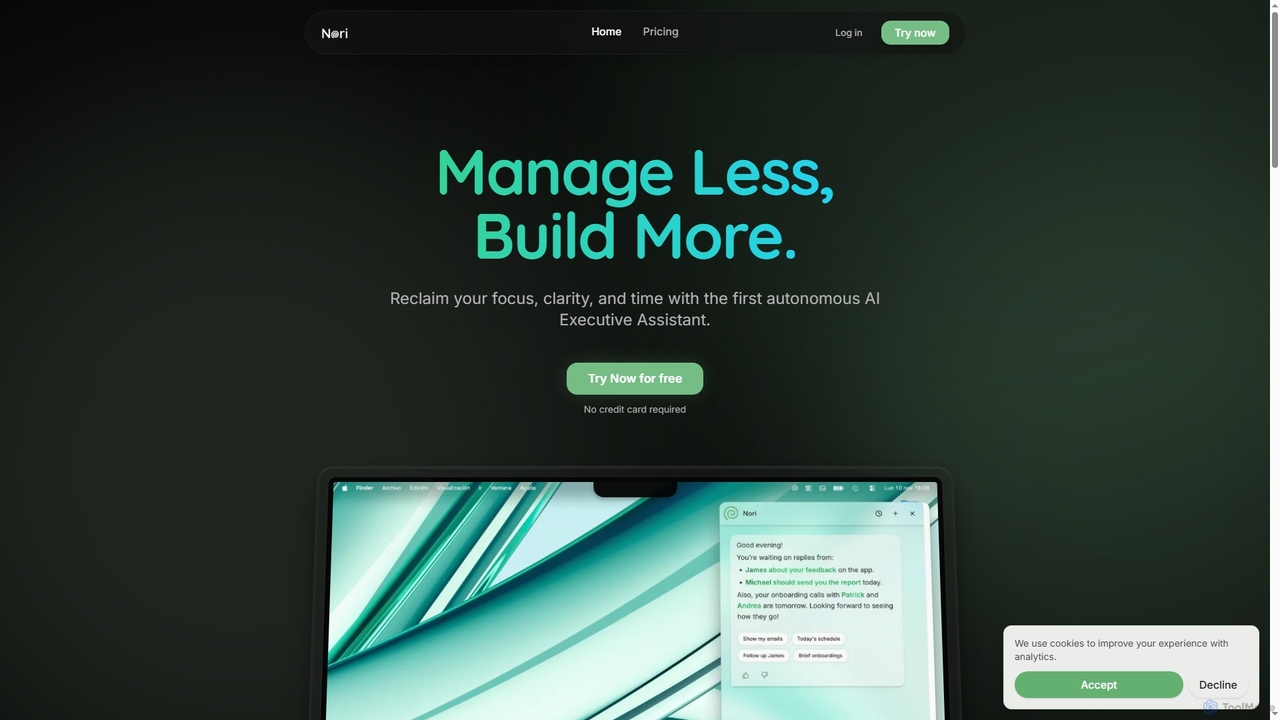
Nori is an autonomous AI Executive Assistant designed to help founders and executives reclaim their time and focus. It intelligently manages your day, prioritizes tasks, handles follow-ups, sets reminders, and coordinates meetings across calendars, integrating seamlessly with Gmail and Google Calendar.

Executive Assistant
Visits 9KFavorites 123Likes 132
Aion
Freemium

Aion

Aion is an AI-powered executive assistant designed for CEOs, founders, and business leaders. It streamlines strategic decision-making by providing data-driven insights, automated reporting, and intelligent communication support, allowing you to focus on growth and innovation.

Business Intelligence
Visits 9.2KFavorites 137Likes 118

About Executive Assistant

AI Executive Assistant tools are specialized AI-powered platforms designed to provide high-level administrative, organizational, and strategic support to executives and senior leadership. Leveraging advanced natural language processing and machine learning, these tools automate complex tasks, synthesize information, and offer data-driven insights, significantly enhancing executive efficiency and decision-making. They serve as a sophisticated extension of traditional executive support, freeing up valuable time for strategic initiatives within the broader productivity landscape.

Core Features

  • Intelligent Calendar & Scheduling: Automates meeting coordination, identifies optimal times, and manages complex schedules with minimal manual input.
  • Advanced Communication Management: Drafts emails, summarizes lengthy correspondence, prioritizes messages, and manages follow-ups based on executive preferences.
  • Information Synthesis & Reporting: Gathers, analyzes, and summarizes data from various sources to generate concise reports and prepare briefing documents.
  • Task Automation & Workflow Optimization: Automates routine administrative tasks, manages project workflows, and ensures timely completion of critical actions.
  • Decision Support & Strategic Insights: Provides data-driven recommendations, identifies trends, and assists in strategic planning by processing vast amounts of information.

Applicable Scenarios

These tools are invaluable for C-suite executives, busy entrepreneurs, and senior managers who need to offload significant administrative burdens and gain strategic advantages. They are particularly useful in fast-paced environments where rapid decision-making and efficient information processing are critical, enabling leaders to focus on core business growth and innovation.

How to Choose

When selecting an AI Executive Assistant, consider its integration capabilities with existing enterprise systems (CRM, ERP, email, calendar) to ensure seamless workflow. Evaluate the tool's security and data privacy protocols, as it will handle sensitive executive information. Look for robust customization and learning features that allow the AI to adapt to specific executive preferences and evolving organizational needs. Finally, assess the scope of assistance, determining if it meets basic administrative needs or extends to advanced strategic insights and decision support.

Executive Assistant use cases

1

Automating Meeting Preparation & Follow-ups

A CEO uses an AI Executive Assistant to automatically generate meeting agendas based on calendar invites, compile relevant documents from cloud storage, and send pre-meeting briefs. After the meeting, the AI transcribes discussions, identifies action items, and drafts follow-up emails to attendees, ensuring all tasks are captured and communicated efficiently.

2

Synthesizing Market Research for Strategic Planning

A Head of Strategy leverages the AI tool to continuously monitor industry news, competitor activities, and market trends across various online sources. The AI then synthesizes this vast amount of information into concise, actionable reports, highlighting key opportunities and threats, which directly informs quarterly strategic planning sessions.

3

Managing Executive Travel Logistics

A busy executive relies on their AI assistant to manage complex international travel arrangements. The AI coordinates flight bookings, hotel reservations, ground transportation, and visa requirements, while also adjusting the executive's calendar for time zone changes and scheduling necessary meetings upon arrival, all based on predefined preferences.

4

Drafting Personalized Executive Communications

A VP of Communications utilizes the AI to draft personalized emails for various stakeholders, from internal team announcements to external partner updates. The AI learns the VP's communication style and tone, generating drafts that require minimal editing, ensuring consistent and effective messaging across all platforms.

5

Prioritizing and Managing Executive Inbox

An executive with a high-volume inbox uses the AI assistant to intelligently filter, prioritize, and categorize incoming emails. The AI identifies urgent messages, flags important requests, suggests quick replies, and archives non-essential communications, allowing the executive to focus on critical correspondence without being overwhelmed.

6

Generating Performance Reports from Disparate Data Sources

A Department Head needs to present monthly performance reviews. The AI Executive Assistant integrates with various departmental systems (CRM, project management, HR platforms) to pull relevant data. It then compiles this data into a comprehensive, visually appealing report, complete with key metrics and insights, saving hours of manual data aggregation.

Executive Assistant FAQ

What are AI Executive Assistants?

AI Executive Assistants are advanced software tools that use artificial intelligence, primarily natural language processing and machine learning, to automate and enhance the administrative, organizational, and strategic tasks typically handled by human executive assistants. They aim to streamline workflows, manage complex schedules, synthesize information, and provide decision support for executives and senior leaders.

How do I choose the best AI Executive Assistant tool?

To choose the best AI Executive Assistant, consider several factors: integration capabilities with your existing software ecosystem (e.g., Outlook, Google Workspace, CRM), the level of security and data privacy offered for sensitive information, the tool's ability to customize and learn your specific preferences and workflows, and the scope of features—whether it focuses on basic scheduling or extends to advanced reporting and strategic insights. User interface and support are also important.

How do AI Executive Assistants differ from general productivity AI tools?

While both aim to boost efficiency, AI Executive Assistants are specifically tailored for the complex, high-stakes needs of executives, focusing on strategic support, advanced information synthesis, and sophisticated communication management. General productivity AI tools often address broader, more common tasks like basic writing assistance or simple task management, lacking the depth and context-awareness required for executive-level decision support and administrative delegation.

What are the main benefits of using an AI Executive Assistant?

The primary benefits include significant time savings for executives by automating routine and complex administrative tasks, allowing them to focus on strategic initiatives. They enhance decision-making through data-driven insights and comprehensive information synthesis. Improved organizational efficiency, better communication management, and consistent workflow optimization are also key advantages, leading to increased overall productivity and reduced operational overhead.

Are AI Executive Assistant tools secure for sensitive information?

Reputable AI Executive Assistant tools prioritize security and data privacy, employing robust encryption, strict access controls, and compliance with relevant data protection regulations (like GDPR or CCPA). They are designed to handle sensitive executive communications, financial data, and strategic plans securely. However, it's crucial to thoroughly review the security policies and certifications of any tool before deployment, especially when dealing with highly confidential information.