Finance Best in category 1 results Debt Management AI Tool

Popular AI tools in the Debt Management field of Finance include finleycms, etc., helping you quickly improve efficiency.

finleycms

finleycms

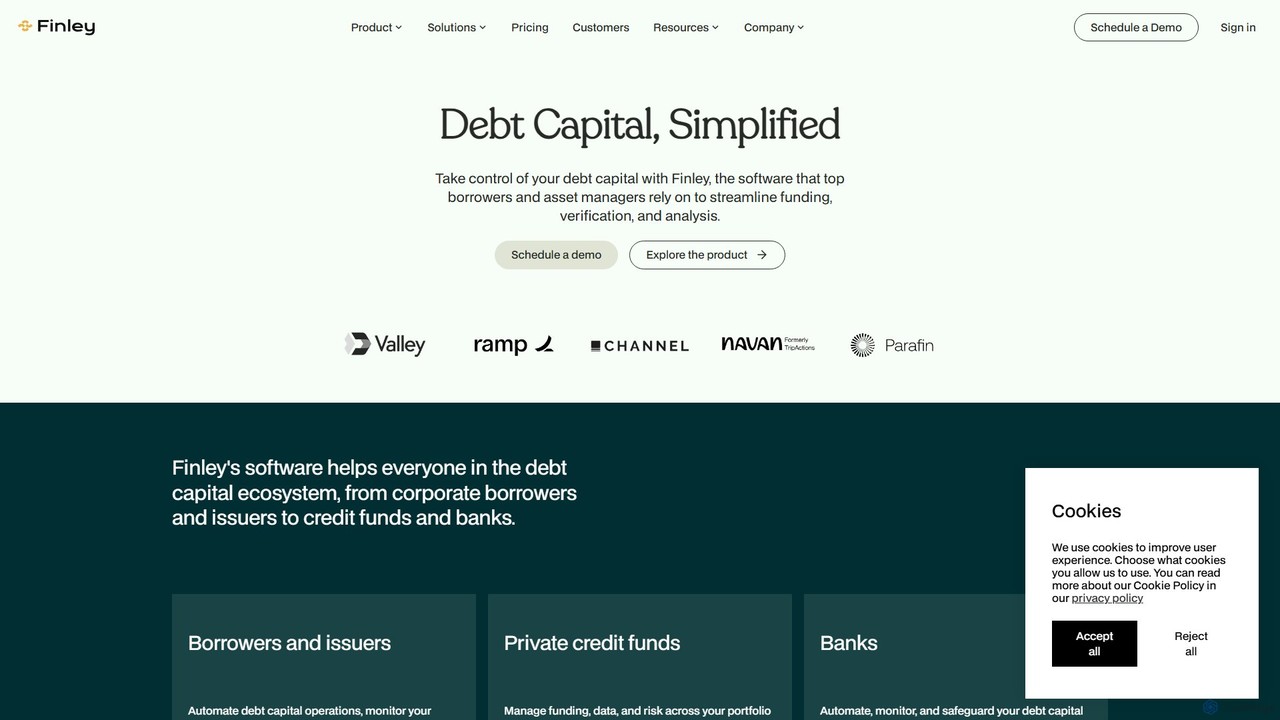
Finley is an AI-powered software platform designed to simplify debt capital management. It helps corporate borrowers, private credit …

12.8K

About Debt Management

AI Debt Management tools are specialized platforms designed to help individuals and businesses strategically analyze and eliminate debt. These tools leverage artificial intelligence to analyze financial data, such as income, expenses, and outstanding loans, to create personalized repayment plans. They go beyond simple budgeting by simulating various debt-reduction strategies, like the avalanche or snowball methods, and forecasting their impact on your financial future. The primary value lies in providing a clear, data-driven path to becoming debt-free while optimizing payments and potentially improving credit scores.

Core Features

  • Personalized Repayment Strategies: Generates optimized plans based on your specific debts, interest rates, and financial goals.
  • Automated Payment Scheduling: Helps automate and track payments to creditors, preventing missed deadlines and late fees.
  • Financial Forecasting: Simulates how different payment scenarios will affect your debt-free date and total interest paid.
  • Spending Analysis: Identifies areas in your budget where spending can be reduced and reallocated to debt payments.
  • Credit Score Monitoring: Tracks changes in your credit score as you pay down debt and provides actionable insights for improvement.

Use Cases

These tools are widely used by individuals with multiple sources of debt, such as credit cards, student loans, and personal loans. Financial advisors and coaches also use them to manage client portfolios and provide data-backed advice. Small businesses utilize them to manage business loans and credit lines, optimizing cash flow and ensuring timely repayments to maintain good credit standing.

How to Choose

When selecting an AI Debt Management tool, consider its security features for protecting sensitive financial data. Evaluate its ability to connect with your bank accounts and loan providers for seamless data synchronization. Look for flexibility in choosing and customizing repayment strategies (e.g., avalanche, snowball, custom plans). Finally, assess the pricing model and ensure it provides clear value relative to the features offered.

Debt ManagementUse Cases

1

Consolidating and Strategizing Multiple Debts

An individual with multiple high-interest credit cards and a personal loan uses an AI Debt Management tool to get a holistic view of their financial situation. By securely linking their accounts, the AI analyzes all debts, interest rates, and balances. It then recommends the 'avalanche' method, prioritizing the highest-interest debt first. The tool creates a clear payment schedule, showing exactly how much extra to pay on the target debt each month. This data-driven plan helps the user save thousands in interest and provides a clear timeline for becoming debt-free, turning a complex problem into actionable steps.

2

Improving Debt-to-Income Ratio for a Mortgage

A couple planning to buy a house needs to improve their debt-to-income (DTI) ratio to qualify for a favorable mortgage rate. They use an AI Debt Management tool to simulate different payoff scenarios. The tool identifies that paying off their car loan and one specific credit card would have the most significant impact on their DTI. It then creates an aggressive 6-month plan, reallocating funds from their entertainment budget to accelerate these payments. The forecasting feature shows them their projected DTI ratio month-by-month, giving them the confidence and motivation to stick to the plan and achieve their homeownership goal.

3

Automating the Debt Snowball Strategy

A user wants to follow the 'debt snowball' method, focusing on paying off the smallest debts first for psychological wins. They use an AI Debt Management tool to automate this process. After linking their accounts, they select the snowball strategy. The tool automatically identifies the smallest debt and calculates the minimum payments for all other debts. It then prompts the user to confirm the extra payment amount for the target debt. Once set up, the tool can help schedule these payments, and as soon as the smallest debt is paid off, it automatically rolls that payment amount over to the next smallest debt, ensuring the snowball effect continues seamlessly without manual tracking.

4

Small Business Loan and Cash Flow Management

A small business owner manages multiple business loans, supplier credits, and a line of credit. They use an AI Debt Management tool to centralize all liabilities. The AI analyzes their projected monthly revenue and expenses, then suggests an optimal payment schedule that minimizes interest costs while ensuring sufficient cash flow for operations. The tool sends alerts for upcoming large payments and can simulate the impact of taking on a new loan for expansion, providing critical data for strategic financial decisions and helping the business maintain a healthy credit profile with lenders.

5

Financial Advisor Client Debt Portfolio Management

A financial advisor uses an AI Debt Management platform to manage the debt portfolios of a dozen clients. Instead of manually creating spreadsheets for each client, the advisor securely links their clients' accounts to the platform. The AI provides a centralized dashboard showing the real-time debt status of all clients. For each client, the advisor can simulate and compare different repayment strategies, generate professional reports showing progress, and set up automated alerts for their clients. This enhances the advisor's efficiency, allowing them to provide more proactive, data-driven advice and demonstrate clear value to their clients.

6

Tracking Progress and Staying Motivated

A user feels overwhelmed by their student loan debt and lacks motivation. They use an AI Debt Management tool for its visualization and progress tracking features. The tool displays a clear chart showing their total debt decreasing over time and a 'debt-free date' that gets closer with every extra payment. It gamifies the process by awarding badges for milestones, like paying off the first 10% or making consistent extra payments for three months. These visual feedback loops and small rewards provide the necessary psychological boost to keep the user engaged and committed to their long-term financial goal.

Debt ManagementFrequently Asked Questions