ToolMage
Sign in

Best 2 Funding AI tools for Finance

Popular Funding AI tools in Finance include 15minuteplan and Candor, helping you work more efficiently.

15minuteplan
Paid

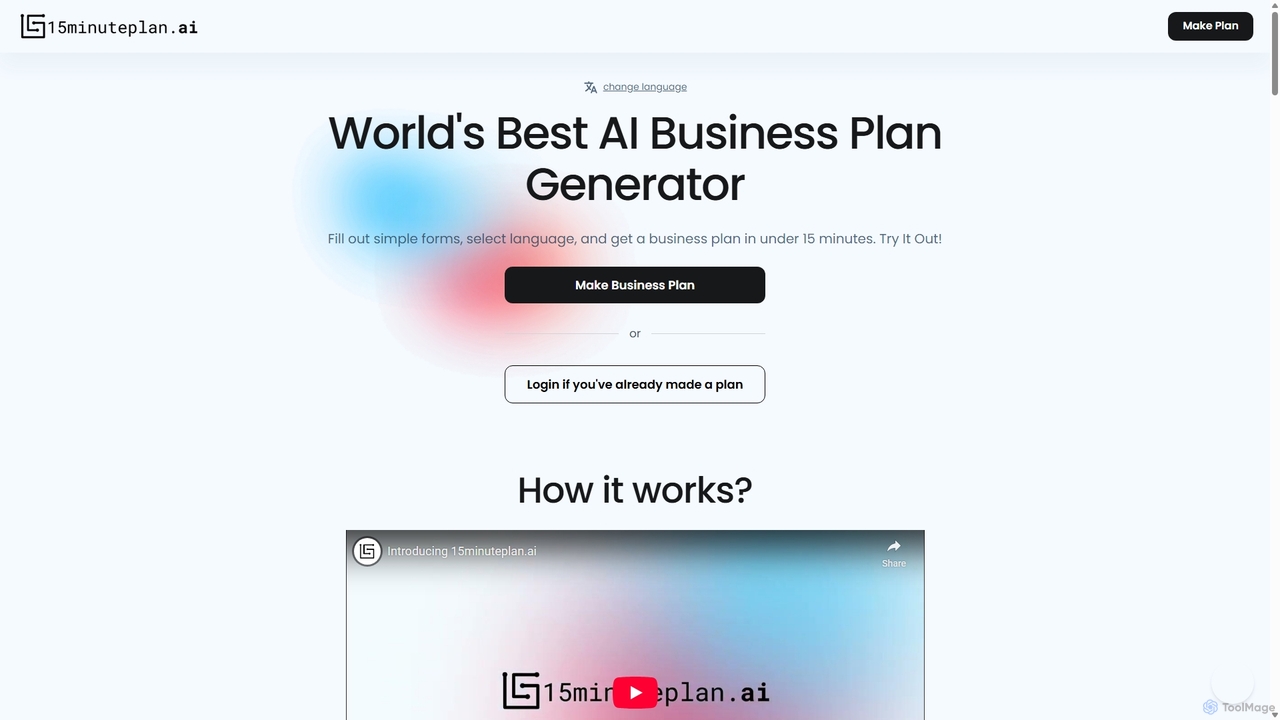
15minuteplan

15minuteplan is an AI-powered business plan generator that creates professional, comprehensive business plans in under 15 minutes. It's designed for entrepreneurs, business owners, and students, offering customizable templates for investor funding, bank loans, and academic projects, with support for numerous languages.

Planning
Visits 35.6KFavorites 107Likes 105
Candor
Paid

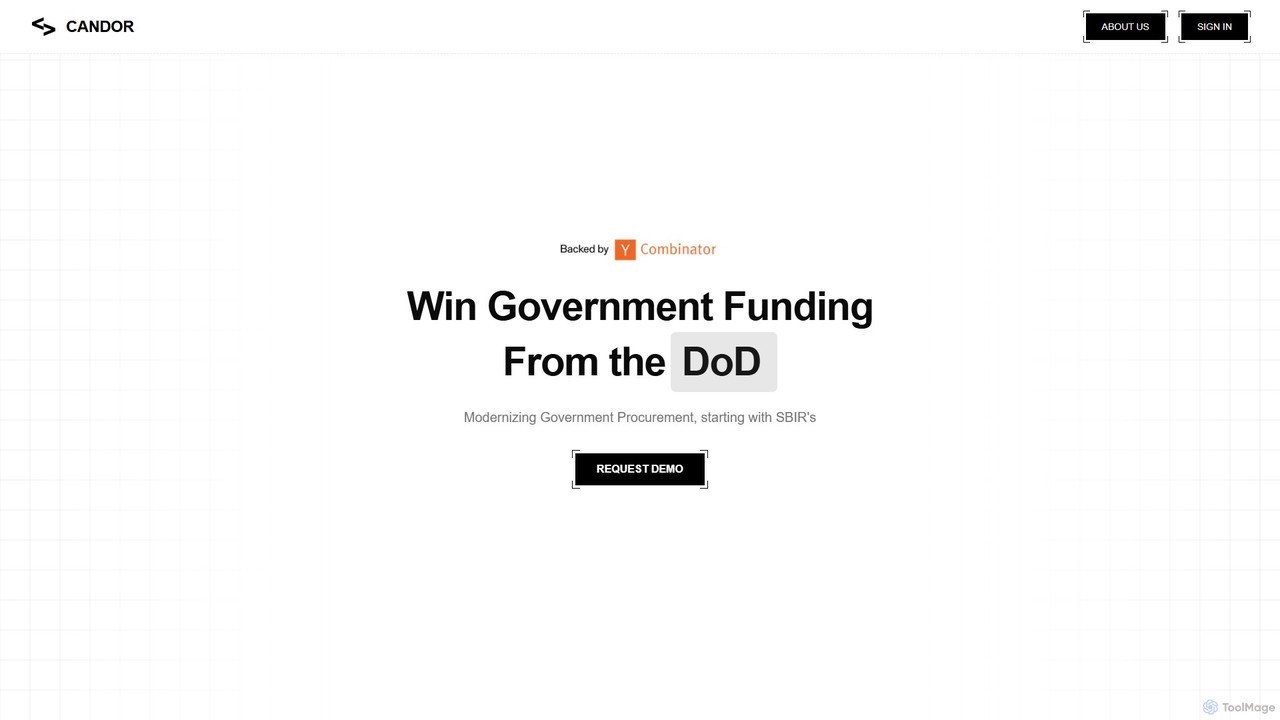
Candor

Candor is an AI-powered platform designed to help companies win US government funding, such as DoD and SBIR contracts. It automates opportunity discovery, generates high-quality proposal drafts using your company's data, and ensures compliance with solicitation requirements, significantly increasing efficiency and success rates.

Grant Writing
Visits 5.4KFavorites 127Likes 125

About Funding

AI Funding tools are specialized platforms that use artificial intelligence to streamline and optimize the capital-raising process. These tools leverage machine learning, natural language processing (NLP), and predictive analytics to analyze vast datasets of companies, investors, and market trends. They help founders identify the most relevant investors, refine their pitch decks, and manage their fundraising pipeline more effectively. This data-driven approach significantly increases the efficiency and success rate of securing financing.

Core Features

  • Investor Matching: Utilizes algorithms to connect startups with the most suitable VCs, angel investors, or grant programs based on industry, stage, and investment thesis.
  • Pitch Deck Analysis: Employs NLP to scan pitch decks, providing feedback on clarity, completeness, and alignment with investor expectations.
  • Deal Flow Management: Automates the tracking of investor communications, follow-ups, and deadlines within a centralized dashboard.
  • Valuation Prediction: Uses market data and company metrics to generate data-backed valuation estimates, strengthening negotiation positions.
  • Automated Due Diligence: Speeds up the due diligence process by automatically gathering and organizing required company data and legal documents.

Use Cases

These tools are primarily used by startup founders and entrepreneurs seeking seed, series, or grant funding. Venture capital firms and angel investors also use them to source and screen potential investments more efficiently. Additionally, investment bankers and corporate development teams leverage these platforms for market analysis and identifying M&A targets.

How to Choose

When selecting an AI Funding tool, consider the quality and breadth of its investor database. Evaluate the accuracy of its matching algorithms and the depth of its pitch deck analysis. Check for integration capabilities with your existing CRM and communication tools. Finally, assess the platform's security protocols for handling sensitive financial and business data.

Funding use cases

1

Identifying Ideal Venture Capital Investors

A founder of an early-stage SaaS startup needs to identify the right investors for their Seed round. Instead of spending weeks manually searching databases, they use an AI Funding tool. They input key data points: industry (FinTech), business model (B2B SaaS), monthly recurring revenue, and target funding amount. The AI analyzes thousands of investor profiles, past investments, and stated preferences. Within minutes, it generates a prioritized list of 50 VCs and angel investors with a high match score, including specific partners to contact and insights into their investment thesis, saving over 80% of research time.

2

Automating Pitch Deck Screening for VCs

A venture capital analyst is overwhelmed with hundreds of inbound pitch decks each week. To streamline the process, their firm implements an AI Funding tool. The AI automatically scans each submitted deck, extracting key metrics like team size, traction, market size, and financial projections. It then scores each startup against the firm's investment thesis and flags high-potential opportunities. This allows the analyst to focus their time on the top 10% of submissions, increasing deal flow efficiency and reducing the risk of missing a promising company.

3

Finding and Applying for Relevant Grants

A non-profit organization focused on environmental research needs funding for a new project. Their team uses an AI Funding tool specialized in grants. They input the project's scope, objectives, and budget. The AI platform searches a comprehensive database of government, corporate, and foundation grants, filtering for eligibility criteria, deadlines, and alignment with the project's goals. It identifies 15 highly relevant grant opportunities and even assists in pre-filling application forms with standard organizational data, significantly reducing the administrative burden and increasing the chances of securing funding.

4

Enhancing Due Diligence with Data Automation

An investment banking analyst is conducting due diligence for a potential acquisition. The process involves collecting and verifying vast amounts of financial statements, contracts, and market data. By using an AI Funding tool, the analyst automates much of this process. The AI connects to various data rooms and public records, extracts relevant information, identifies discrepancies, and flags potential risks in contracts using NLP. This transforms a multi-week manual task into a few days of review, allowing the analyst to focus on strategic analysis rather than data collection.

5

Optimizing Investor Relations and Reporting

After successfully closing a funding round, a startup's CEO needs to manage investor relations and provide regular updates. They use the reporting module of their AI Funding tool. The platform integrates with their accounting and CRM software to automatically generate quarterly investor reports, including key performance indicators (KPIs), financial summaries, and progress against milestones. The AI can also analyze investor communication sentiment to help the CEO tailor their updates, ensuring strong, transparent relationships with their backers and simplifying future fundraising efforts.

6

Predicting Fundraising Success and Valuation

A growth-stage company is planning its Series B round and needs to set a realistic valuation and timeline. The corporate development team uses an AI Funding tool's predictive analytics feature. By inputting the company's historical growth data, market comparables, and industry trends, the AI model generates a probable valuation range and predicts the likelihood of closing the round within six months. This data-driven forecast helps the team set appropriate expectations with the board, strengthen their negotiating position with investors, and strategically time their fundraising launch.

Funding FAQ

What are AI Funding tools?

AI Funding tools are software platforms that use artificial intelligence to make the process of raising capital faster and more effective. They go beyond simple databases by actively analyzing data to provide actionable insights. Key functions include matching startups with the most relevant investors, analyzing pitch decks for weaknesses, automating communication tracking, and predicting company valuations. These tools are designed for both founders seeking capital and investors sourcing deals.

How to choose the right AI Funding tool?

Choosing the right tool depends on your specific needs. Consider the following factors:

  • Data Quality: Ensure the platform has a comprehensive, accurate, and up-to-date database of investors and companies.
  • Algorithm Transparency: Understand how the tool matches you with investors. Look for platforms that provide clear reasoning for their recommendations.
  • Feature Set: Do you need just investor matching, or also pitch deck analysis, CRM integration, and reporting features?
  • User Interface: The tool should be intuitive and easy to navigate to save you time, not create another complex system to learn.
  • Security: Since you'll be handling sensitive data, verify the platform's security measures and data privacy policies.
What's the difference between AI Funding tools and databases like Crunchbase?

The key difference is intelligence and actionability. Databases like Crunchbase or PitchBook provide vast amounts of raw data that users must manually search, filter, and analyze. AI Funding tools act as an intelligent layer on top of such data. They use algorithms to proactively surface relevant opportunities, analyze unstructured data (like pitch decks), predict outcomes, and automate workflows. In short, a database is a library where you search for books; an AI Funding tool is a librarian who reads them and recommends the best ones for you.

Who benefits most from using AI Funding tools?

While several groups benefit, the primary beneficiaries are:

  • Startup Founders: They save immense time on research, get data-backed valuation advice, and increase their chances of connecting with the right investors, especially first-time founders who lack an extensive network.
  • Venture Capital Analysts: They can screen a much larger volume of deals efficiently, identify promising startups that might be missed by manual review, and automate parts of the due diligence process.
  • Grant Seekers: Non-profits and researchers can quickly find and filter relevant grant opportunities from thousands of sources, a task that is extremely time-consuming to do manually.
Can AI Funding tools guarantee fundraising success?

No, AI Funding tools cannot guarantee success. Fundraising is a complex process that heavily relies on human relationships, negotiation, and the fundamental strength of the business. What these tools do is significantly improve the efficiency and effectiveness of the process. They replace manual, time-consuming tasks with data-driven automation, allowing founders to focus more of their energy on building relationships and telling their story. They increase the probability of success by ensuring you're talking to the right people with the best possible preparation.