BuyScout
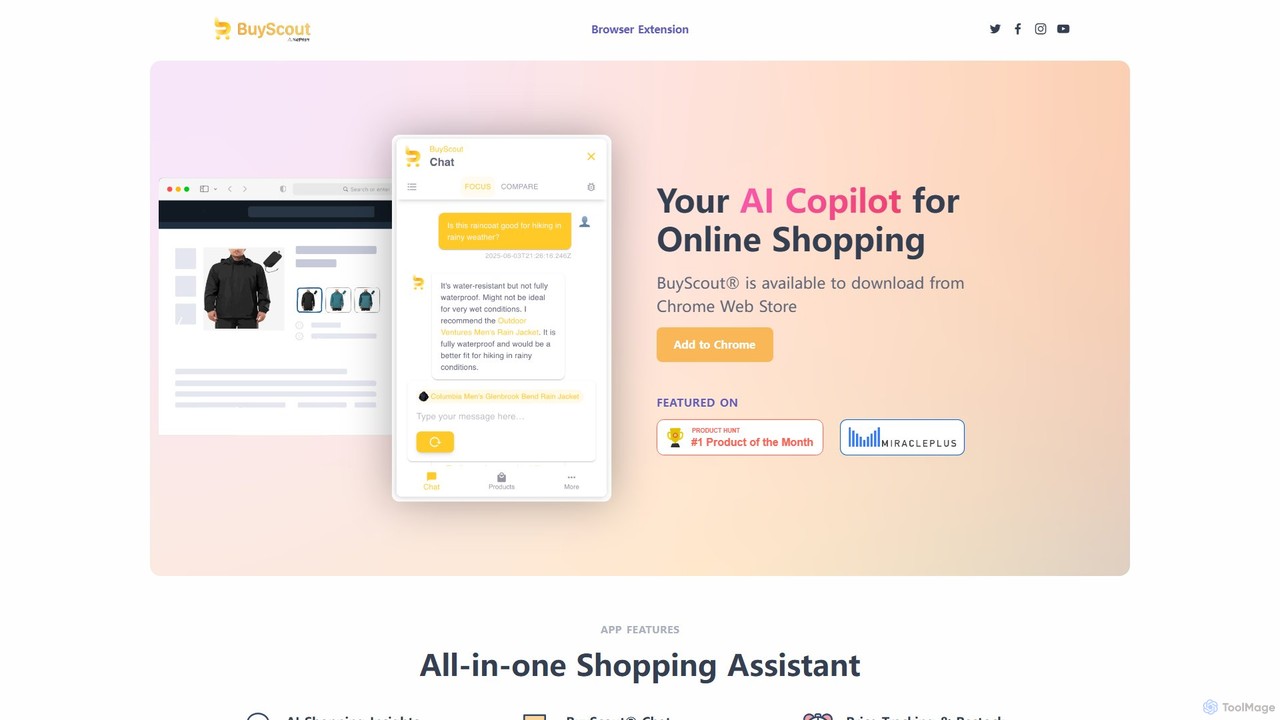
BuyScout is an AI-powered shopping assistant and Chrome extension that revolutionizes your online shopping. It analyzes reviews to …
BuyScout is an AI-powered shopping assistant and Chrome extension that revolutionizes your online shopping. It analyzes reviews to provide pros and cons, offers a chatbot for product comparisons, and tracks prices and stock, ensuring you always make the best purchase decision.
About Price Tracker
Price Tracker tools are AI-powered applications that automatically monitor and report price fluctuations of products, services, or financial assets across various online platforms. They utilize web scraping, data analysis, and machine learning algorithms to collect real-time pricing data and identify trends. These tools empower consumers and investors to make informed purchasing or trading decisions by notifying them of price drops, deals, or target price achievements. Many advanced trackers can also analyze historical price data to predict future price movements.
Core Features
- Real-time Monitoring: Tracks prices across multiple e-commerce sites, stock exchanges, or booking platforms simultaneously.
- Customizable Alerts: Sends notifications via email, push, or SMS when a price drops, rises, or hits a user-defined target.
- Historical Price Charts: Visualizes price history to help users identify patterns, seasonality, and the best time to buy.
- Cross-Platform Support: Operates as browser extensions, mobile apps, or web dashboards for easy access.
- Predictive Analysis: Employs AI models to forecast potential price changes based on historical data and market trends.
Use Cases
Price Trackers are widely used by online shoppers for securing the best deals on electronics, apparel, and household goods. In the financial sector, investors and traders use them to monitor stocks, cryptocurrencies, and commodities to time their market entries and exits. Businesses also leverage these tools for competitive analysis and procurement, tracking competitors' pricing strategies and the cost of raw materials.
How to Choose
When selecting a Price Tracker, consider the scope of its coverage—does it monitor the specific websites or asset classes you need? Evaluate the customization options for alerts and the frequency of price checks. The quality and accessibility of historical data are crucial for strategic decisions. Finally, assess the user interface and whether it offers convenient integrations like browser extensions.

Price TrackerUse Cases
Smart Shopping for Consumer Electronics
A tech enthusiast wants to buy a new high-end graphics card. Instead of manually checking prices daily across multiple online retailers, they use a price tracker. They add the specific graphics card model to their tracking list and set a target price 15% below the current market average. The tool monitors the price 24/7. Two weeks later, during a flash sale, the price drops below their target. They receive an instant email and push notification, allowing them to purchase it immediately and save over $200.
Monitoring Competitor Pricing for E-commerce
An e-commerce manager for a fashion brand needs to maintain competitive pricing. They use an AI price tracker to monitor the prices of 100 key products from their top three competitors. The tool provides a daily dashboard comparing their prices against the competition and sends an alert whenever a competitor initiates a significant price drop. This allows the manager to react swiftly, either by matching the price or launching a counter-promotion, thus protecting their market share and sales volume without constant manual checks.
Spotting Investment Opportunities in Crypto Markets
A cryptocurrency trader actively follows several altcoins but cannot watch the market 24/7. They configure a price tracker to monitor five specific cryptocurrencies on multiple exchanges. They set up complex alerts: one for a 10% price drop within 24 hours (a potential buying opportunity) and another for a 20% price increase within a week (a potential profit-taking signal). The tracker aggregates data from all exchanges, providing a more accurate market view and allowing the trader to execute their strategy based on automated, timely signals rather than constant screen time.
Finding the Best Deals on Flights and Hotels
A family is planning a vacation to Japan for the next summer but has a flexible travel schedule. They use a travel-focused price tracker to monitor flight prices from their home city to Tokyo for the entire months of June and July. They also track prices for three different hotels in their desired area. The tool's historical data suggests that prices are typically lowest when booked three months in advance. They set an alert for any price that drops below this historical average. The tracker notifies them of a 3-day airline sale, allowing them to book flights and a hotel package at a 30% discount compared to the initial prices they saw.
Optimizing Corporate Procurement Costs
A procurement manager for a construction company needs to purchase large quantities of steel. The price of steel fluctuates daily based on global market conditions. They use a B2B price tracker to monitor the price of specific steel grades from three major suppliers. The tool not only provides real-time price alerts but also analyzes historical trends to suggest optimal purchasing windows. Based on a prediction that prices are likely to rise in the next quarter, the manager receives an alert to lock in a price now, saving the company an estimated 8% on a major materials contract.
Tracking Market Value of Collectibles
A collector of rare sneakers uses a specialized price tracker to monitor the resale market value of several limited-edition models. The tool scrapes data from major resale platforms like StockX and GOAT. The collector sets alerts to be notified when a specific sneaker model's average sale price drops by 10% (a buying signal) or when a pair they own increases in value by 25% (a potential selling signal). This data-driven approach helps them manage their collection as an investment portfolio, making informed decisions on when to buy, sell, or hold their assets.