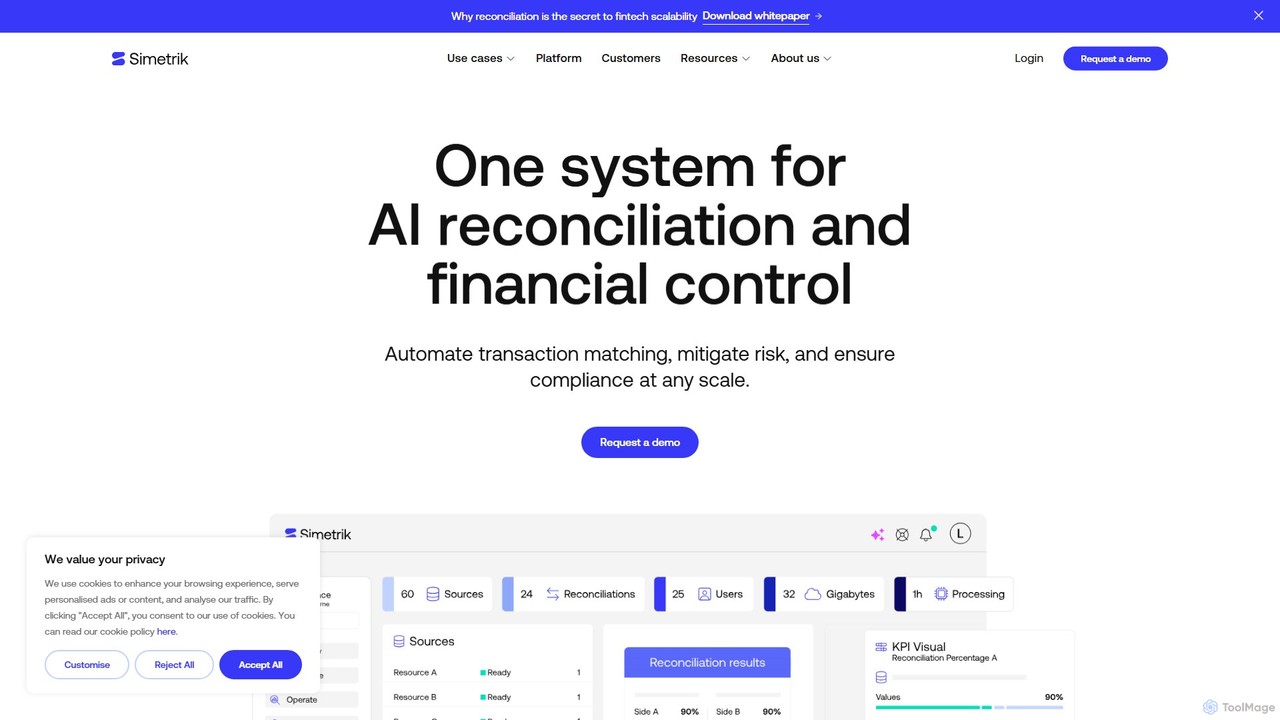
AI Reconciliation tools are advanced software solutions that automate the process of comparing and matching financial records to identify discrepancies. Leveraging machine learning and natural language processing, these tools efficiently analyze vast datasets from various sources, such as bank statements, ledgers, invoices, and payment systems. They significantly enhance accuracy, accelerate closing cycles, and bolster compliance by proactively flagging anomalies and potential fraud.
Core Features
- Automated Data Ingestion: Seamlessly imports data from diverse financial systems and formats.
- Intelligent Matching Algorithms: Utilizes AI to match complex transactions, even with partial or inconsistent data.
- Discrepancy Identification: Automatically highlights unmatched items and variances for investigation.
- Anomaly Detection: Employs machine learning to detect unusual patterns indicative of errors or fraud.
- Audit Trail & Reporting: Provides detailed logs and customizable reports for compliance and analysis.
Use Cases
Finance departments, accounting firms, and large enterprises frequently deploy AI reconciliation tools to streamline their operations. They are particularly valuable in scenarios involving high transaction volumes, multiple data sources, and complex matching rules, reducing manual effort and improving data integrity.
How to Choose
When selecting an AI reconciliation tool, consider its data integration capabilities with your existing systems, the accuracy and flexibility of its matching algorithms, and its ability to handle your specific transaction volumes. Evaluate its reporting features, audit trail functionality, and the level of customization offered to align with unique business rules and compliance requirements.