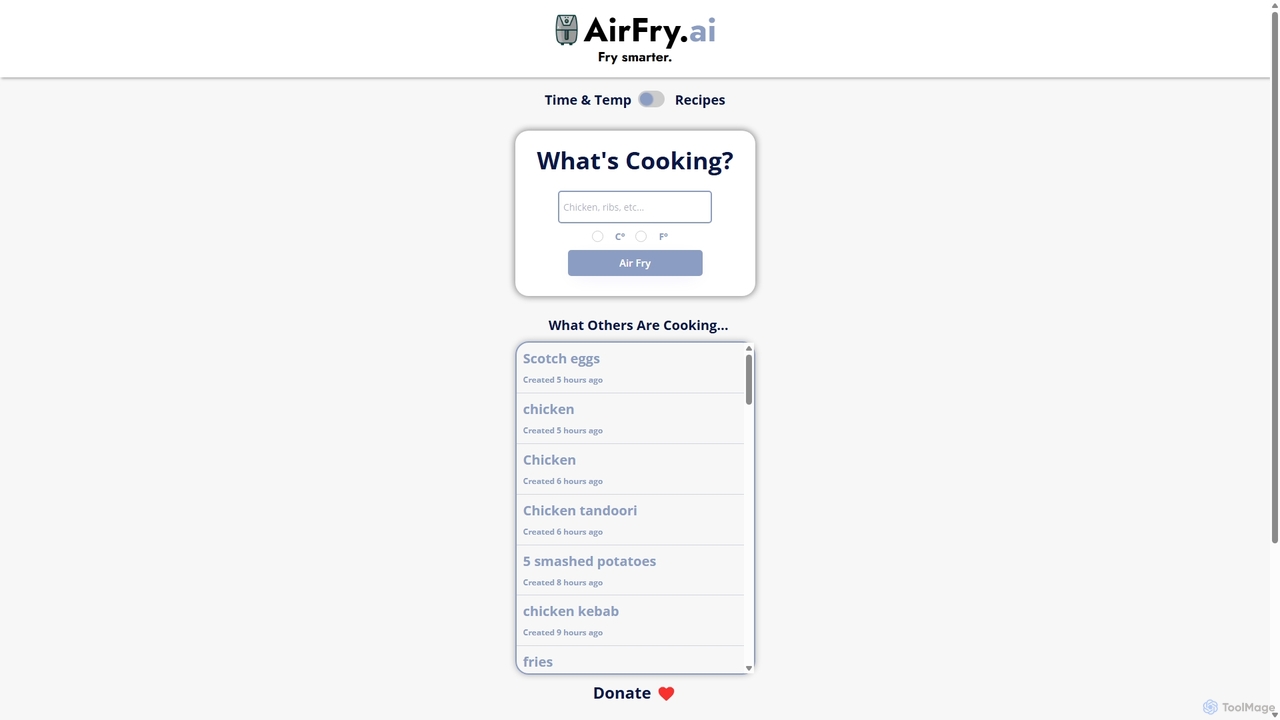
AirFry.ai
AirFry.ai is a free AI-powered tool that instantly provides optimal cooking times and temperatures for any food in …
AirFry.ai is a free AI-powered tool that instantly provides optimal cooking times and temperatures for any food in your air fryer. Simply type in your ingredient, and the AI generates precise instructions, supporting both Celsius and Fahrenheit. It's the fastest way to get perfect air-fried results every time.
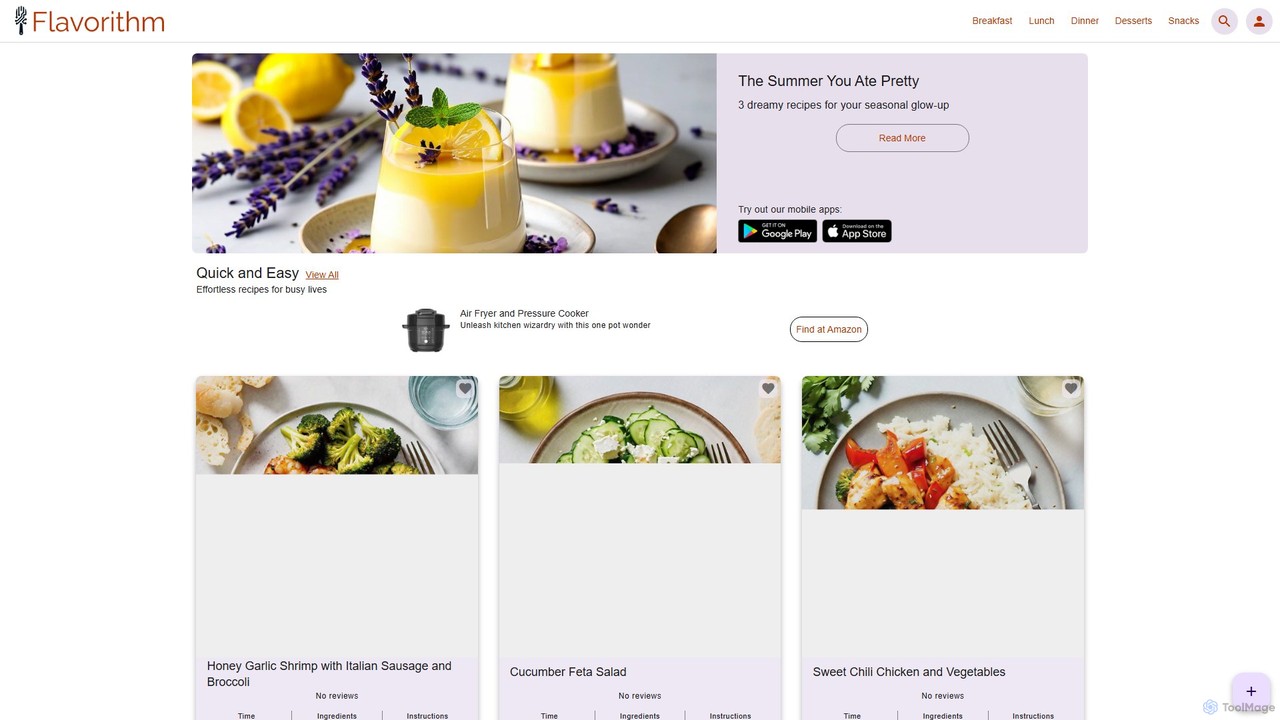
flavorithm
Flavorithm is an AI-powered culinary platform designed for home chefs and food enthusiasts. It features a vast recipe …
Flavorithm is an AI-powered culinary platform designed for home chefs and food enthusiasts. It features a vast recipe database, an innovative AI Sous Chef for step-by-step cooking guidance, and personalized tips tailored to your dietary needs and taste preferences. Discover, create, and share recipes with a vibrant community of food lovers.
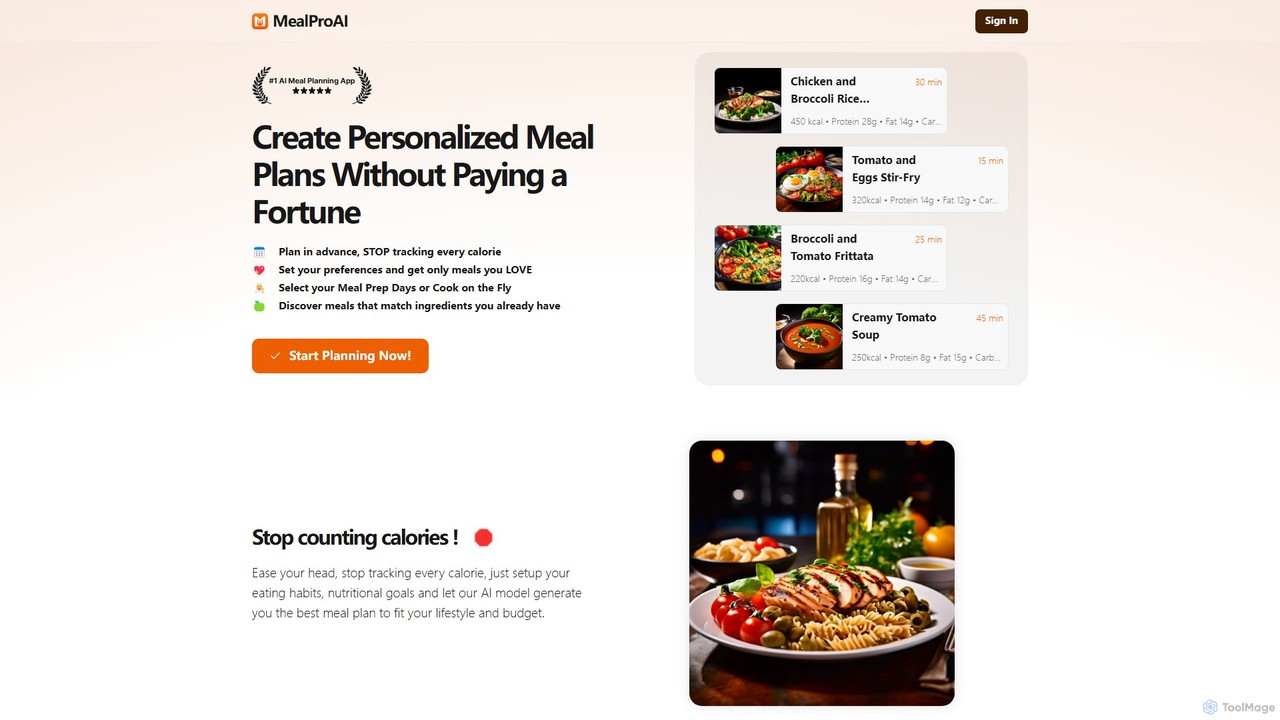
MealProAI
MealProAI is an AI-powered meal planning app that creates personalized meal plans based on your dietary preferences, nutritional …
MealProAI is an AI-powered meal planning app that creates personalized meal plans based on your dietary preferences, nutritional goals, and budget. It supports various diets like vegetarian, gluten-free, and lactose-free, helping you discover new recipes and save time without tedious calorie counting. Plan your meals in advance, get meal prep instructions, or find quick recipes with ingredients you already have.
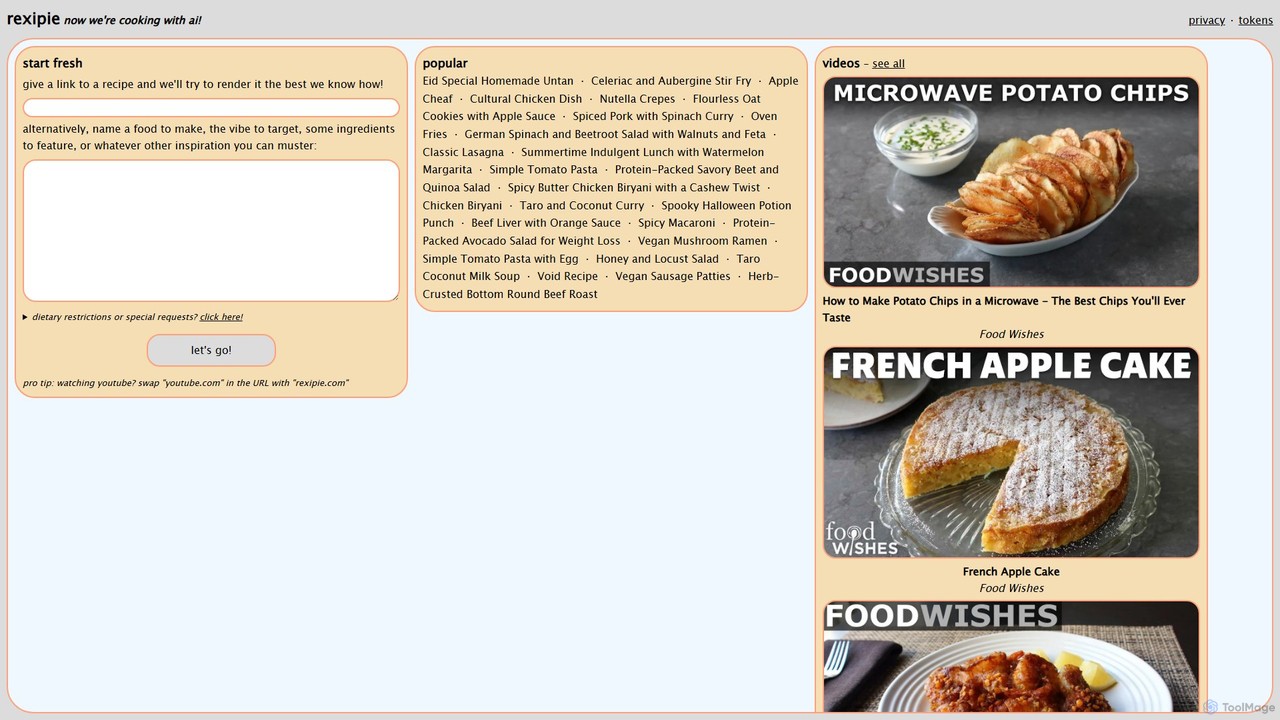
rexipie
rexipie is an AI-powered cooking assistant that generates custom recipes from text prompts, web links, or YouTube videos. …
rexipie is an AI-powered cooking assistant that generates custom recipes from text prompts, web links, or YouTube videos. It transforms cooking content into step-by-step instructions with timers, allows for recipe remixing, and caters to dietary restrictions, making it a versatile tool for any home cook.
About Recipe Generator
An AI Recipe Generator is a tool that uses artificial intelligence to create new or customized culinary recipes based on user inputs. These tools analyze specified ingredients, dietary restrictions, cuisine preferences, and even cooking skill levels to produce step-by-step cooking instructions. They are invaluable for reducing food waste, discovering new dishes, and adhering to specific nutritional plans. Many advanced generators can also provide nutritional information, suggest pairings, or scale ingredient quantities for different serving sizes.
Core Features
- Ingredient-Based Generation: Creates recipes using a specific list of ingredients you have on hand.
- Dietary & Allergy Filtering: Customizes recipes to be vegan, gluten-free, low-carb, nut-free, or fit other specific dietary needs.
- Cuisine & Meal Type Customization: Generates ideas for specific cuisines (e.g., Italian, Mexican, Japanese) or meal types (e.g., breakfast, dessert, snack).
- Recipe Scaling & Adjustment: Automatically adjusts ingredient quantities for different serving sizes or modifies complexity based on skill level.
- Nutritional Analysis: Provides estimated calorie counts, macronutrients, and other nutritional data for the generated recipe.
Use Cases
These tools are widely used by home cooks seeking inspiration or a way to use up leftover ingredients. They are also essential for individuals with specific dietary requirements, such as allergies or health conditions, who need personalized meal plans. Food bloggers and content creators leverage them to brainstorm unique recipe ideas and overcome creative blocks.
How to Choose
When selecting an AI Recipe Generator, consider the breadth of its recipe database and cuisine variety. Evaluate the depth and accuracy of its dietary and allergy filters. A user-friendly interface for inputting ingredients and viewing recipes is crucial. Also, look for valuable extra features like shopping list creation, nutritional information, or the ability to save and organize your favorite generated recipes.
Recipe GeneratorUse Cases
Creating Meals from Leftover Ingredients
A home cook faces the common problem of having random ingredients in the fridge, such as half a bell pepper, a chicken breast, and some yogurt, with no clear meal plan. Instead of letting them go to waste, they input these items into an AI Recipe Generator. The tool analyzes the combination and suggests a creative recipe like 'Creamy Yogurt-Marinated Chicken with Sautéed Peppers,' complete with step-by-step instructions. This not only prevents food waste but also introduces the user to a new dish they might not have considered otherwise.
Personalized Meal Planning for Allergies
An individual with both a gluten intolerance and a dairy allergy struggles to find recipes that are both safe and exciting. Using an AI Recipe Generator, they can apply multiple filters simultaneously ('gluten-free', 'dairy-free'). The AI processes these constraints and generates a week's worth of suitable meal ideas, such as 'Coconut Curry Lentil Soup' for dinner and 'Gluten-Free Banana Oat Pancakes' for breakfast. This empowers the user to manage their dietary needs effectively without sacrificing variety or flavor, saving significant time on research.
Exploring New Cuisines and Cooking Techniques
A cooking enthusiast wants to expand their culinary skills by learning Thai cuisine but is intimidated by unfamiliar ingredients and methods. They use a recipe generator and specify 'Thai cuisine' and 'intermediate skill level'. The AI provides a recipe for 'Green Curry Chicken' that not only lists ingredients but also explains techniques like how to properly make curry paste from scratch or the best way to infuse flavor into coconut milk. This guided approach makes learning a new cuisine less daunting and more educational, acting as a virtual cooking coach.
Generating Unique Recipe Ideas for Content
A food blogger is experiencing a creative block and needs fresh, unique content for their website. They use an AI Recipe Generator as a brainstorming tool, inputting unconventional ingredient pairings like 'beetroot' and 'dark chocolate'. The AI generates a novel recipe for 'Dark Chocolate Beetroot Brownies'. This provides the blogger with a unique and SEO-friendly recipe concept to develop, photograph, and write about, helping them stand out in a crowded market and engage their audience with surprising new flavors.
Scaling Recipes for Parties or Solo Meals
A user finds a perfect lasagna recipe online that serves eight people, but they only need to cook for two. Manually calculating the new ingredient quantities is tedious and prone to error. They input the ingredient list into an AI Recipe Generator and use its scaling feature to adjust the recipe for two servings. The tool instantly provides the precise measurements needed (e.g., changing 2 lbs of ground beef to 0.5 lbs), saving time and ensuring the dish maintains its intended flavor balance and proportions, whether for a large gathering or a solo dinner.
Building Meal Plans for Fitness Goals
A fitness enthusiast is following a high-protein, low-carbohydrate diet to build muscle. Manually finding recipes and calculating macros for every meal is time-consuming. They use an advanced AI Recipe Generator with nutritional analysis features, setting their daily targets for protein, carbs, and calories. The AI then generates a full day's meal plan, including a 'Spinach and Feta Omelette' for breakfast and 'Lemon Herb Baked Salmon with Asparagus' for dinner, complete with macro breakdowns. This automates the planning process, ensuring they meet their fitness goals efficiently.