ToolMage
Sign in

Best 1 Digital Immortality AI tools for Fun

Popular Digital Immortality AI tools in Fun include eternity.ac, helping you work more efficiently.

eternity.ac
Freemium

eternity.ac

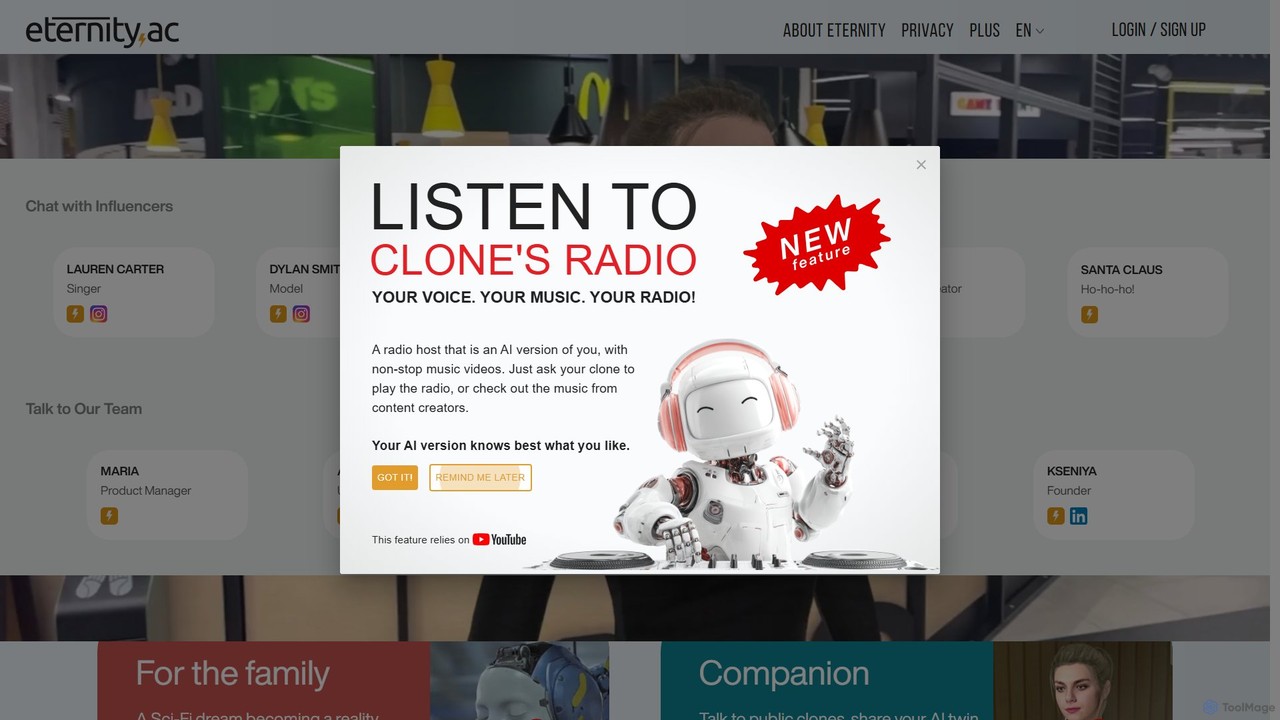
eternity.ac is an AI platform that allows you to create a full digital clone of yourself. This AI twin mirrors your appearance, voice, and thought patterns, offering a unique way to preserve your legacy, interact with others, and even enhance your professional brand.

Personalized Avatars
Visits 4.7KFavorites 166Likes 165

About Digital Immortality

Digital Immortality tools are AI-powered platforms designed to preserve and interact with a person's digital essence, memories, and personality beyond their physical life. Leveraging advanced AI, natural language processing, and data synthesis, these tools create interactive digital personas or archives that can communicate, share stories, and offer insights based on an individual's collected digital footprint. Within the broader "Fun" category, they offer a unique and profound way to engage with personal legacies, offering comfort, connection, and a novel form of interactive remembrance for future generations.

Core Features

  • Persona Emulation: AI models learn and replicate an individual's communication style, knowledge, and personality from their digital data.
  • Memory Archiving: Securely store and organize vast amounts of personal data, including texts, images, audio, and video, for long-term preservation.
  • Conversational AI Interface: Enable natural language interactions with the digital persona, allowing users to ask questions and receive contextually relevant responses.
  • Data Synthesis & Generation: Generate new content (e.g., stories, advice) consistent with the original individual's style and knowledge base.
  • Interactive Avatars: Some tools offer visual or auditory representations that enhance the immersive experience of interacting with the digital persona.

Applicable Scenarios

These tools are invaluable for individuals wishing to leave a comprehensive digital legacy, families seeking to preserve the memories and wisdom of loved ones, and historians or educators aiming to create interactive archives of notable figures. They can be used for personal remembrance, genealogical research, or even as advanced educational resources where historical figures can "speak" to students.

How to Choose

When selecting a Digital Immortality tool, consider the depth of persona emulation, the range of data types supported for archiving, and the naturalness of the conversational AI. Evaluate data privacy and security protocols, as well as the ethical guidelines and ownership policies for the generated digital persona. User-friendliness, integration capabilities with existing digital platforms, and the long-term viability of the service are also crucial factors.

Featured tool rankings

Digital Immortality use cases

1

Preserving Family Stories for Generations

Families can use Digital Immortality tools to create interactive archives of elderly relatives. By inputting personal anecdotes, photos, and voice recordings, the AI generates a digital persona that can recount family histories, share life lessons, and answer questions, ensuring cherished memories and wisdom are accessible and engaging for future generations, fostering a deeper connection to their heritage.

2

Creating a Personal Digital Legacy

Individuals can proactively build their own digital legacy, curating their life experiences, knowledge, and personality. This allows them to leave behind an interactive "digital twin" that can offer advice, share perspectives, or simply communicate in their unique style after they are gone, providing comfort and continued presence for loved ones and a comprehensive record of their life's journey.

3

Interactive Memorial for Loved Ones

For those grieving, these tools offer a unique way to remember and interact with a deceased loved one's digital persona. Based on their digital footprint (emails, social media, journals), the AI can simulate conversations, recall shared memories, and provide a sense of continued connection, aiding in the grieving process and keeping their spirit alive in an interactive format.

4

Archiving Professional Knowledge and Expertise

Experts, academics, or business leaders can utilize Digital Immortality tools to archive their vast professional knowledge, insights, and decision-making processes. This creates an accessible, interactive repository of their expertise that can serve as a valuable resource for colleagues, students, or successors, ensuring their intellectual contributions continue to inform and inspire long after their active involvement.

5

Developing Interactive Historical Figures for Education

Educators and museums can leverage these tools to bring historical figures to life. By feeding the AI with historical documents, biographies, and speeches, an interactive digital persona can be created, allowing students to "converse" with historical leaders, scientists, or artists, gaining a deeper, more personal understanding of their lives, ideas, and the historical context.

6

Personal AI Companion for Self-Reflection

Individuals can create a private digital persona of their past self or an idealized future self. By interacting with this AI, users can gain new perspectives on their personal growth, reflect on past decisions, or explore potential future paths. This serves as a unique self-coaching or journaling tool, offering a novel form of introspection and personal development.

Digital Immortality FAQ

What are Digital Immortality AI tools?

Digital Immortality AI tools are advanced platforms that use artificial intelligence to create and preserve a digital representation of an individual's personality, memories, and knowledge. They analyze vast amounts of personal data—like texts, photos, and audio—to build an interactive digital persona that can communicate and share insights, offering a unique way to extend one's legacy beyond physical life.

How do Digital Immortality tools work?

These tools typically work by ingesting and analyzing an individual's digital footprint, including written communications, voice recordings, images, and videos. AI models, particularly natural language processing (NLP) and machine learning, then learn the person's communication style, knowledge base, and personality traits. This data is used to synthesize responses and interactions, creating a conversational AI that emulates the original individual.

What are the main ethical considerations for Digital Immortality?

Key ethical considerations include data privacy and security, ensuring personal data is handled responsibly and with consent. Questions of ownership and control over the digital persona, potential for misuse or misrepresentation, and the psychological impact on users (both the creator and those interacting with the persona) are also critical. Transparency about the AI's nature and limitations is paramount to avoid deception.

How do Digital Immortality tools differ from simple data archiving?

While simple data archiving merely stores information, Digital Immortality tools go further by actively processing and synthesizing that data to create an interactive, communicative persona. Archiving provides raw files; Digital Immortality provides an AI that can interpret, respond, and generate new content consistent with the archived individual's essence, offering a dynamic and engaging form of legacy preservation.

Who can benefit most from using Digital Immortality tools?

Individuals seeking to leave a comprehensive and interactive legacy, families wishing to preserve the memories and wisdom of loved ones, and professionals aiming to archive their expertise for future generations can all benefit significantly. Additionally, educators and researchers can use these tools to create interactive historical figures or subject matter experts, enriching learning experiences and access to knowledge.