ToolMage
Sign in

Best 1 Voice Changer AI tools for Fun

Popular Voice Changer AI tools in Fun include FineVoice, helping you work more efficiently.

FineVoice
Freemium

FineVoice

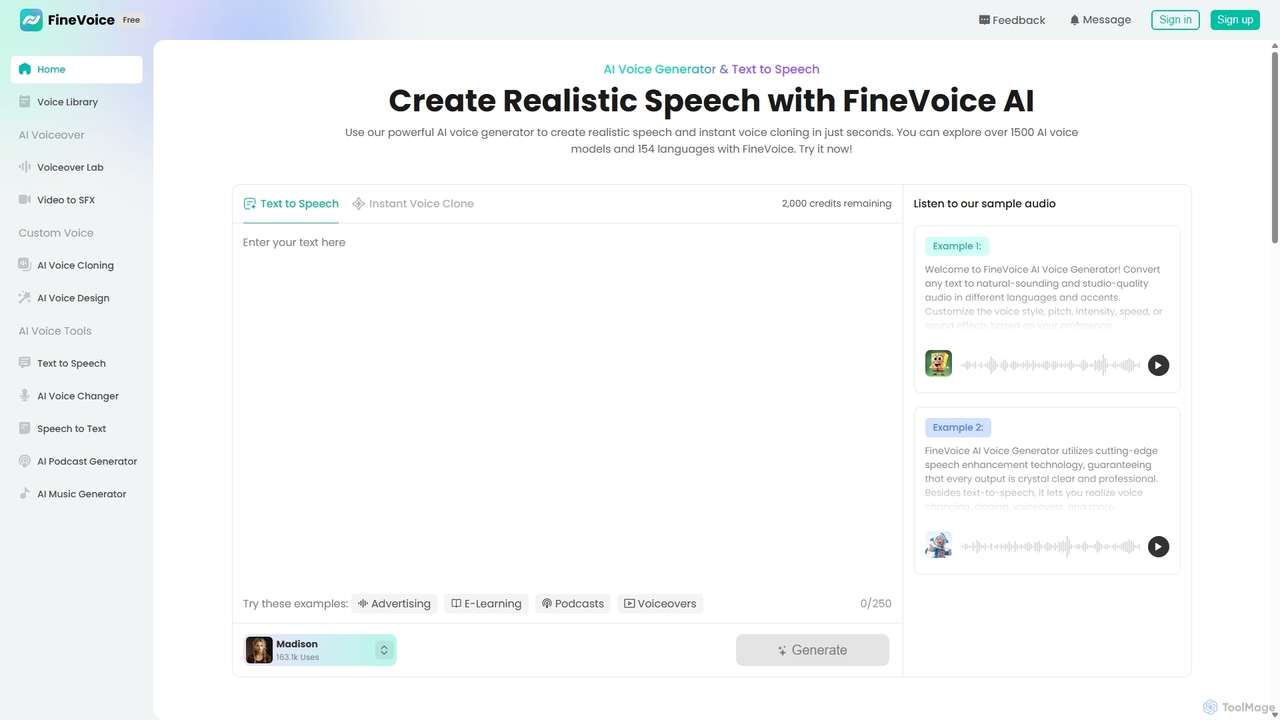
FineVoice is a powerful AI voice generator and audio creation suite. It offers realistic text-to-speech, instant voice cloning, a real-time voice changer, and professional voiceover tools. With a library of over 1500 AI voices in 154 languages, it's designed for content creators, marketers, podcasters, and developers seeking high-quality, customizable audio solutions.

Voice Synthesis
Visits 10.2KFavorites 183Likes 185

About Voice Changer

Voice Changer tools are AI-powered applications designed to modify a user's voice in real-time or from pre-recorded audio, primarily for entertainment and creative purposes within the broader 'Fun' category. These tools leverage advanced AI algorithms to analyze vocal characteristics like pitch, timbre, and tone, then transform them to mimic different voices, characters, or apply various sound effects. They offer users the ability to experiment with their vocal identity, enhance digital content, and add an element of surprise to online interactions.

Core Features

  • Real-time Voice Transformation: Instantly alters voice during live calls, streams, or gaming sessions.
  • Extensive Voice Library: Provides a wide range of preset voices, including characters, celebrities, and robotic tones.
  • Customization Options: Allows fine-tuning of pitch, timbre, gender, and age parameters for unique voice creation.
  • Sound Effects Integration: Adds background noises or special audio effects to enhance the transformed voice.
  • Audio Recording & Editing: Records transformed voices and offers basic editing capabilities for post-production.

Use Cases

Voice Changer tools are widely adopted by content creators, gamers, and individuals seeking novel ways to interact online. They are particularly useful in live streaming to embody game characters, in video production for diverse voiceovers, and in social settings for humorous interactions. These tools enable users to explore creative vocal expressions without needing professional voice actors or complex audio equipment.

How to Choose

When selecting an AI Voice Changer, consider its real-time performance and latency, the diversity and quality of its voice library, and the extent of customization options available. Evaluate its compatibility with your operating system and preferred communication/streaming platforms, as well as its ease of use and pricing model. Look for tools that offer clear audio output and intuitive controls for the best experience.

Voice Changer use cases

1

Enhance Live Streaming & Gaming Immersion

Live streamers and gamers can use voice changers to embody game characters, create unique personas, or add humorous effects during broadcasts. By transforming their voice in real-time, they can increase audience engagement, make their content more entertaining, and fully immerse themselves and their viewers in the virtual world, leading to a more dynamic and memorable streaming experience.

2

Create Diverse Character Voices for Content

Content creators, such as YouTubers, podcasters, or animators, can utilize voice changers to generate multiple distinct voices for different characters in their videos, audio dramas, or animations. This eliminates the need for multiple voice actors, saving production costs and time, while allowing a single creator to produce rich, multi-character narratives with professional-sounding vocal diversity.

3

Add Humor to Online Social Interactions

Individuals can use voice changers for lighthearted fun during online calls, video chats, or social gaming sessions with friends. By instantly altering their voice to sound like a robot, a cartoon character, or a different gender, users can create unexpected and amusing moments, enhancing the entertainment value of their social interactions and fostering a more playful and engaging atmosphere among peers.

4

Protect Online Identity and Privacy

For users who need to maintain anonymity in online discussions, interviews, or sensitive communications, a voice changer can mask their true vocal characteristics. By altering pitch, tone, and timbre, the tool helps protect personal privacy, preventing voice-based identification and ensuring that users can participate or communicate without revealing their natural voice, thus safeguarding their identity.

5

Experiment with Vocal Styles for Performance

Aspiring voice actors, singers, or performers can use voice changers as a creative tool to experiment with different vocal styles, accents, and character voices. This allows them to practice and refine their vocal range, explore new performance possibilities, and develop a diverse portfolio of voices without the need for extensive vocal training or professional studio equipment, aiding in skill development.

6

Assist in Language Learning and Accent Practice

Language learners can leverage voice changers to practice pronunciation and mimic accents. By recording their voice and then applying a target accent or adjusting pitch and tone to match native speakers, they can receive immediate auditory feedback. This iterative process helps in identifying discrepancies and refining their spoken language skills, making accent acquisition more engaging and effective without a native speaker present.

Voice Changer FAQ

What are AI Voice Changers?

AI Voice Changers are software or hardware tools that use artificial intelligence to modify a person's voice. They can alter characteristics like pitch, timbre, and tone in real-time or for pre-recorded audio, allowing users to sound like different characters, genders, or even mimic specific voices. These tools are primarily used for entertainment, content creation, and sometimes for privacy or anonymity.

How do I choose the right AI Voice Changer for my needs?

To choose the right AI Voice Changer, consider several factors. Evaluate whether you need real-time modification for live streaming or post-production editing for recorded content. Look at the diversity and quality of the voice library, customization options (pitch, tone, gender), and compatibility with your operating system and other applications. Also, consider ease of use, pricing models (free, subscription, one-time purchase), and community support for troubleshooting.

How do AI Voice Changers work technically?

AI Voice Changers typically work by employing advanced deep learning models, such as neural networks. These models analyze the input audio, extracting key vocal features like pitch, formants (resonant frequencies), and prosody (rhythm and intonation). They then synthesize a new voice by mapping these features to a target voice model or by applying specific transformations based on user-defined parameters, ensuring the output speech remains natural and coherent.

What's the difference between real-time and post-production voice changers?

Real-time voice changers modify your voice instantly as you speak, making them ideal for live applications like gaming, streaming, or online calls. They prioritize low latency to ensure a smooth, immediate transformation. Post-production voice changers, on the other hand, apply effects to pre-recorded audio files. These tools often offer more complex editing capabilities, higher fidelity, and a wider range of effects, as they don't have the same latency constraints as real-time systems.

Are there ethical concerns when using AI Voice Changers?

Yes, ethical concerns exist with AI Voice Changers. While primarily used for fun and creativity, these tools can be misused for impersonation, deception, or harassment. It's crucial for users to employ them responsibly, respecting privacy and consent. Developers also bear a responsibility to implement safeguards and educate users on ethical usage to prevent malicious applications, ensuring the technology is used for positive and harmless purposes.