
ToolMage
Sign in

Best 1 Beauty AI tools for Health & Fitness

Popular Beauty AI tools in Health & Fitness include facesymmetrytest, helping you work more efficiently.

facesymmetrytest
Freemium

facesymmetrytest

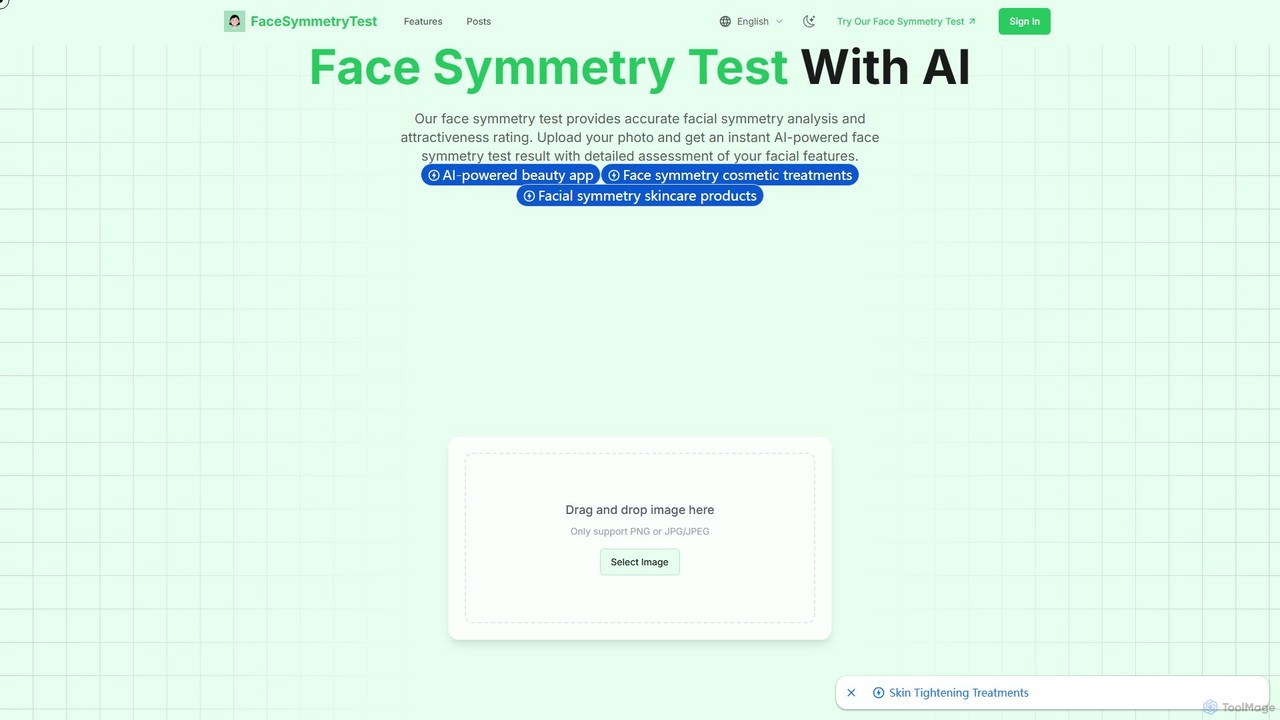
facesymmetrytest is an AI-powered tool that provides a professional facial symmetry analysis. Simply upload a front-facing photo to receive an instant, detailed report on your facial harmony, including a symmetry score and attractiveness rating. The tool uses advanced algorithms and multi-point analysis to evaluate features based on metrics like the golden ratio. It's designed for individuals curious about their features, as well as professionals in beauty, photography, and cosmetic surgery.

Analysis
Visits 7.1KFavorites 141Likes 145

About Beauty

AI Beauty tools are applications that use artificial intelligence to provide personalized beauty analysis, recommendations, and virtual experiences. Leveraging computer vision and machine learning algorithms, these tools can analyze facial features, skin conditions, and hair types from an image or video feed. They empower users to make informed decisions by offering data-driven product suggestions and realistic simulations, such as virtual makeup try-ons. This technology bridges the gap between digital browsing and physical product testing, creating a more interactive and customized beauty journey.

Core Features

  • Virtual Try-On: Uses augmented reality (AR) to realistically apply makeup, hair colors, or accessories to a user's live video or photo.
  • Skin Analysis: Scans a user's face to detect concerns like wrinkles, acne, dark spots, and hydration levels, then provides a detailed report.
  • Personalized Recommendations: Suggests specific skincare or makeup products based on the user's unique skin analysis, preferences, and goals.
  • Hairstyle Simulation: Allows users to visualize different haircuts and styles on their own photo before committing to a change.
  • Shade Matching: Analyzes skin tone to find the perfect foundation, concealer, or lipstick shade from a brand's product line.

Use Cases

These tools are widely used in the e-commerce sector by cosmetic brands to increase conversion rates and reduce returns. They are also valuable for individual consumers seeking personalized skincare routines and makeup advice. Salons and stylists use them to consult with clients on new looks, while R&D departments in beauty companies leverage the data for product development.

How to Choose

When selecting an AI Beauty tool, consider the accuracy of its analysis and the realism of its virtual try-on feature. Evaluate the breadth of its product database and brand partnerships. Prioritize tools with a clear data privacy policy that explains how your images and personal data are used. Finally, assess the user interface for ease of use and the quality of the recommendations provided.

Beauty use cases

1

Virtual Makeup Try-On for E-commerce

An online shopper visiting a cosmetics brand's website wants to buy a new lipstick but is unsure which shade suits them. Using the AI Beauty tool integrated into the product page, they activate their camera for a live virtual try-on. The tool uses AR to accurately map their lips and apply different lipstick shades in real-time. The shopper can instantly see how each color looks with their skin tone, helping them choose the perfect shade with confidence and reducing the likelihood of a product return.

2

Personalized Skincare Routine Generation

An individual concerned about their skin condition uses a mobile AI Beauty app. They take a selfie, and the app's AI analyzes it for various metrics like hydration, acne, wrinkles, and dark spots. Based on this analysis, the app generates a personalized daily and weekly skincare routine. It recommends specific types of products (e.g., a cleanser with salicylic acid, a moisturizer with hyaluronic acid) and explains why each is beneficial for their specific skin concerns, empowering them to build an effective and targeted skincare regimen.

3

AI-Powered Hairstyle Simulation for Salons

A client at a hair salon is considering a major change, like a short bob or a bold new color, but is afraid of the commitment. The stylist uses an AI tool on a tablet. They take a photo of the client, and the software allows them to simulate various haircuts, styles, and colors on the client's image. This provides a realistic preview of the final look, helping the client make a confident decision and ensuring satisfaction with the result. It also serves as a powerful consultation tool for the stylist to showcase possibilities.

4

Finding the Perfect Foundation Shade

A user struggles to find a foundation that perfectly matches their skin tone, often buying products that are too light or too dark. They use an AI shade-matching tool from a beauty brand's website. By uploading a photo taken in natural light or using their phone's camera, the AI analyzes their skin's unique undertones and surface tone. Within seconds, it recommends the exact foundation shade from the brand's collection that will provide the most natural-looking match, eliminating guesswork and costly purchasing mistakes.

5

At-Home Skin Health Monitoring

A person with a recurring skin condition like acne or rosacea wants to track its progress over time. They use an AI skin analysis app to take standardized photos of their face weekly. The AI tool analyzes each photo, quantifies the severity of the condition (e.g., number of blemishes, area of redness), and charts the changes over weeks or months. This provides objective, data-driven insights into whether their current treatment or routine is effective, helping them and their dermatologist make more informed decisions about their care.

6

Beauty Trend Analysis for Product Development

A product development team at a major cosmetics company needs to decide on their next product line. They use an AI Beauty tool that analyzes millions of social media posts, beauty blogs, and online articles. The AI identifies emerging trends, such as a rising interest in 'glass skin' or specific ingredients like niacinamide. It provides data on which demographics are discussing these trends and the sentiment associated with them. This allows the company to make a data-backed decision to develop a new serum line that aligns with current market demand, reducing the risk of a failed product launch.

Beauty FAQ

What are AI Beauty tools?

AI Beauty tools are software applications that use artificial intelligence, primarily computer vision and machine learning, to analyze skin, hair, and facial features. They provide personalized services like virtual makeup try-ons, skincare product recommendations, hairstyle simulations, and skin health tracking. Unlike simple photo filters, these tools offer data-driven analysis and customized advice to enhance the user's beauty and shopping experience.

How do I choose the right AI Beauty tool?

To choose the right tool, consider these factors:

  • Accuracy: Look for tools with high-quality analysis. Check reviews or case studies for information on the accuracy of their skin analysis or shade matching.
  • Features: Determine what you need. Do you want virtual try-on, skincare analysis, or hairstyle simulation? Choose a tool that specializes in your area of interest.
  • Realism: For virtual try-on tools, the realism of the AR application is key. A poor simulation won't be helpful for making decisions.
  • Data Privacy: Read the privacy policy. Understand how your photos and personal data will be stored and used before you upload anything.
What's the difference between AI Beauty tools and photo editing apps?

The key difference is analysis versus alteration. Photo editing apps are designed for manual or filter-based alteration of an image, such as smoothing skin or changing colors, without understanding the underlying context. AI Beauty tools, on the other hand, are analytical. They use AI to 'see' and interpret features—like identifying a pimple versus a freckle—to provide personalized data, diagnostics, and recommendations. Their goal is to inform and guide, not just to beautify a single photo.

How accurate is AI skin analysis?

The accuracy of AI skin analysis can be quite high, often capable of identifying common concerns with significant precision. However, its effectiveness depends heavily on factors like the quality of the user's photo (lighting, angle, camera resolution) and the size and diversity of the dataset the AI was trained on. While these tools are excellent for educational purposes and tracking general skin health, they are not a substitute for a professional diagnosis from a dermatologist. They should be used as a supplementary tool to aid in your skincare journey.

Who can benefit from using AI Beauty tools?

A wide range of users can benefit:

  • Consumers: For making more informed purchasing decisions, discovering new products, and learning about their skin or hair needs.
  • Beauty Brands: To increase online sales, reduce product returns, gather consumer insights, and personalize marketing.
  • Makeup Artists & Stylists: As a consultation tool to help clients visualize new looks before application.
  • Dermatologists & Estheticians: To supplement in-office visits by allowing patients to track skin conditions remotely.