
ToolMage
Sign in

Best 1 Calorie Counter AI tools for Health & Fitness

Popular Calorie Counter AI tools in Health & Fitness include metrical, helping you work more efficiently.

metrical
Free

metrical

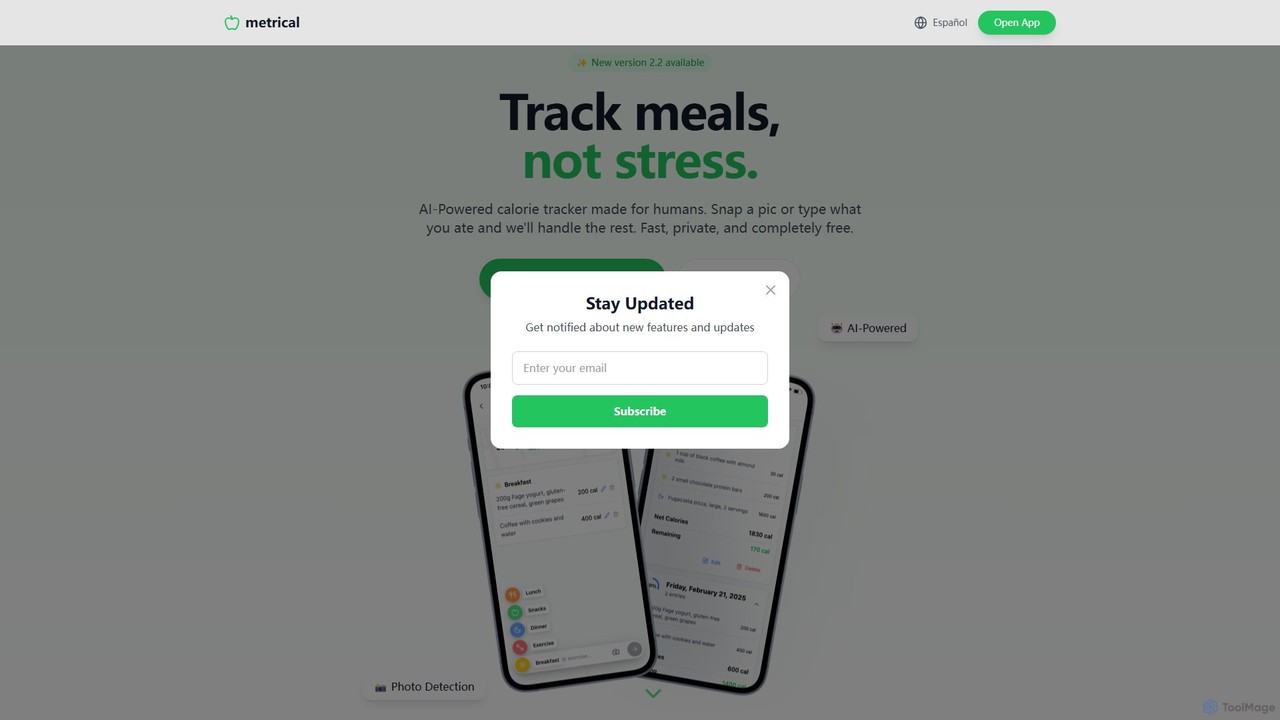
Metrical is an AI-powered calorie tracker that simplifies health monitoring. Just snap a photo of your meal or describe it in text, and the AI instantly estimates calories and macronutrients. It's designed for speed and privacy, requiring no account and storing all data locally on your device. This completely free tool offers detailed statistics, shareable reports, and smart food tagging, making calorie tracking effortless and stress-free.

Calorie Counter
Visits 10.5KFavorites 145Likes 139

About Calorie Counter

AI Calorie Counters are applications that use artificial intelligence to simplify and automate the process of tracking food intake and nutritional information. These tools leverage technologies like computer vision to recognize foods from photos and natural language processing (NLP) to log meals from text or voice descriptions. Their primary value is to provide users with an accurate, fast, and convenient way to monitor their diet for weight management, fitness goals, or health monitoring. This AI-driven approach significantly reduces the manual effort required by traditional food logging methods.

Core Features

  • Photo Food Recognition: Automatically identifies food items, estimates portion sizes, and logs nutritional data from a single photo of a meal.
  • Natural Language Logging: Allows users to log meals by simply typing or speaking what they ate, such as "an apple and a handful of almonds."
  • Barcode Scanning: Instantly retrieves detailed nutritional information by scanning the barcode on packaged food products.
  • Personalized Insights: Analyzes dietary patterns to offer personalized recommendations, progress reports, and nutritional advice.
  • Macronutrient Tracking: Automatically calculates and tracks the intake of protein, carbohydrates, and fats against daily goals.

Use Cases

These tools are widely used by individuals aiming for weight loss or muscle gain, athletes fine-tuning their nutrition for performance, and people managing health conditions like diabetes or high cholesterol. Nutritionists and dietitians also use them to monitor client progress and provide data-driven advice.

How to Choose

When selecting an AI Calorie Counter, consider the accuracy of its food recognition and the size of its food database. Evaluate its integration capabilities with other health apps and fitness trackers (e.g., Apple Health, Google Fit). Also, assess the user interface for ease of use and review the subscription model and privacy policy to ensure it meets your needs.

Calorie Counter use cases

1

Effortless Meal Logging for Weight Management

A busy professional aiming to lose weight often lacks the time for manual calorie counting. Using an AI Calorie Counter, they can simply take a photo of their lunch. The app's computer vision technology instantly identifies each food item, estimates portion sizes, and logs the corresponding calories and macronutrients. This process turns a tedious five-minute task into a quick five-second snap, making consistent tracking achievable and supporting their weight loss journey without adding stress to their schedule.

2

Precise Macronutrient Tracking for Athletes

An athlete or bodybuilder needs to meet specific daily targets for protein, carbohydrates, and fats to optimize performance and muscle growth. They use an AI Calorie Counter's natural language logging feature. By saying or typing "post-workout meal: 200g chicken breast, 150g brown rice, and a cup of broccoli," the app parses the text, accesses its database for each item, and accurately calculates the macronutrient breakdown. This allows for precise nutritional control that is essential for achieving elite fitness goals.

3

Managing Dietary Needs for Health Conditions

A person diagnosed with type 2 diabetes must carefully monitor their carbohydrate intake. They use an AI Calorie Counter's barcode scanning feature while grocery shopping. By scanning a product's barcode, they instantly see a full nutritional breakdown, including total carbohydrates and sugars, allowing them to make informed choices on the spot. At home, they use photo logging for meals, ensuring they stay within their prescribed dietary limits. The app provides daily and weekly reports, which they can share with their doctor or dietitian for better health management.

4

Understanding Nutrition in Restaurant Meals

When dining out, it's challenging to know the nutritional content of a meal. A health-conscious individual uses their AI Calorie Counter to take a photo of their restaurant dish. The AI analyzes the image, cross-references it with a vast database of common restaurant foods, and provides an estimated calorie and macronutrient count. This empowers the user to make healthier choices, such as opting for a grilled option over a fried one, and helps them stay on track with their health goals even when not cooking at home.

5

Integrating Diet with Fitness Activity

A fitness enthusiast connects their AI Calorie Counter with their smartwatch and other health apps. After a long run, the calories burned are automatically synced to the calorie counter. The app then adjusts their daily calorie budget in real-time, showing them how much more they can eat to maintain their energy balance. This seamless integration provides a holistic view of 'calories in vs. calories out,' helping them make smarter decisions about post-workout nutrition and recovery without manual calculations.

6

Building a Healthy Recipe Database

A home cook who enjoys creating healthy meals uses an AI Calorie Counter to build a personal recipe database. When they create a new dish, they input the ingredients and quantities. The AI automatically calculates the total calories and nutritional information per serving. They can save this recipe within the app for future use. Over time, they build a library of trusted, healthy meals with known nutritional values, making meal planning and consistent healthy eating much simpler and more organized.

Calorie Counter FAQ

What is an AI Calorie Counter?

An AI Calorie Counter is a digital tool that uses artificial intelligence to automatically track your food intake. Unlike traditional apps that require manual entry for every item, these tools use technologies like computer vision to identify food from photos and natural language processing to understand typed or spoken meal descriptions. This makes logging calories, macronutrients, and other nutritional information faster, more accurate, and significantly more convenient for users focused on health and fitness goals.

How do I choose the right AI Calorie Counter?

To choose the right AI Calorie Counter, consider these factors:

  • Accuracy: Look for reviews on the accuracy of its photo recognition and the reliability of its food database.
  • Database Size: A larger, more comprehensive database (including branded products and restaurant meals) will provide better results.
  • Features: Determine if you need features like barcode scanning, recipe calculation, or natural language input.
  • Integrations: Check if it syncs with your fitness trackers, smartwatches, or other health apps (like Apple Health or Google Fit).
  • User Experience: Choose an app with a clean, intuitive interface that makes daily logging easy and not a chore.
How accurate is AI food recognition from photos?

The accuracy of AI food recognition from photos is constantly improving but can vary. It generally performs well with distinct, single-item foods (like an apple or a steak) and common dishes. However, it can be less accurate with complex, mixed meals (like casseroles or salads with many ingredients) or when portion sizes are difficult to estimate. Most advanced apps use machine learning to improve over time and often allow users to quickly correct any misidentified items, ensuring the final log is accurate.

What's the difference between an AI Calorie Counter and a general fitness app?

The main difference lies in their core focus. A general fitness app is a broad tool for tracking workouts, steps, sleep, and may include a *manual* food diary. An AI Calorie Counter, while part of the broader health and fitness category, *specializes* in automating and simplifying the food logging process. Its key feature is using AI (like photo recognition) to reduce manual data entry, providing a more detailed and effortless nutritional tracking experience. Many users integrate both, using the fitness app for activity and the AI counter for diet.

Can AI Calorie Counters help with specific diets like Keto or Vegan?

Yes, most advanced AI Calorie Counters are well-suited for specific diets. Users can typically set custom goals for macronutrients (low carbs for Keto, high protein for muscle building) and micronutrients. Many apps also allow users to filter for or flag dietary preferences like vegan, vegetarian, or gluten-free. The AI can then help track adherence to these specific dietary rules, making it a valuable tool for anyone following a structured eating plan beyond simple calorie counting.