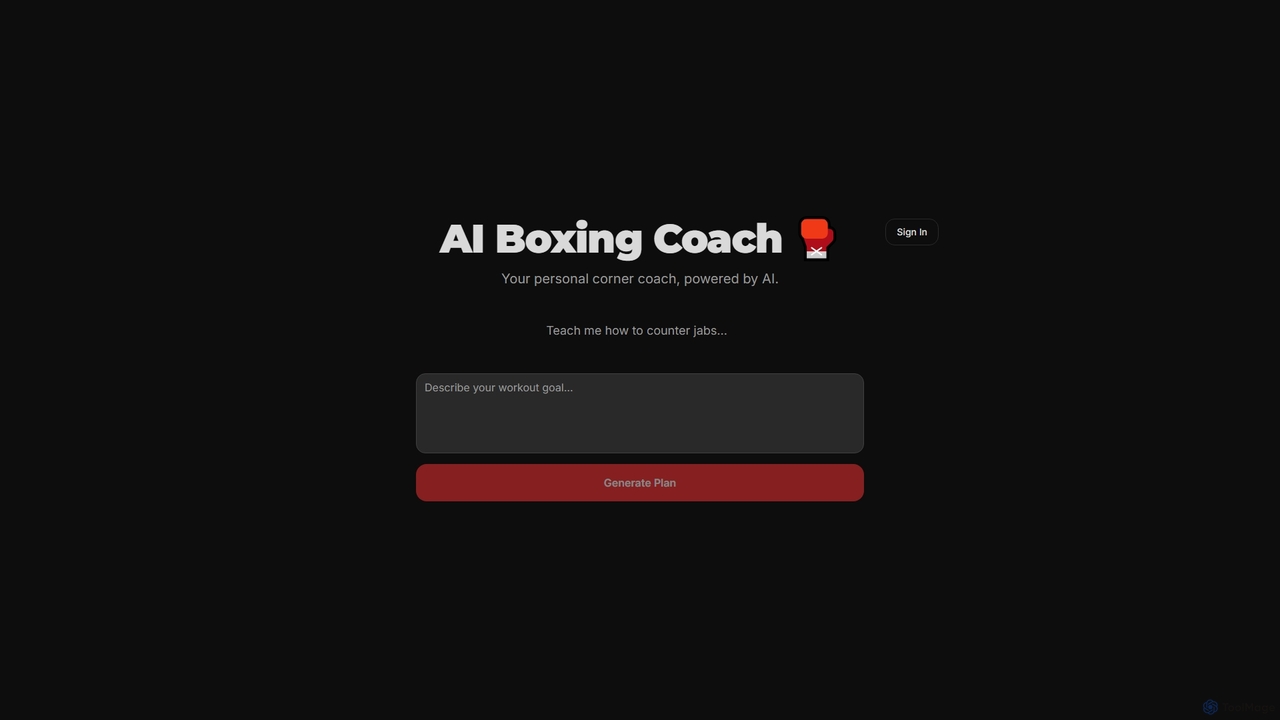
Ai Boxing Coach
An AI-powered personal corner coach designed to help boxers and enthusiasts improve their skills. Users can ask for …
An AI-powered personal corner coach designed to help boxers and enthusiasts improve their skills. Users can ask for specific techniques, such as how to counter a jab, and the tool generates customized training plans or instructions to guide their practice.
About Coaching
AI Coaching tools are applications that use artificial intelligence to provide personalized guidance, feedback, and motivation to help users achieve specific goals. These tools leverage machine learning algorithms to analyze user data, track progress, and adapt plans in real-time. Their primary value lies in making expert-level coaching accessible, affordable, and available 24/7, covering areas from fitness and nutrition to mental wellness and skill development. They act as a digital partner, offering data-driven insights to foster consistent improvement.
Core Features
- Personalized Goal Setting: Analyzes user input and performance data to create customized, achievable goals and milestones.
- Real-time Feedback & Analysis: Provides instant feedback on activities, such as workout form, dietary choices, or speech patterns, using sensor data or user logs.
- Adaptive Planning: Dynamically adjusts training schedules, meal plans, or learning modules based on the user's progress, schedule, and feedback.
- Motivational Nudges: Delivers automated, context-aware reminders, encouragement, and insights to maintain user engagement and consistency.
- Progress Tracking & Reporting: Visualizes performance data through dashboards and reports, highlighting achievements and areas for improvement.
Use Cases
AI Coaching tools are widely used by individuals seeking structured self-improvement. In fitness, they guide users through personalized workout routines. For nutrition, they function as dietitians by analyzing meals and suggesting improvements. In mental wellness, they offer guided meditation and cognitive behavioral therapy (CBT) exercises. Professionals also use them for skill development, such as practicing public speaking or learning a new language.
How to Choose
When selecting an AI Coaching tool, first consider the level of personalization and adaptability; the tool should adjust to your specific needs and progress. Evaluate the scientific basis or expert validation behind its coaching methodology. Data privacy and security are crucial, as you will be sharing personal information. Also, check for compatibility with other devices, like wearables, for seamless data integration, and consider the user interface for ease of use.

CoachingUse Cases
Personalized Fitness Training Plan
A fitness enthusiast aiming to run their first 10k race uses an AI Coach. After inputting their goal, current fitness level, and available training days, the AI generates a dynamic weekly training schedule. It syncs with their smartwatch to analyze run data like pace, heart rate, and distance. Based on performance, the coach adjusts future workouts—suggesting a lighter recovery run after a strenuous session or increasing intensity when progress plateaus. This adaptive approach ensures optimal training load, reduces injury risk, and keeps the user motivated with personalized feedback.
AI-Powered Nutrition Guidance
An individual looking to improve their eating habits uses an AI nutrition coach. They log meals by taking photos, and the AI's image recognition technology identifies the food items and estimates nutritional information. The coach provides real-time feedback on macronutrient balance, calorie intake, and vitamin deficiencies. It learns the user's preferences and dietary restrictions over time, suggesting personalized recipes and creating weekly meal plans. If the user logs a high-sugar snack, the coach might suggest a healthier alternative for next time, helping to build sustainable healthy habits.
Mental Wellness and Mindfulness Coaching
A professional dealing with work-related stress uses an AI coach for mental wellness. The app provides daily mindfulness exercises and guided meditation sessions tailored to their reported stress levels. Through a conversational interface, the user can journal their thoughts and feelings. The AI uses Natural Language Processing (NLP) to identify patterns and triggers, offering insights and cognitive behavioral therapy (CBT) based exercises to help manage anxiety. It provides a non-judgmental space for emotional expression and delivers consistent, on-demand support whenever needed.
Improving Public Speaking Skills
A manager preparing for a major presentation uses an AI public speaking coach. They record themselves practicing their speech, and the AI analyzes various aspects of their delivery. It provides a detailed report on pacing, use of filler words like 'um' and 'ah', vocal tone variation, and body language (if video is used). The tool offers specific, actionable feedback, such as 'try to slow down your pace in the introduction' or 'you used 'like' 15 times'. It also provides targeted exercises to help the manager improve in weak areas, allowing for focused and efficient practice before the event.
Habit Formation and Tracking
A user wants to build a consistent daily reading habit. They set a goal in their AI coaching app to read for 20 minutes every day. The app sends intelligent reminders at times the user is most likely to be free, based on their calendar or past behavior. After each session, the user confirms completion, and the app visualizes their progress with a streak calendar. If the user misses a day, the AI coach sends a supportive message, like 'It's okay, let's get back on track tomorrow!', instead of a critical one. This positive reinforcement loop helps build long-term consistency and motivation.
Corporate Wellness and Employee Coaching
A company provides its employees with an AI coaching app to support their well-being. The platform offers confidential, on-demand coaching for stress management, work-life balance, and productivity. An employee feeling overwhelmed can interact with a chatbot coach to identify stressors and learn coping techniques. The AI can suggest short mindfulness breaks during a busy day or provide modules on time management. For the company, aggregated, anonymized data offers insights into overall workforce well-being, helping HR to design more effective wellness programs without compromising individual privacy.