
ToolMage
Sign in

Best 1 Cognitive Training AI tools for Health & Fitness

Popular Cognitive Training AI tools in Health & Fitness include beyourbest, helping you work more efficiently.

beyourbest
Paid

beyourbest

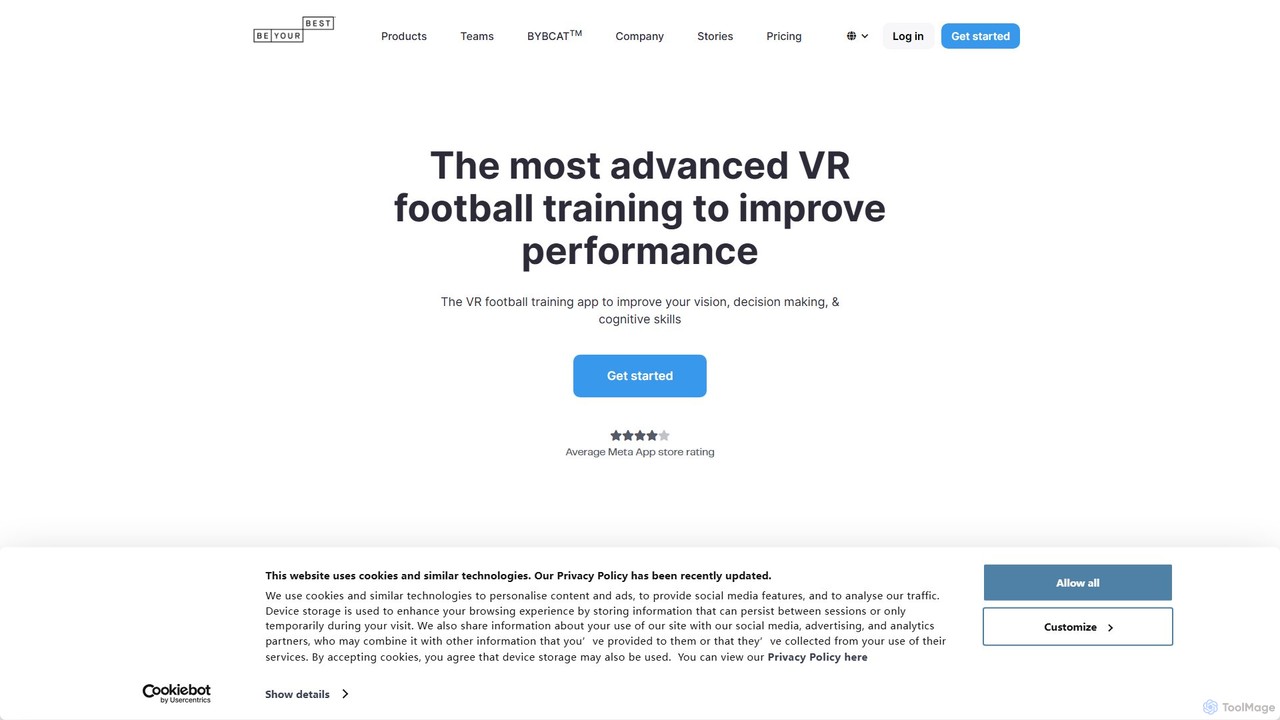
Be Your Best is a cutting-edge VR football (soccer) training platform powered by AI. Used by professional players and top clubs, it enhances cognitive skills like game intelligence, decision-making, and spatial awareness through immersive, data-driven virtual scenarios. Train smarter, not just harder, and gain a competitive edge on the pitch.

Skills Training
Visits 35.5KFavorites 179Likes 193

About Cognitive Training

Cognitive Training AI tools are specialized platforms designed to enhance and maintain various brain functions through intelligent, adaptive exercises. Leveraging artificial intelligence, these tools personalize training regimens, adapting difficulty and content based on individual performance and cognitive goals. They aim to improve areas such as memory, attention, problem-solving, and executive functions, contributing to overall mental agility and well-being within the broader Health & Fitness domain.

Core Features

  • Personalized Training Paths: AI algorithms create custom exercise plans tailored to individual cognitive strengths and weaknesses.
  • Adaptive Difficulty: Tools automatically adjust the challenge level of tasks in real-time to optimize engagement and learning.
  • Performance Tracking & Analytics: Detailed reports monitor progress, identify areas for improvement, and visualize cognitive gains over time.
  • Gamified Exercises: Engaging game-like interfaces make brain training enjoyable and encourage consistent use.
  • Targeted Cognitive Domains: Specific modules focus on improving memory, attention, logic, reaction time, and spatial reasoning.

Use Cases

These tools are utilized across various demographics and professional fields. Students employ them to sharpen focus and memory for academic success, while professionals use them to enhance decision-making and problem-solving skills in demanding work environments. Seniors benefit from maintaining cognitive vitality and reducing the risk of age-related decline, making these tools valuable for proactive brain health management.

How to Choose

When selecting a Cognitive Training AI tool, prioritize platforms with scientifically validated methodologies and a strong focus on personalization. Evaluate the variety and quality of exercises, ensuring they target your specific cognitive goals. Consider the user interface for ease of use, data privacy policies, and whether the tool offers comprehensive progress tracking and insightful analytics to monitor your improvements effectively.

Cognitive Training use cases

1

Enhancing Academic Focus and Memory for Students

Students preparing for exams or facing demanding coursework can utilize AI cognitive training tools to improve their concentration and recall abilities. By engaging in personalized memory games and attention-boosting exercises, they can sharpen their mental faculties, leading to better information retention and improved academic performance during study sessions and tests.

2

Boosting Professional Problem-Solving and Decision-Making

Professionals in high-pressure roles, such as managers or consultants, can leverage these tools to refine their critical thinking and rapid decision-making skills. AI-driven logic puzzles and strategic planning simulations help train the brain to process complex information more efficiently, enabling quicker, more effective solutions to workplace challenges and strategic planning.

3

Maintaining Cognitive Vitality in Older Adults

Seniors seeking to preserve their mental sharpness and mitigate age-related cognitive decline can benefit significantly from regular AI cognitive training. Personalized programs focusing on memory recall, processing speed, and executive functions help maintain brain health, supporting independence and quality of life by keeping mental faculties active and engaged.

4

Supporting Recovery from Mild Cognitive Impairment

Individuals experiencing mild cognitive impairment (MCI) can use AI cognitive training tools, often under professional guidance, as part of a broader rehabilitation strategy. The adaptive nature of these tools allows for tailored exercises that gently challenge and stimulate affected cognitive areas, potentially slowing progression and improving daily functioning.

5

Improving Reaction Time and Strategic Thinking for Athletes

Athletes, particularly in sports requiring quick reflexes and strategic foresight, can integrate AI cognitive training to enhance their performance. Exercises targeting visual processing speed, peripheral awareness, and rapid decision-making can translate into faster reaction times on the field or court, giving them a competitive edge.

6

Stimulating Creativity and Divergent Thinking for Innovators

Creative professionals, designers, and innovators can use AI cognitive training to foster divergent thinking and generate novel ideas. Tools that present open-ended problems or require flexible thinking can help break mental blocks and expand creative problem-solving approaches, leading to more innovative solutions and artistic expressions.

Cognitive Training FAQ

What are AI Cognitive Training tools?

AI Cognitive Training tools are software applications or platforms that use artificial intelligence to provide personalized exercises aimed at improving specific brain functions. They adapt to your performance, offering tailored challenges to enhance memory, attention, problem-solving, and other cognitive skills, distinguishing them from generic brain games by their adaptive and data-driven approach.

How to choose an effective AI Cognitive Training tool?

To choose an effective tool, look for scientific validation, often indicated by research studies or endorsements from cognitive scientists. Prioritize tools offering personalized adaptive learning paths, a wide variety of exercises targeting different cognitive domains, and clear progress tracking. User interface, data privacy, and a supportive community or expert guidance can also be important factors.

What cognitive functions can AI training improve?

AI cognitive training can target and potentially improve a wide range of cognitive functions, including working memory, long-term memory, attention span, focus, processing speed, problem-solving abilities, logical reasoning, executive functions (like planning and organization), and even aspects of spatial awareness and language skills, depending on the tool's design.

How do AI Cognitive Training tools differ from traditional brain games?

The key difference lies in AI's adaptive and personalized nature. Traditional brain games often offer static challenges, whereas AI tools dynamically adjust difficulty, exercise types, and training paths based on your real-time performance and progress. This personalization ensures optimal challenge and engagement, making the training more effective and targeted than a one-size-fits-all approach.

Are AI Cognitive Training tools scientifically proven to work?

Many reputable AI cognitive training tools are developed based on neuroscience research and have undergone scientific studies to validate their effectiveness in improving specific cognitive functions. While results can vary by individual and tool, a growing body of evidence supports their potential benefits, especially when used consistently and as part of a holistic brain health strategy. Always look for tools that cite peer-reviewed research.