beyourbest
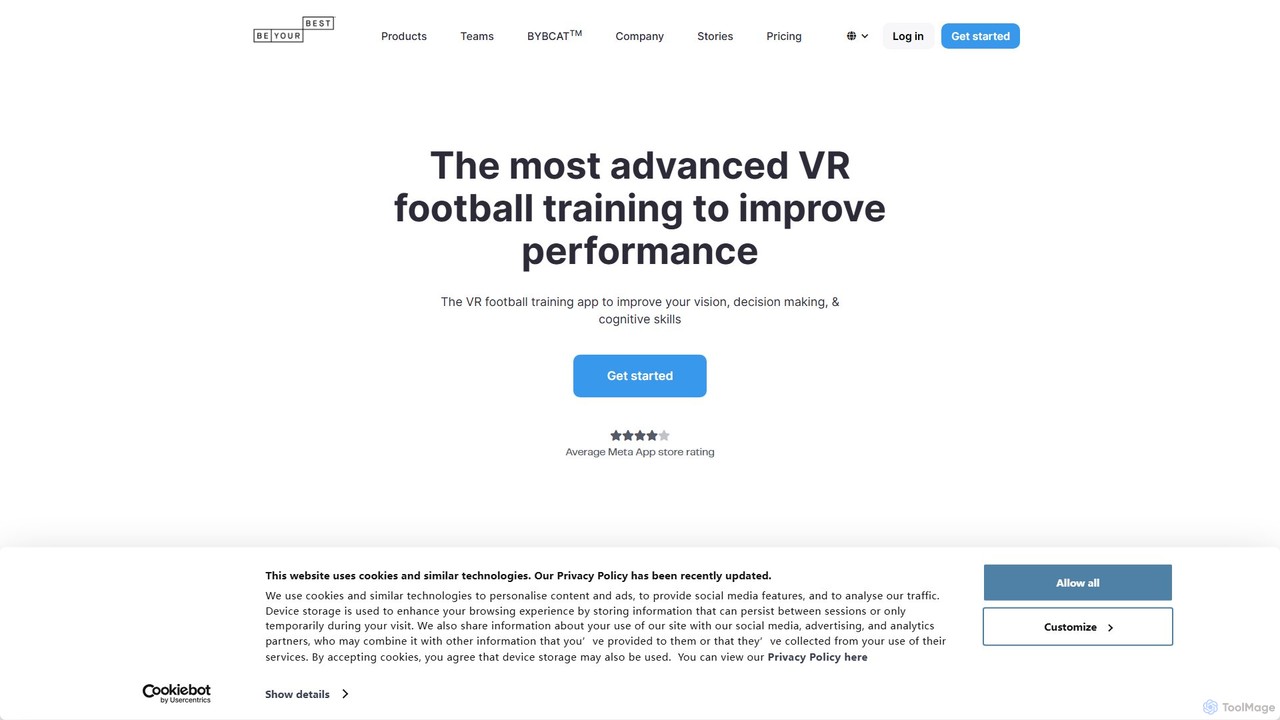
Be Your Best is a cutting-edge VR football (soccer) training platform powered by AI. Used by professional players …
Be Your Best is a cutting-edge VR football (soccer) training platform powered by AI. Used by professional players and top clubs, it enhances cognitive skills like game intelligence, decision-making, and spatial awareness through immersive, data-driven virtual scenarios. Train smarter, not just harder, and gain a competitive edge on the pitch.
About Skills Training
AI Skills Training tools are specialized platforms that leverage artificial intelligence to deliver personalized and interactive learning for professional development. These tools use machine learning algorithms to analyze user performance, simulate real-world scenarios, and provide instant, data-driven feedback. They are designed to accelerate the acquisition of both hard skills, like coding and data analysis, and soft skills, such as communication and leadership. Unlike traditional online courses, AI-powered training adapts dynamically to each learner's pace and knowledge gaps, creating a more efficient and effective educational experience.
Core Features
- Personalized Learning Paths: The AI assesses a user's current abilities and goals to generate a customized curriculum that focuses on areas needing improvement.
- Interactive Simulations: Users can practice complex skills in realistic, AI-driven environments, such as simulated sales calls, coding interviews, or difficult conversations.
- Real-time Performance Feedback: AI provides immediate, objective analysis on performance, highlighting strengths and offering specific suggestions for enhancement.
- Skill Gap Analysis: These tools identify discrepancies between an individual's or a team's current skill set and the skills required for a specific role or project.
- Adaptive Assessments: Quizzes and challenges adjust in difficulty based on the user's answers, ensuring an accurate measure of competency.
Applicable Scenarios
AI Skills Training tools are widely used in corporate environments for employee onboarding, upskilling, and leadership development. They are particularly valuable in industries like technology, sales, and customer service, where practical application and continuous improvement are critical. Individuals also use these platforms for career advancement, preparing for job interviews, or mastering new technical abilities.
Selection Criteria
When choosing an AI Skills Training tool, consider the specific skills it covers—whether technical, creative, or interpersonal. Evaluate the quality and depth of the AI feedback and the realism of its simulations. Assess its integration capabilities with existing Learning Management Systems (LMS) and HR software. Finally, consider the platform's scalability for individual or enterprise use and its pricing model.

Skills TrainingUse Cases
Mastering Sales Pitches with AI Coaching
A junior sales representative needs to improve their ability to handle client objections. Using an AI Skills Training platform, they engage in simulated sales conversations with an AI-powered virtual client. The AI presents common objections related to price, features, and competitors. After each session, the platform provides a detailed report analyzing the rep's word choice, tone of voice, response time, and confidence level. This allows the rep to practice repeatedly in a risk-free environment, refining their pitch and building confidence before interacting with real customers.
Accelerating Developer Upskilling with Adaptive Coding Challenges
A software development team needs to adopt a new programming language for an upcoming project. An AI Skills Training tool provides a series of adaptive coding challenges. The platform assesses each developer's initial proficiency and assigns problems that are challenging but not overwhelming. As they solve problems, the AI offers real-time hints, explains optimal solutions, and identifies recurring error patterns. This personalized approach helps the entire team learn the new language much faster than following a generic, one-size-fits-all online course.
Developing Leadership and Communication Skills
A newly promoted manager must learn how to conduct effective performance reviews. They use an AI simulation tool to practice difficult conversations with virtual employees who exhibit various personalities and reactions. The AI provides instant feedback on the manager's empathy, clarity, and ability to deliver constructive criticism. The platform offers suggestions on phrasing and active listening techniques, helping the manager build the soft skills necessary for effective leadership without risking real-world team morale.
Preparing for Technical Interviews with AI Mock Interviews
A job seeker is preparing for a series of technical interviews for a data scientist position. They use an AI platform that simulates the entire interview experience. The AI asks relevant technical questions, presents data-driven case studies, and conducts a mock coding test. The platform records the session and provides comprehensive feedback on the clarity of their explanations, the efficiency of their code, and their problem-solving approach. This helps the candidate identify weaknesses and practice their responses under pressure.
Enhancing Public Speaking and Presentation Delivery
An executive needs to deliver a high-stakes keynote presentation. They use an AI-powered public speaking coach to rehearse. By uploading their script and recording themselves, the AI analyzes their delivery for key metrics like pacing, use of filler words (e.g., "um," "ah"), eye contact, and vocal variety. The tool generates a report with visual data and actionable tips, such as "slow down during this section" or "vary your pitch to maintain audience engagement." This allows for targeted practice to ensure a polished and impactful final presentation.
Standardizing Customer Service Agent Training
A large call center needs to ensure all new customer service agents are trained to handle difficult customer interactions consistently. They deploy an AI Skills Training platform with a library of common complaint scenarios. New hires interact with AI-powered customer avatars that simulate frustration, confusion, or anger. The system scores their performance based on adherence to company policy, de-escalation effectiveness, and problem-resolution time. This provides a scalable and standardized way to certify that all agents meet a high quality bar before they begin taking live calls.