ToolMage
Sign in

Best 1 Sleep AI tools for Health & Fitness

Popular Sleep AI tools in Health & Fitness include Sleep Care Pro, helping you work more efficiently.

Sleep Care Pro
Free

Sleep Care Pro

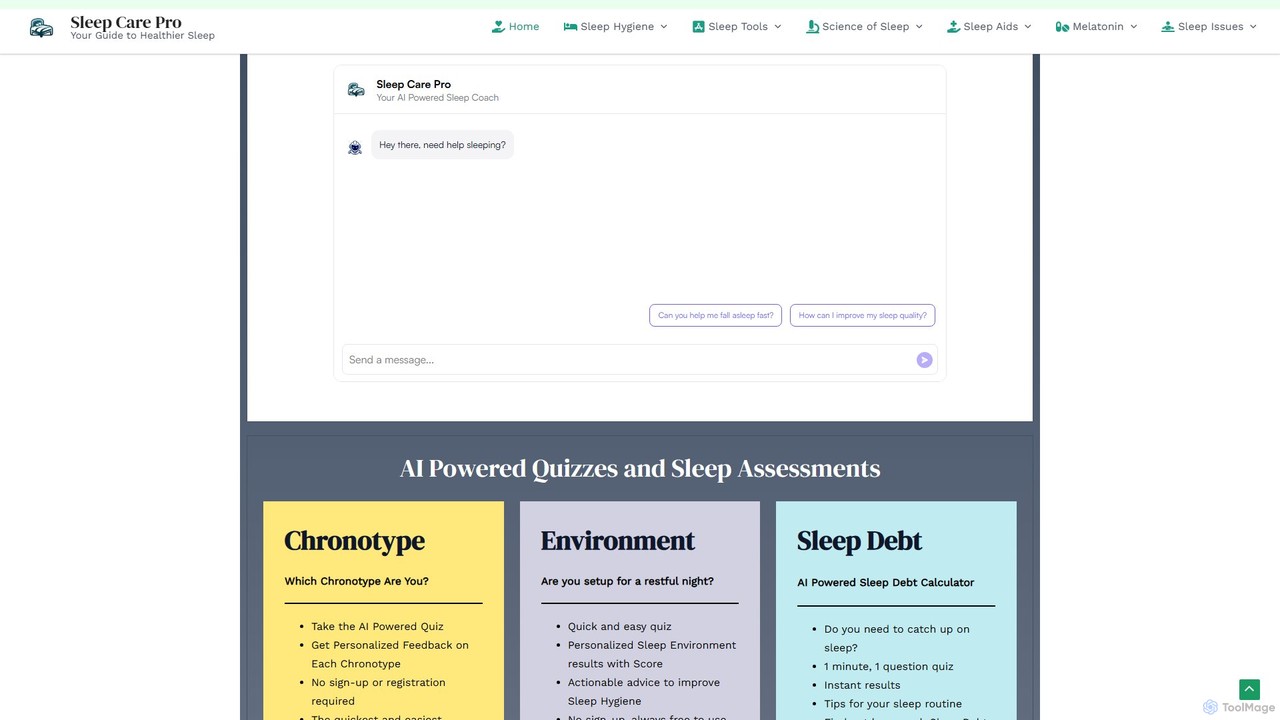
Sleep Care Pro is a comprehensive platform dedicated to improving sleep health. It combines a wealth of science-backed articles with a suite of free AI-powered tools. Users can interact with an AI Sleep Coach for personalized advice, generate custom relaxation audio and bedtime stories, and take quizzes to assess their chronotype, sleep environment, and sleep debt. It's a one-stop resource for understanding and improving your sleep without any cost or registration.

Resource
Visits 6.5KFavorites 123Likes 135

About Sleep

AI Sleep tools are applications that use artificial intelligence to monitor, analyze, and improve sleep quality. They leverage data from wearables or smartphone sensors to track sleep stages, breathing patterns, and environmental factors. These insights help users understand their sleep habits, identify potential issues, and receive personalized recommendations for better rest. Some advanced tools offer smart alarm functions that wake users during their lightest sleep phase or provide AI-generated soundscapes for relaxation.

Core Features

  • Sleep Stage Analysis: Utilizes AI to accurately identify and quantify sleep cycles, including light, deep, and REM sleep.
  • Personalized Sleep Coaching: Delivers tailored advice and action plans based on your unique sleep data and lifestyle inputs.
  • Smart Alarm Clock: Wakes you up during an optimal, light sleep phase within a designated time window to reduce grogginess.
  • Environmental & Sound Detection: Analyzes ambient noise, such as snoring or traffic, to identify potential sleep disruptions.
  • AI-Generated Soundscapes: Creates adaptive audio environments, like white noise or nature sounds, to help you fall asleep faster.

Use Cases

These tools are ideal for individuals seeking to enhance daily energy levels, athletes optimizing physical recovery, and people managing irregular schedules like shift work or jet lag. They are also valuable for anyone curious about how lifestyle choices, such as caffeine intake or exercise timing, impact their sleep quality.

How to Choose

When selecting an AI Sleep tool, consider its compatibility with your devices (e.g., Apple Watch, Oura Ring, or smartphone only). Evaluate the depth of the sleep analysis provided, from basic stage tracking to advanced metrics like HRV. Also, assess the quality of the AI coaching and the platform's data privacy policies.

Sleep use cases

1

Optimizing Daily Energy for Professionals

A busy professional often experiences fluctuating energy levels, impacting productivity. By using an AI Sleep tool, they can track their sleep cycles nightly. The tool's smart alarm feature gently wakes them during their lightest sleep phase within a 30-minute window, preventing sleep inertia. The AI analyzes sleep debt and provides actionable advice, such as suggesting a 20-minute power nap or adjusting bedtime to align with their natural circadian rhythm. This results in more consistent morning energy and improved focus throughout the workday.

2

Identifying and Mitigating Sleep Disruptions

A user feels tired despite getting 8 hours of sleep. An AI Sleep tool uses the smartphone's microphone to detect and analyze sounds during the night. The AI identifies recurring snoring events and periods of loud external noise (e.g., traffic) that correlate with arousals from deep sleep. The app presents a report showing exactly when these disruptions occurred. Based on this data, the user can take action, such as trying a new sleeping position to reduce snoring or using earplugs, leading to more restorative, uninterrupted sleep.

3

Creating a Personalized Wind-Down Routine

An individual struggles with falling asleep due to stress. An AI Sleep tool offers a library of AI-generated soundscapes and guided meditations. Based on the user's heart rate data from a wearable, the AI can suggest a calming soundscape that is most effective at lowering their heart rate. It also helps establish a consistent bedtime by sending smart reminders. Over time, the AI learns which sounds and timings work best, creating a highly personalized and adaptive wind-down routine that significantly reduces the time it takes to fall asleep.

4

Enhancing Athletic Recovery and Performance

An athlete needs to maximize recovery to perform at their best. They use an AI Sleep tool connected to their fitness tracker. The AI correlates their training intensity data with their sleep data, specifically tracking deep sleep and REM sleep percentages, which are crucial for muscle repair and mental consolidation. The app provides a daily 'Readiness Score' based on sleep quality and HRV. This score helps the athlete and their coach make informed decisions about a day's training load, preventing overtraining and optimizing long-term performance gains.

5

Managing Sleep Schedules for Shift Workers

A nurse working rotating shifts struggles to maintain a consistent sleep pattern. An AI Sleep tool allows them to input their upcoming work schedule. The AI then generates a personalized sleep plan, suggesting optimal times for sleep and naps to minimize sleep debt and combat fatigue. It provides guidance on light exposure and caffeine timing to help adjust their body clock more effectively. This proactive planning helps the nurse improve alertness during critical work hours and enhances overall well-being despite an unconventional schedule.

6

Correlating Lifestyle Choices with Sleep Quality

A health-conscious user wants to understand how their daily habits affect their sleep. They use an AI Sleep tool to log activities like late-night meals, evening workouts, or caffeine consumption. The AI platform analyzes this data alongside their sleep metrics. After a few weeks, it generates insights and visualizations showing clear correlations, such as 'Your deep sleep decreased by 15% on days you exercised after 8 PM.' These personalized reports empower the user to make small, evidence-based lifestyle adjustments that lead to significant improvements in their sleep quality.

Sleep FAQ

What are AI Sleep tools?

AI Sleep tools are applications that use artificial intelligence algorithms to analyze data from your smartphone or wearable devices. Their primary goal is to provide deep insights into your sleep patterns, such as identifying sleep stages (light, deep, REM) and detecting disruptions. Unlike simple trackers, they offer personalized, data-driven recommendations and coaching to help you actively improve your sleep quality over time.

How do AI Sleep tools work?

AI Sleep tools typically use sensors to collect data while you sleep. This can include the accelerometer and microphone in your smartphone, or more advanced sensors in wearables like smartwatches or rings that track heart rate, body temperature, and blood oxygen. The AI algorithms then process this raw data to:

  • Identify Sleep Stages: By analyzing movement and heart rate patterns.
  • Detect Events: By listening for sounds like snoring or coughing.
  • Find Correlations: By linking your sleep data to your logged daily activities.
  • Generate Recommendations: By comparing your data to established sleep science principles and your own historical trends.

What's the difference between an AI sleep tracker and a standard sleep app?

The key difference lies in the depth of analysis and personalization. A standard sleep app might simply record the time you went to bed and woke up, or use basic motion detection to guess if you were asleep. An AI sleep tracker goes much further by:

  • Analyzing complex data: It interprets heart rate, HRV, and breathing patterns for more accurate sleep stage detection.
  • Providing context: It connects sleep quality to lifestyle factors you log, like exercise or caffeine.
  • Offering adaptive coaching: Its recommendations evolve as it learns more about your unique physiology and habits.
In short, standard apps record, while AI tools analyze and guide.

How accurate are AI Sleep tools?

The accuracy of AI Sleep tools varies depending on the device and algorithms used. Consumer-grade tools are not as precise as clinical polysomnography (a medical sleep study). However, high-quality tools, especially those using data from dedicated wearables like the Oura Ring or advanced smartwatches, can be highly effective for tracking trends. Their strength lies not in perfect minute-by-minute accuracy, but in consistently tracking changes over time, which is extremely valuable for understanding and improving personal sleep habits.

Who can benefit from using AI Sleep tools?

A wide range of individuals can benefit from AI Sleep tools. This includes:

  • Professionals and Students: Who want to optimize their sleep to improve cognitive performance and manage stress.
  • Athletes: Who need to maximize physical recovery and monitor their readiness for training.
  • Health-Conscious Individuals: Who are interested in quantifying their health and understanding the impact of lifestyle on their well-being.
  • People with Mild Sleep Issues: Who struggle with falling asleep, staying asleep, or waking up feeling unrested, and are looking for non-medical solutions.
However, they are not a substitute for medical advice for serious sleep disorders like sleep apnea.