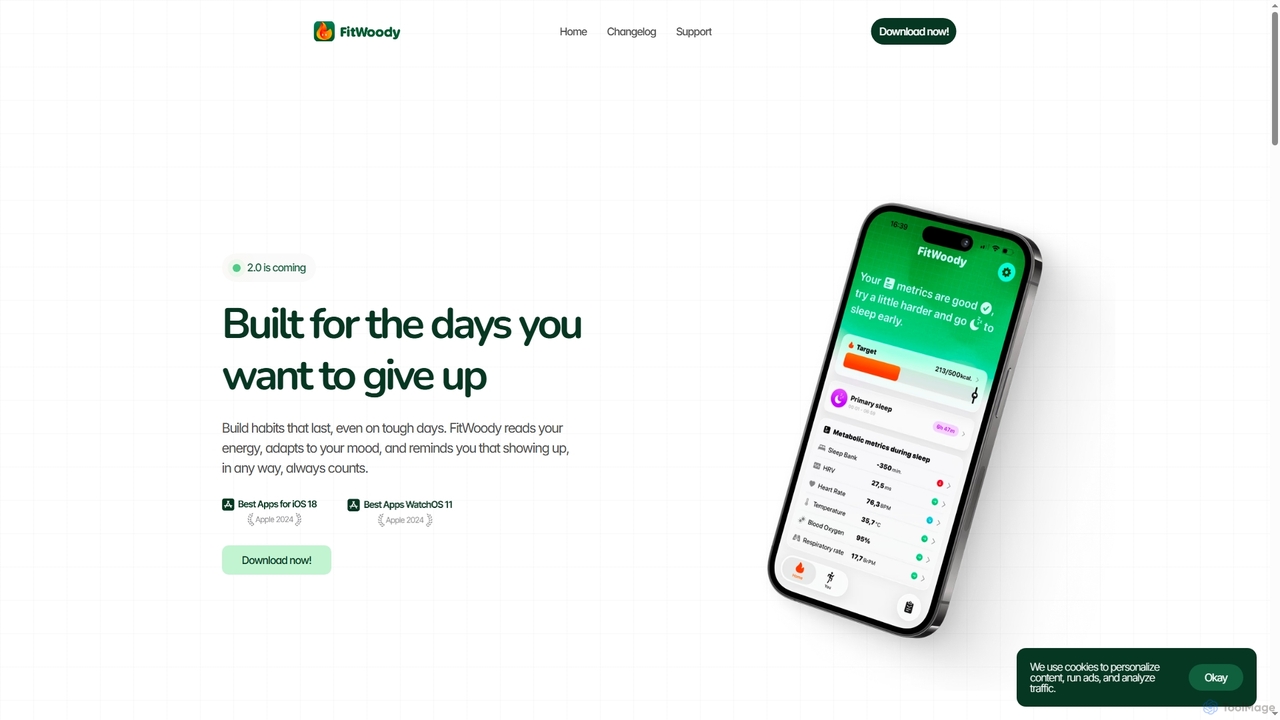
Fitness Tracking tools are AI-powered applications and devices designed to monitor, analyze, and optimize an individual's physical activity, health metrics, and workout performance. Leveraging advanced sensors and machine learning algorithms, these tools provide personalized insights into sleep patterns, heart rate, calorie expenditure, and exercise routines. They empower users to set achievable goals, track progress effectively, and make data-driven decisions for a healthier lifestyle, integrating seamlessly into daily wellness management.
Core Features
- Activity Monitoring: Automatically tracks steps, distance, calories burned, and active minutes throughout the day.
- Heart Rate Variability (HRV) Analysis: Measures heart rate fluctuations to assess stress levels, recovery status, and overall cardiovascular health.
- Sleep Pattern Analysis: Detects sleep stages (REM, deep, light), duration, and disturbances to provide insights into sleep quality.
- Personalized Workout Recommendations: Generates customized exercise plans and suggestions based on performance data, goals, and recovery needs.
- Nutrition & Calorie Tracking: Helps users log food intake, monitor macronutrients, and manage calorie budgets for weight management.
Use Cases
Individuals aiming for a healthier lifestyle can utilize AI fitness tracking tools to gain a comprehensive understanding of their daily activity and sleep. Athletes and fitness enthusiasts benefit from detailed performance analytics and recovery insights to optimize training regimens. Chronic disease management patients can monitor vital signs and activity levels, sharing data with healthcare providers for better care coordination. These tools offer a proactive approach to personal health, moving beyond simple step counting to holistic wellness management.
How to Choose
When selecting an AI fitness tracking tool, consider its data accuracy and sensor quality for reliable metrics. Evaluate the breadth of features offered, such as sleep tracking, heart rate monitoring, and personalized coaching, ensuring they align with your specific health goals. Look for integration capabilities with other health apps or smart devices you already use. Finally, assess the user interface and data visualization for ease of understanding and actionable insights, along with the privacy policy regarding your sensitive health data.