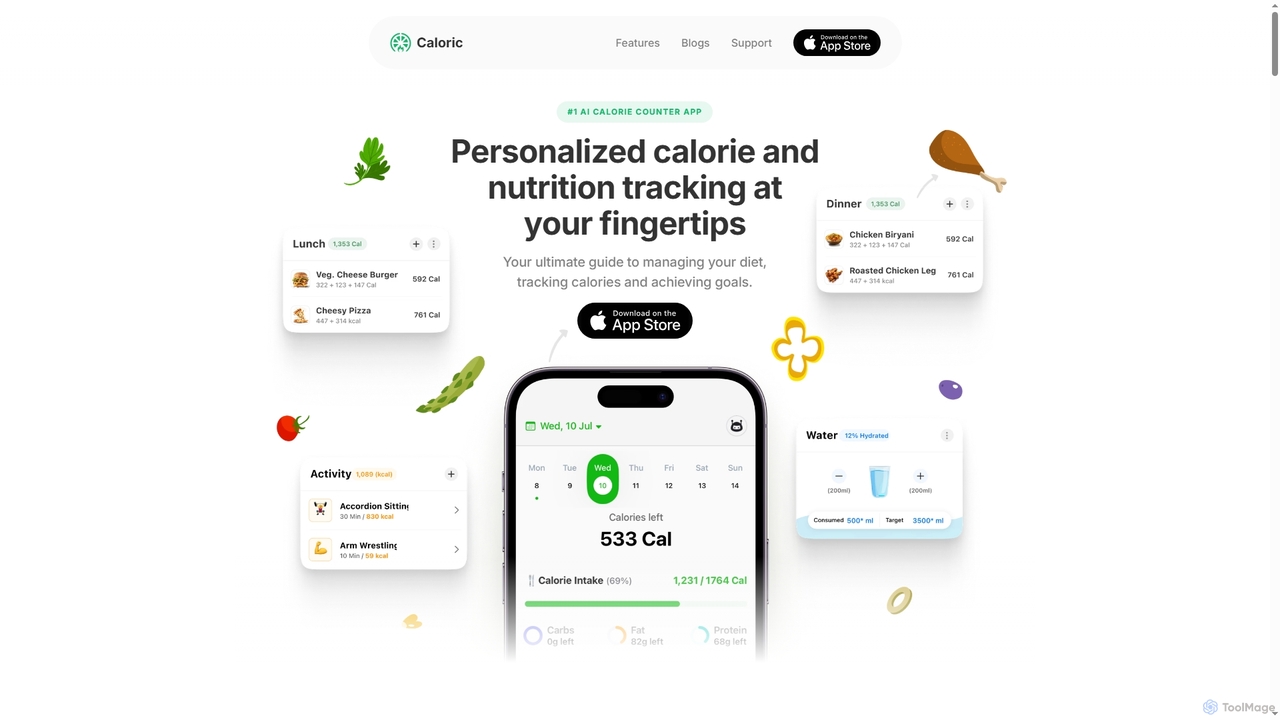
Weight Management AI tools are a specialized category of intelligent applications designed to assist individuals in achieving and maintaining a healthy body weight. Leveraging advanced artificial intelligence and machine learning algorithms, these tools analyze personal health data, dietary habits, and activity levels to provide highly personalized recommendations and actionable insights. They empower users with data-driven strategies for sustainable weight loss, gain, or maintenance, promoting overall well-being and forming a crucial part of the broader Health & Fitness technology landscape.
Core Features
- Personalized Meal Planning: Generates customized diet plans and recipes tailored to individual preferences, dietary restrictions (e.g., vegan, keto), and specific caloric or macronutrient goals.
- Activity & Exercise Tracking: Monitors physical activity through integrated devices, suggests suitable workout routines based on fitness levels, and adapts recommendations to optimize calorie expenditure.
- Progress Monitoring & Analytics: Tracks weight, body measurements, body fat percentage, and other health metrics over time, offering detailed visual insights and trend analysis to keep users motivated.
- Behavioral Coaching & Support: Provides motivational guidance, helps in forming healthy habits, and offers strategies to overcome common challenges like emotional eating or lack of motivation.
- Nutritional Analysis & Food Logging: Allows users to log food intake, automatically breaks down meals into macronutrients and micronutrients, and identifies areas for dietary improvement.
- Goal Setting & Adjustment: Assists users in setting realistic weight goals and dynamically adjusts plans based on real-time progress and changing needs.
Use Cases
These AI-powered tools are invaluable for individuals embarking on a personal weight loss or fitness journey, offering structured guidance and accountability. Fitness coaches and dietitians utilize them to efficiently manage and personalize plans for multiple clients with diverse needs and health conditions. Furthermore, they are increasingly adopted in corporate wellness programs to promote employee health and in clinical settings for supporting patients with obesity or other weight-related chronic health conditions, providing continuous, data-driven support.
How to Choose
When selecting a Weight Management AI tool, it's crucial to consider its data accuracy and the depth of its personalization capabilities, ensuring it can genuinely adapt to your unique physiological characteristics, lifestyle, and health goals. Evaluate its integration with various wearable devices and health apps for seamless data synchronization, which is vital for comprehensive tracking. Assess the quality and scientific backing of its behavioral coaching features, as sustainable change often requires more than just diet and exercise. Finally, prioritize tools with robust data privacy policies and a user-friendly interface that encourages consistent engagement for an effective and secure experience.