
ToolMage
Sign in

Best 1 Wellness Tracker AI tools for Health & Fitness

Popular Wellness Tracker AI tools in Health & Fitness include prefit.ai, helping you work more efficiently.

prefit.ai
Free

prefit.ai

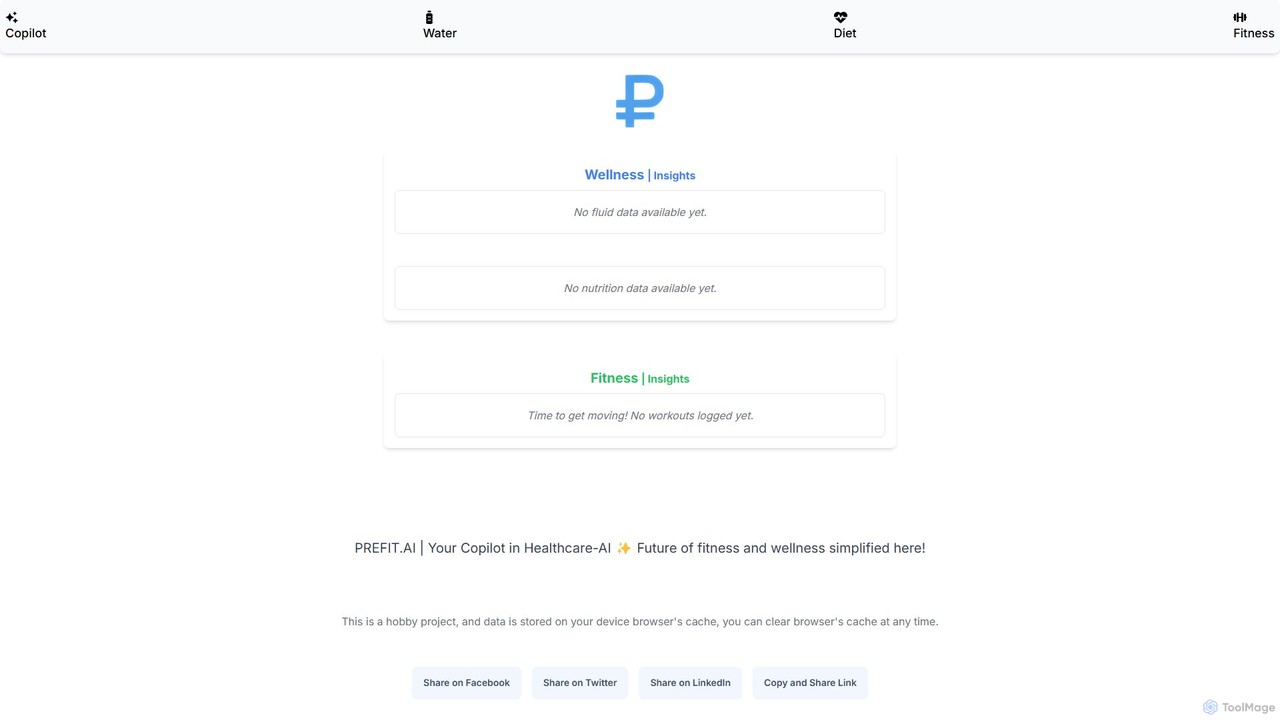
prefit.ai is a free, privacy-focused AI health copilot designed to simplify your fitness and wellness journey. Track your water intake, diet, and workouts on a unified dashboard. It provides AI-driven insights while ensuring all your data is stored locally in your browser for maximum privacy.

Diet Planner
Visits 6.2KFavorites 139Likes 133

About Wellness Tracker

AI Wellness Trackers are applications that use artificial intelligence to monitor and analyze a holistic range of personal health data. Unlike traditional fitness apps, these tools go beyond physical metrics to encompass mental, emotional, and sleep health, using AI algorithms to identify patterns and correlations in your daily habits. They provide personalized insights and actionable recommendations to help you understand and proactively improve your overall well-being. This data-driven approach empowers users to make informed decisions about their lifestyle for sustained health benefits.

Core Features

  • Holistic Data Logging: Record a wide array of metrics including mood, stress levels, sleep quality, nutrition, and mindfulness sessions.
  • AI-Powered Pattern Analysis: Identifies connections between lifestyle factors, such as how sleep affects mood or diet impacts energy levels.
  • Personalized Recommendations: Delivers tailored suggestions, like breathing exercises during high-stress periods or dietary adjustments.
  • Progress Visualization: Offers intuitive charts and reports to track wellness trends and goal achievement over time.

Use Cases

These tools are ideal for individuals seeking to manage stress, improve sleep, or gain deeper self-awareness of their emotional patterns. They are also increasingly used in corporate wellness programs to support employee mental health and by health coaches to provide data-informed guidance to their clients.

How to Choose

When selecting a Wellness Tracker, consider the scope of metrics it tracks and ensure it aligns with your personal goals. Evaluate its data privacy policy, compatibility with your wearable devices (like smartwatches), and the quality of its AI-generated insights. A good tool offers actionable advice, not just raw data.

Wellness Tracker use cases

1

Stress Management for Professionals

A project manager experiencing high-pressure deadlines uses a wellness tracker to log daily stress levels and mood. The AI analyzes this data alongside their calendar, identifying that back-to-back virtual meetings are a primary stress trigger. Based on this insight, the app proactively suggests 5-minute guided breathing exercises between these meetings. Over several weeks, the manager notices a significant reduction in perceived stress and an improvement in focus, helping them navigate their demanding schedule more effectively without reaching burnout.

2

Improving Sleep Quality and Hygiene

A user struggling with inconsistent sleep uses a wellness tracker that syncs with their smartwatch. The app tracks sleep stages, duration, and interruptions. The AI correlates this data with user-logged daily activities, such as caffeine intake and screen time before bed. It identifies a pattern where late-afternoon coffee consumption leads to more frequent awakenings. The app then provides personalized recommendations, like setting a caffeine cutoff time and enabling a 'wind-down' mode with calming sounds an hour before bedtime, leading to more restful and consistent sleep.

3

Mindful Eating and Nutrition Analysis

An individual wants to understand the connection between their diet and energy levels. They use a wellness tracker to log meals by taking photos, and the AI identifies the food items and estimates nutritional information. The user also logs their energy levels throughout the day. After two weeks, the AI generates a report showing a strong correlation between high-sugar lunches and a significant energy dip around 3 PM. The app suggests alternative lunch ideas rich in protein and complex carbs, helping the user maintain stable energy throughout their workday.

4

Emotional Pattern Awareness for Personal Growth

Someone seeking better self-understanding uses a wellness tracker's journaling feature to log daily thoughts and moods. They consistently tag entries with emotions like 'Anxious', 'Productive', or 'Content'. Over three months, the AI's visualization tool reveals a recurring pattern of anxiety on Sunday evenings. Recognizing this 'Sunday Scaries' trend, the user can proactively address it by implementing a relaxing Sunday routine, such as meditation or planning the week ahead in a low-stress way, fostering greater emotional regulation and a more positive start to the week.

5

Supporting Corporate Wellness Programs

An HR department implements a company-wide wellness challenge using a wellness tracker app. Employees opt-in to share anonymized, aggregated data on stress levels and activity. After a month, the dashboard reveals that the marketing department reports significantly higher stress levels than other teams. This data-driven insight allows HR to move beyond generic wellness emails and instead offer targeted resources, such as a stress-management workshop specifically for the marketing team, leading to a more effective and impactful wellness initiative.

6

Optimizing Athletic Recovery and Performance

A marathon runner uses a wellness tracker to monitor recovery metrics like sleep quality, resting heart rate (RHR), and heart rate variability (HRV). The AI establishes a personal baseline for these metrics. After a particularly intense training session, the app notes a lower-than-usual HRV and elevated RHR, indicating physical stress and incomplete recovery. Instead of pushing through the next planned high-intensity workout, the AI recommends a light recovery run or a rest day. This data-driven adjustment helps the athlete prevent overtraining, reduce injury risk, and optimize their long-term performance.

Wellness Tracker FAQ

What is an AI Wellness Tracker?

An AI Wellness Tracker is a digital tool that monitors various aspects of your health beyond just physical activity. It focuses on a holistic view of well-being, including mental health, sleep patterns, stress levels, and nutrition. Using artificial intelligence, it analyzes this data to identify trends, provide personalized insights, and offer actionable recommendations to help you improve your overall health and lifestyle.

How do AI Wellness Trackers differ from standard Fitness Trackers?

The primary difference lies in their scope. Standard fitness trackers primarily focus on physical metrics like steps taken, calories burned, and heart rate during exercise. AI Wellness Trackers adopt a more holistic approach. They incorporate mental and emotional data (mood, stress), sleep quality analysis, and nutritional logging. The 'AI' component is key, as it connects these disparate data points to provide deeper insights, such as how a poor night's sleep impacts your mood and productivity the next day.

How do I choose the right AI Wellness Tracker?

To choose the right tool, consider the following factors:

  • Your Goals: Are you focused on stress management, sleep improvement, or nutrition? Choose a tracker that excels in the areas most important to you.
  • Data Privacy: Since you'll be sharing sensitive health information, carefully review the app's privacy policy and data security measures.
  • Device Compatibility: Ensure the app can sync with your existing devices, such as a smartwatch or other health apps, for seamless data collection.
  • User Experience: The app should be easy to use and present data in a clear, understandable way. A good tracker offers actionable insights, not just overwhelming charts.
Is the data in AI Wellness Trackers secure?

Reputable wellness trackers prioritize user data security. They typically use encryption for data both in transit and at rest. Many also comply with stringent privacy regulations like GDPR in Europe or HIPAA for health information in the US. However, it is always crucial for users to read the privacy policy of any app before use to understand how their data is collected, stored, and used. Choosing apps from well-known developers can also add a layer of confidence in their security practices.

Who can benefit from using an AI Wellness Tracker?

A wide range of individuals can benefit from these tools. This includes:

  • Professionals looking to manage work-related stress and prevent burnout.
  • Individuals seeking to improve their sleep quality or understand their emotional patterns.
  • Athletes aiming to optimize their training and recovery cycles based on data.
  • Anyone interested in a proactive, data-driven approach to their overall health, moving beyond simple fitness metrics to a more complete picture of their well-being.