ToolMage
Sign in

Best 1 Ingredient Analysis AI tools for Health

Popular Ingredient Analysis AI tools in Health include Claros, helping you work more efficiently.

Claros
Freemium

Claros

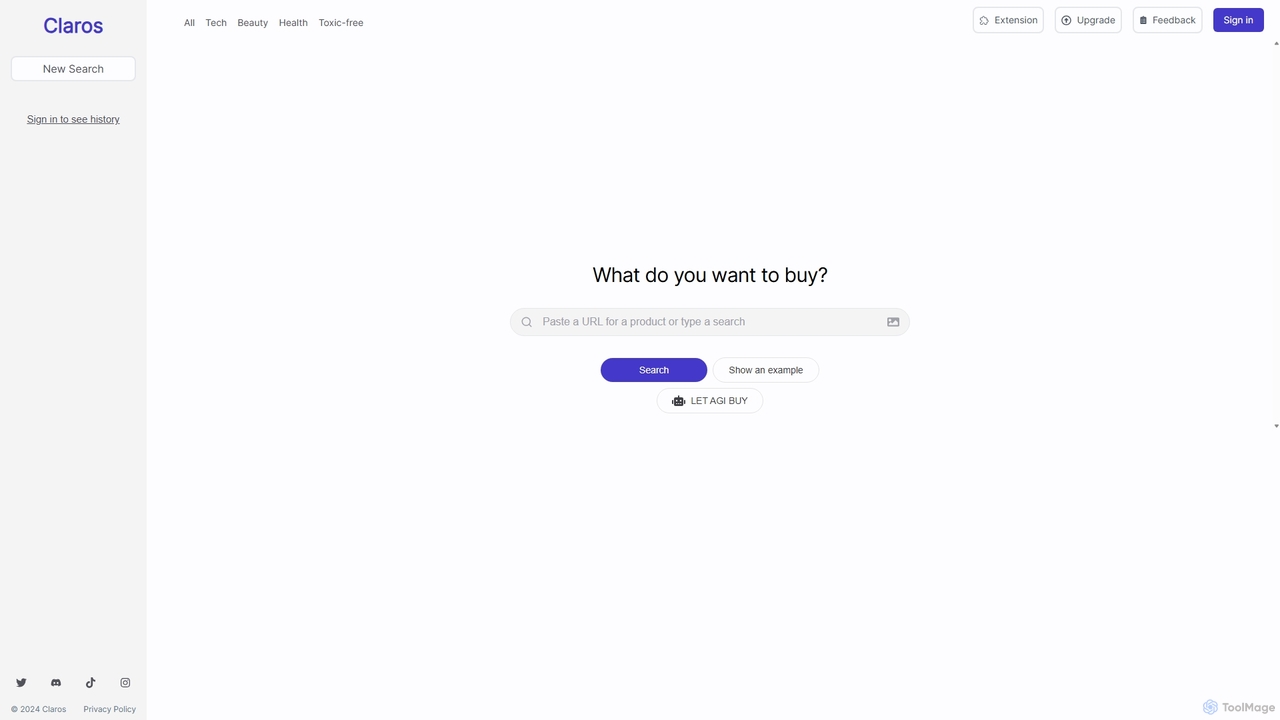
Claros is an AI-powered shopping assistant designed to simplify your purchasing decisions. Using advanced natural language processing, it understands your needs to find the best products across tech, beauty, and health. It specializes in identifying safe, non-toxic items, saving you time and ensuring you buy with confidence.

Shopping Assistant
Visits 5.5KFavorites 150Likes 149

About Ingredient Analysis

Ingredient Analysis tools are AI-powered applications designed to decode and evaluate the components listed in products like food, cosmetics, and supplements. They leverage optical character recognition (OCR) to scan labels and natural language processing (NLP) to interpret complex chemical names, cross-referencing them with extensive databases. This provides users with instant, easy-to-understand insights into a product's safety, nutritional value, and potential allergens, empowering healthier and more informed purchasing decisions within the broader health and wellness landscape.

Core Features

  • Label Scanning & OCR: Utilizes a device's camera to automatically scan and digitize ingredient lists from product packaging.
  • Component Identification: Identifies each ingredient and provides detailed information on its function, origin, and properties.
  • Safety & Allergen Flagging: Highlights potentially harmful chemicals, common allergens, or ingredients that conflict with dietary restrictions (e.g., vegan, gluten-free).
  • Nutritional Scoring: Analyzes nutritional data and ingredient quality to provide an overall health score or rating for the product.
  • Personalized Filtering: Allows users to set up profiles based on allergies, dietary preferences, and health goals to receive customized alerts.

Applicable Scenarios

These tools are invaluable for individuals with specific dietary needs, such as allergies or intolerances, parents checking baby food ingredients, and health-conscious consumers aiming to avoid artificial additives. In a professional context, nutritionists use them to quickly assess client food diaries, while product developers in the food and cosmetics industries can analyze competitor formulations.

Selection Criteria

When selecting an Ingredient Analysis tool, consider the breadth and reliability of its ingredient database. Evaluate the user interface for ease of scanning and clarity of results. Check for personalization features, such as the ability to create custom avoidance lists. Finally, assess the business model—whether it's a one-time purchase, subscription, or ad-supported—to find what best suits your usage frequency.

Ingredient Analysis use cases

1

Checking Cosmetics for Allergens and Irritants

A consumer with sensitive skin is considering a new skincare product in a store. Before purchasing, they use an ingredient analysis app to scan the product's ingredient list. The AI instantly processes the text, cross-references each component with a database of known irritants and allergens, and highlights ingredients like specific fragrances or sulfates that match the user's pre-set allergy profile. This immediate feedback helps the user avoid a potential skin reaction and make a confident, safe purchase.

2

Verifying Food Products for Dietary Restrictions

A parent of a child with celiac disease is grocery shopping. They encounter a new brand of snack that appears to be gluten-free. To be certain, they use an ingredient analysis tool to scan the barcode or ingredient list. The app quickly identifies not only obvious gluten sources but also hidden ones like 'malt extract' or 'brewer's yeast'. It provides a clear 'safe' or 'unsafe' notification, removing the guesswork and preventing accidental gluten exposure for their child.

3

Evaluating Nutritional Quality of Packaged Foods

A fitness enthusiast is trying to choose between two protein bars. While both claim to be healthy, the ingredient lists are long and confusing. By scanning each product with an analysis tool, they get an easy-to-understand breakdown. The AI flags high levels of added sugars, identifies artificial sweeteners, and provides a simple health score for each bar. This allows the user to quickly compare the products beyond the marketing claims and choose the one that truly aligns with their nutritional goals.

4

Ensuring Products Align with Ethical Values (Vegan, Cruelty-Free)

An ethically-conscious consumer wants to ensure their purchases are vegan and cruelty-free. When shopping for a new lotion, they scan the ingredient list. The AI tool identifies animal-derived ingredients that may not be obvious, such as 'lanolin' or 'glycerin' (which can be animal or plant-based). Furthermore, it can cross-reference the brand with PETA or Leaping Bunny databases to verify its cruelty-free status, providing comprehensive assurance that the product meets the user's ethical standards.

5

Assisting Nutritionists with Client Meal Planning

A professional nutritionist is reviewing a new client's food log, which includes many packaged items. Instead of manually researching each product's detailed composition, the nutritionist has the client use an ingredient analysis app to log their food. This provides the nutritionist with accurate, detailed data on preservatives, artificial colorings, and micronutrients that standard calorie counters miss. This deeper insight allows for more precise and effective dietary advice, helping to identify potential triggers for inflammation or other health issues.

6

Researching Competitor Product Formulations

A product developer in the cosmetics industry is tasked with creating a new facial serum. To understand the market, they use an ingredient analysis tool to scan the labels of top-selling competitor products. The AI breaks down each formulation, identifying key active ingredients, the types of preservatives used, and potential allergens to avoid. This provides rapid, structured competitive intelligence, saving hours of manual research and helping the developer formulate a new product that is both effective and competitively positioned.

Ingredient Analysis FAQ

What are AI Ingredient Analysis tools?

AI Ingredient Analysis tools are applications that use technology like Optical Character Recognition (OCR) and Natural Language Processing (NLP) to scan and interpret product labels. Their primary function is to break down complex ingredient lists from food, cosmetics, or supplements into easy-to-understand information. They identify individual components, flag potential allergens or harmful chemicals, and often provide a health or safety rating, empowering consumers to make more informed choices about the products they use and consume.

How to choose the right Ingredient Analysis app?

Choosing the right app depends on your specific needs. Consider these factors:

  • Database Accuracy and Scope: Ensure the app uses a comprehensive, up-to-date, and scientifically-backed database. Check if it covers the types of products you use most (e.g., food, skincare).
  • Scanning Performance: A good app should have fast and accurate OCR technology that works well even in low-light conditions or on curved packaging.
  • Customization and Personalization: Look for features that allow you to create a personal profile to flag specific allergens, dietary preferences (like vegan or keto), or ingredients you wish to avoid.
  • Clarity of Information: The results should be presented clearly, using simple scores, color-coding, or plain language explanations rather than just technical jargon.
What's the difference between an Ingredient Analysis tool and a general nutrition tracker?

The primary difference lies in their focus. A general nutrition tracker (like MyFitnessPal or Cronometer) concentrates on macronutrients (calories, protein, fats, carbs) and micronutrients (vitamins, minerals) for the purpose of logging diet and tracking quantitative goals. An Ingredient Analysis tool, on the other hand, focuses on the quality and composition of the ingredients themselves. It answers 'What is this?' rather than 'How much?'. It identifies specific chemicals, additives, preservatives, and potential allergens, which are details that most nutrition trackers do not cover.

How accurate are AI Ingredient Analysis tools?

The accuracy of these tools depends heavily on two core components: the quality of the Optical Character Recognition (OCR) technology and the comprehensiveness of their ingredient database. Reputable apps use advanced OCR to minimize scanning errors and continuously update their databases with the latest scientific research, manufacturer data, and regulatory information. While they are generally reliable for everyday guidance, they should not replace professional medical advice. For critical health conditions, such as severe allergies, it is always best to double-check labels manually and consult with a healthcare provider.

Who can benefit from using Ingredient Analysis tools?

A wide range of individuals can benefit from these tools. Key user groups include:

  • People with Allergies or Intolerances: To safely avoid specific ingredients like nuts, dairy, gluten, or soy.
  • Health-Conscious Consumers: To identify and avoid artificial additives, preservatives, high levels of sugar, or trans fats.
  • Parents and Caregivers: To ensure the food and products they give to children are safe and nutritious.
  • Individuals on Specific Diets: To verify that products comply with dietary rules such as vegan, vegetarian, keto, or paleo.
  • Professionals: Nutritionists, dietitians, and product developers use them for client analysis and competitive research.