X-ray Interpreter
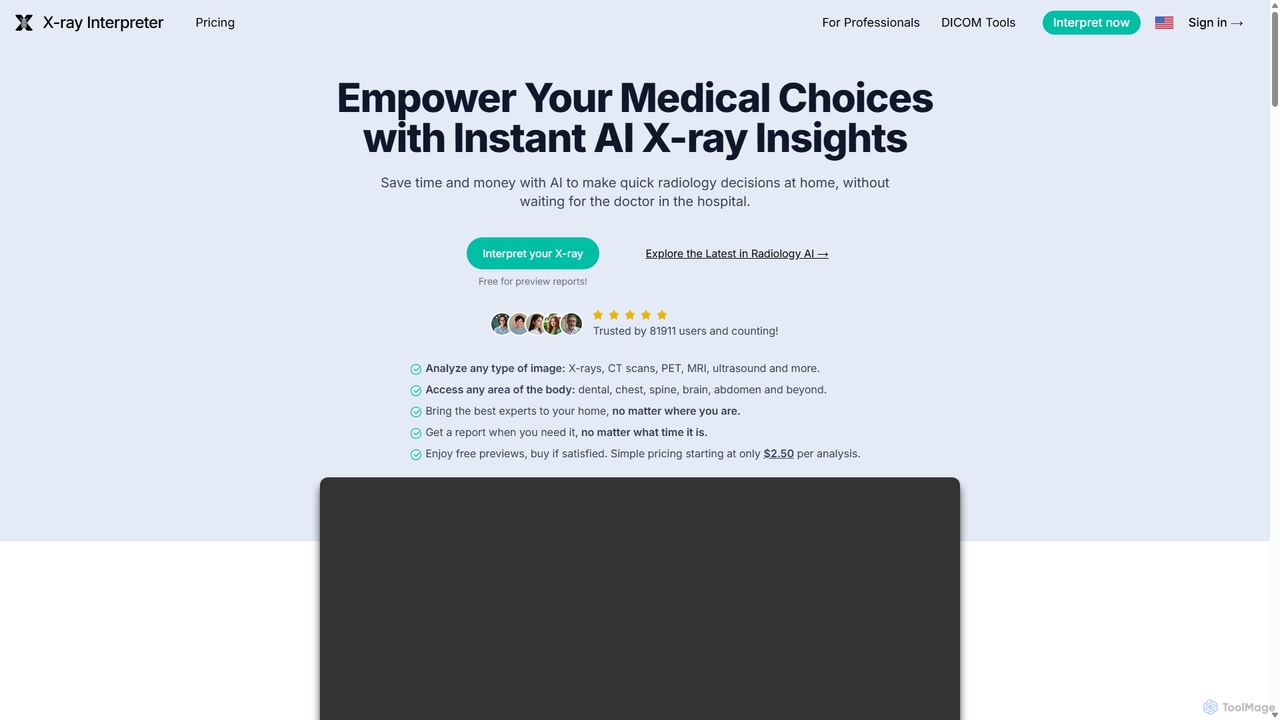
X-ray Interpreter is an AI-powered platform that provides instant, detailed analysis of radiological images like X-rays, CT scans, …
X-ray Interpreter is an AI-powered platform that provides instant, detailed analysis of radiological images like X-rays, CT scans, MRIs, and ultrasounds. It offers a reliable second opinion for patients, families, and medical professionals, delivering easy-to-understand reports to empower informed healthcare decisions. The service is fast, secure, and cost-effective, with a free preview option.
CT Read
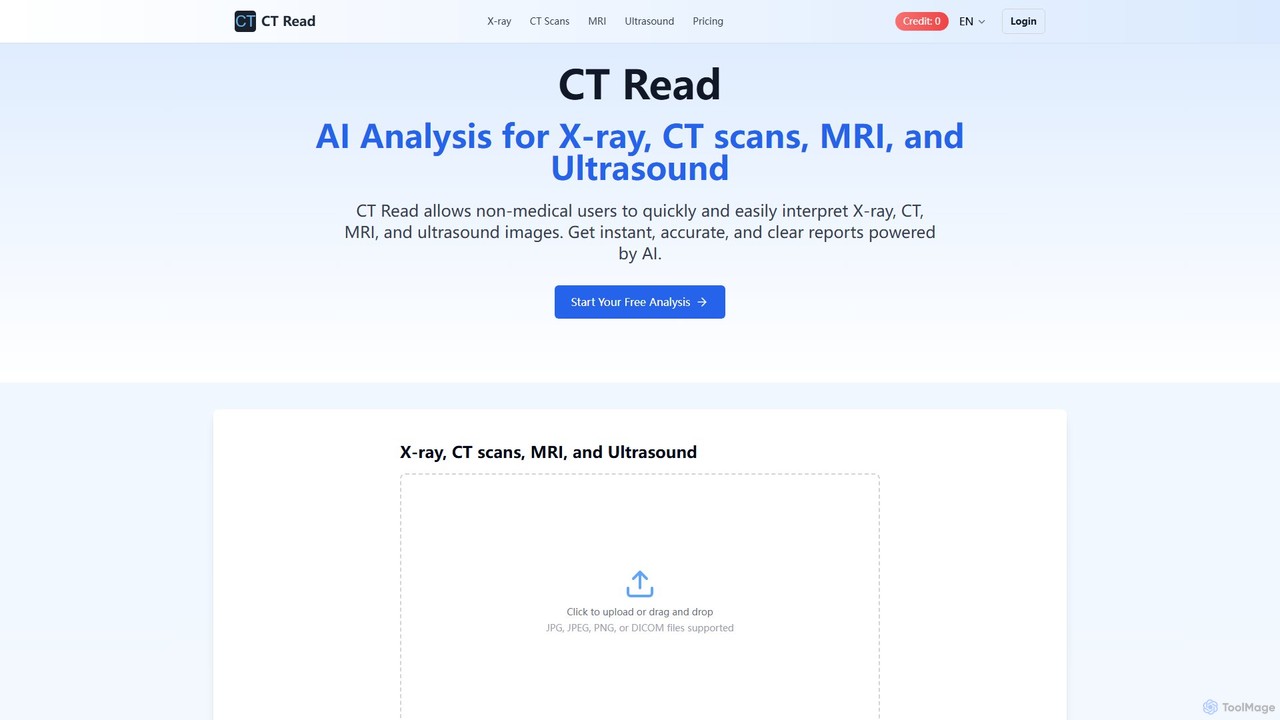
CT Read is an AI-powered tool that provides instant analysis and easy-to-understand reports for medical images like X-rays, …
CT Read is an AI-powered tool that provides instant analysis and easy-to-understand reports for medical images like X-rays, CT scans, MRIs, and ultrasounds. Designed for non-medical users, it helps demystify complex medical jargon, offering clear insights into various health conditions, from dental issues to sports injuries and pregnancy ultrasounds. Simply upload your scan to get a rapid, detailed explanation.
About Medical Imaging
Medical Imaging AI tools are advanced software solutions that leverage artificial intelligence to process, analyze, and interpret medical images such as X-rays, CT scans, MRIs, and ultrasounds. These tools utilize machine learning and deep learning algorithms to enhance diagnostic accuracy, streamline clinical workflows, and assist healthcare professionals in identifying abnormalities and making informed decisions. By automating repetitive tasks and providing quantitative insights, they significantly improve efficiency and precision in patient care within the broader health sector.
Core Features
- Automated Anomaly Detection: Identifies potential lesions, tumors, or other abnormalities in medical scans with high precision.
- Quantitative Image Analysis: Provides objective measurements of organ volumes, lesion sizes, and tissue characteristics, aiding in disease progression monitoring.
- Image Segmentation: Automatically delineates specific anatomical structures or pathological regions for detailed examination.
- Workflow Optimization: Prioritizes critical cases, reduces reading times, and integrates seamlessly with existing PACS systems.
- Predictive Analytics: Uses imaging data to forecast disease progression or treatment response, supporting personalized medicine.
Applicable Scenarios
Radiologists use these tools to quickly screen large volumes of images for subtle signs of disease, reducing diagnostic errors and improving throughput. Oncologists leverage AI for precise tumor measurement and tracking treatment efficacy over time. Surgeons utilize AI-segmented 3D models for pre-operative planning, enhancing surgical precision and patient safety.
How to Choose
When selecting Medical Imaging AI tools, prioritize solutions with high validation accuracy demonstrated through clinical trials and regulatory approvals. Consider integration capabilities with your existing Picture Archiving and Communication Systems (PACS) and Electronic Health Records (EHR). Evaluate the specific clinical applications offered, such as oncology, cardiology, or neurology, and ensure the tool addresses your primary diagnostic needs. Finally, assess vendor support, data privacy compliance (e.g., HIPAA, GDPR), and scalability for future growth.

Medical ImagingUse Cases
Early Detection of Lung Nodules in CT Scans
Radiologists can utilize AI tools to automatically highlight and characterize suspicious lung nodules in low-dose CT scans. This helps in the early detection of lung cancer, reducing the burden on human readers and improving patient outcomes by identifying subtle changes that might be missed during manual review, leading to timely intervention.
Automated Brain Tumor Segmentation and Volume Measurement
Neuro-oncologists and radiologists employ AI for precise segmentation of brain tumors from MRI scans. The tools automatically delineate tumor boundaries and calculate their volume, providing objective metrics for monitoring disease progression, evaluating treatment response, and assisting in surgical planning with greater accuracy than manual methods.
Cardiac Function Assessment from MRI/CT
Cardiologists use AI-powered solutions to analyze cardiac MRI or CT images, automatically segmenting heart chambers and vessels. These tools can quantify ejection fraction, ventricular volumes, and blood flow dynamics, providing comprehensive insights into heart health and aiding in the diagnosis and management of various cardiovascular diseases with enhanced efficiency.
Diabetic Retinopathy Screening from Fundus Images
Ophthalmologists and general practitioners can deploy AI systems to screen for diabetic retinopathy from retinal fundus images. The AI automatically detects microaneurysms, hemorrhages, and exudates, enabling rapid and accurate identification of patients at risk, especially in remote or underserved areas, facilitating early referral and treatment to prevent vision loss.
Fracture Detection and Classification in X-rays
Emergency room physicians and orthopedic specialists leverage AI tools to assist in detecting and classifying fractures in X-ray images. The AI can quickly identify subtle fractures, reduce false negatives, and provide preliminary classifications, thereby speeding up diagnosis in high-volume settings and ensuring timely and appropriate patient management.
Personalized Treatment Planning for Radiation Therapy
Radiation oncologists use AI to optimize radiation therapy planning. By automatically segmenting organs at risk and target volumes from CT or MRI scans, AI tools help create highly precise treatment plans that maximize radiation dose to the tumor while minimizing exposure to healthy tissues, leading to improved therapeutic efficacy and reduced side effects.